

Table of Contents
- The Robot Chassis: Your Build’s Structural Backbone
- Motors and Servos: The Muscles of Your Robot
- DC motors
- Servos
- Brushless motors
- Motor Controllers and Driver Boards
- Microcontrollers and Single-Board Computers
- Microcontrollers (MCUs)
- Single-board computers (SBCs)
- Wheels, Tracks, and Mobility Systems
- Sensors: Giving Your Robot Awareness
- Power Systems: Batteries, Wiring, and Regulation
- Fasteners, Mounting Hardware, and Structural Tools
- The Advantage of Starting With a Complete Robotics Kit
- Your Next Step Toward Smarter Robotics Projects
Building your own robot is one of the most rewarding ways to learn engineering, programming, and problem-solving. But before you write a single line of code, you need the right hardware foundation. The success of any DIY robot depends on choosing components that are reliable, compatible, and flexible enough to support your creative ideas.
Whether you’re a beginner, a hobbyist, or preparing for competitions, understanding the essential hardware pieces will help you start stronger and build better. Quality hardware not only improves performance but also makes coding easier, because your programs will run on a stable, well-constructed robot.
In this guide, we explore the most important hardware components for Robotics Projects, how to choose them, and why starting with the right foundation sets you up for long-term success.
The Robot Chassis: Your Build’s Structural Backbone
Every robotics project begins with a strong and well-designed chassis. This frame holds all components together and supports movement. It provides mounting points for sensors, electronics, and manipulators.
What to look for in a chassis:
- Rigidity
- Modularity
- Lightweight materials
A well-built chassis allows motors and wheels to perform smoothly and gives you the flexibility to experiment with new designs. Many beginner kits include customizable frames, but investing in a high-quality modular chassis, like those included in the FTC starter kit, gives you far more engineering possibilities.
Motors and Servos: The Muscles of Your Robot
Motors give your robot the ability to move, turn, lift, and manipulate objects. Choosing the right motor type depends on your project goals.
DC motors
DC motors are great for making wheels turn and helping a robot move smoothly. They spin in one direction and keep going as long as they have power. These motors are strong and can push or pull heavier parts of your robot.
Servos
Perfect for precise movements like steering, grabbing, or lifting. Servos offer predictable angles. It makes them a must-have for projects with arms or claws.
Brushless motors
Brushless motors are more advanced and are often used in high-performance robots. They are very efficient, meaning they use power wisely and last a long time. They become useful when building faster or more powerful robots.
Your motor choice affects how you control speed, direction, and torque in your code. Quality matters here. Poorly tuned motors make programming much more difficult.
Motor Controllers and Driver Boards
Motors cannot be powered directly from a microcontroller. They require a motor controller or driver board to regulate voltage and current.
A reliable motor controller protects both your motors and your microcontroller. It prevents overheating or electrical damage.
High-quality controllers allow smoother movements, faster response times, and easier programming. Many beginner-friendly robotics kits include built-in control systems so you can start coding sooner.
Microcontrollers and Single-Board Computers
Your robot’s “brain” determines how it processes commands, responds to sensors, and executes code. Two common types of controllers are used in robotics:
Microcontrollers (MCUs)
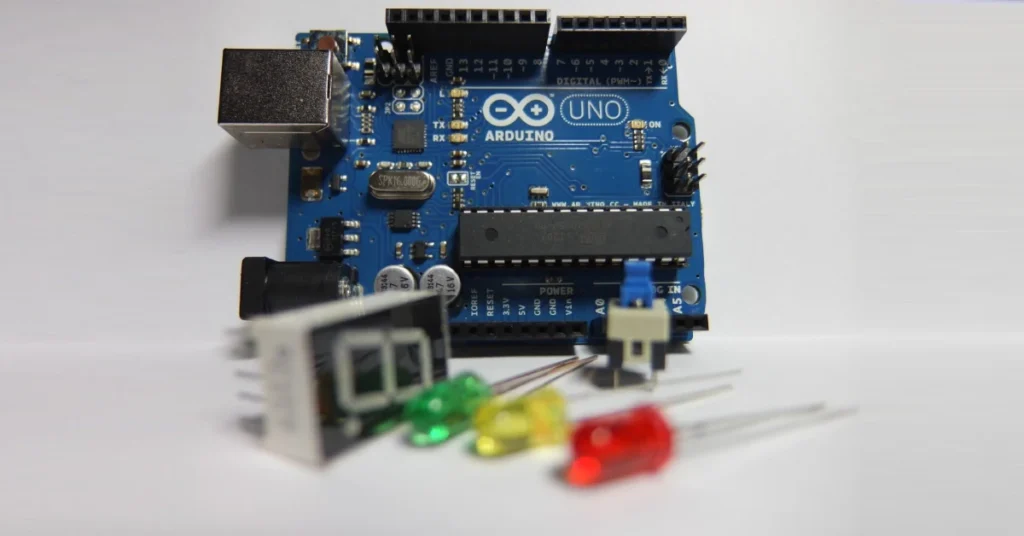
Microcontrollers, or MCUs, are small computers that help control motors and sensors in a robot. Some examples are Arduino, Studica’s controllers, and REV Robotics modules. They’re great for beginners because they’re easy to use and perfect for real-time tasks, like helping a robot avoid obstacles while it moves.
Single-board computers (SBCs)
Single-board computers, or SBCs, are small but powerful computers used in robotics. Examples include the Raspberry Pi and the Jetson Nano.
They can run full operating systems and have stronger processors. This makes them great for tasks like computer vision and advanced AI.
Wheels, Tracks, and Mobility Systems
Your mobility platform determines how your robot moves. Choosing the right system depends on the environment and tasks your robot will handle.
There are different ways to help a robot move. A simple option is a two-wheel drive with a small caster wheel, which is great for beginners. A four-wheel drive gives better balance and grip.
Omni wheels let the robot move sideways and diagonally. This is helpful in competitions. Tracked systems, like the ones on tanks, work well on rough ground or for heavy-duty projects.
The FTC competition kits often include high-quality mecanum wheels. It gives students advanced mobility out of the box.
Sensors: Giving Your Robot Awareness
Sensors allow robots to interact with their surroundings. Without them, your robot can’t detect obstacles, measure distance, follow lines, or respond to changes in the environment.
Essential sensors include:
- Ultrasonic sensors
- Gyroscopes
- Encoders
- Touch sensors
- Light or color sensors
A great robotics build uses multiple sensors working together. Coding becomes much easier when your hardware provides clean, reliable sensor data.
Power Systems: Batteries, Wiring, and Regulation
Your robot’s power supply is very important because it affects how long your robot can work and how well it performs. Make sure to use good rechargeable batteries and check that the voltage matches what your motors and controllers need.
It’s also safer to include fuses or breakers and to keep all the wires neat so nothing comes loose or causes a short. Many beginner kits already come with safe batteries and wiring. This makes it easier to set up your robot without having electrical problems.
Fasteners, Mounting Hardware, and Structural Tools
Bolts, nuts, brackets, and mounting plates might seem like small details. But they are crucial for stability and long-term durability. A reliable set of tools-Allen keys, screwdrivers, pliers, and cutters-makes your build easier and faster.
Robotics kits with modular building systems save beginners hours of frustration.
The Advantage of Starting With a Complete Robotics Kit
You can buy robot parts one by one, but beginners usually learn faster with a complete starter kit. A kit already has parts that are made to work well together. This includes
- a strong frame
- right motors
- controllers
- safe wiring
- battery systems
It also comes with guides and tutorials to help you build. Plus, you can still upgrade it later. If you want to make robots for school, competitions, or just for fun, a good starter kit makes everything easier and helps you succeed.
Your Next Step Toward Smarter Robotics Projects
Before you begin coding your robot, take the time to assemble the right hardware foundation. A reliable chassis, quality motors, a smart controller, accurate sensors, and a clean power system make your robot easier to program, more stable, and far more fun to work with.
DIY robotics projects become much more rewarding when your hardware is solid, flexible, and built to support long-term experimentation. Whether you’re a beginner or building for competition, investing in the right components-especially a complete Robotics Projects kit-will improve your results and bring your creative ideas to life.

Archie Holmes
Archie covers entertainment, technology, and internet culture, chasing down where a trending topic actually came from. He likes untangling scattered, half-explained stories into something coherent, treating the background as seriously as the headline. His pieces are for readers who want the full context behind what's already all over their feed.
View all articles →Get the Weekly Brief
The best guides and stories, delivered every Sunday.