
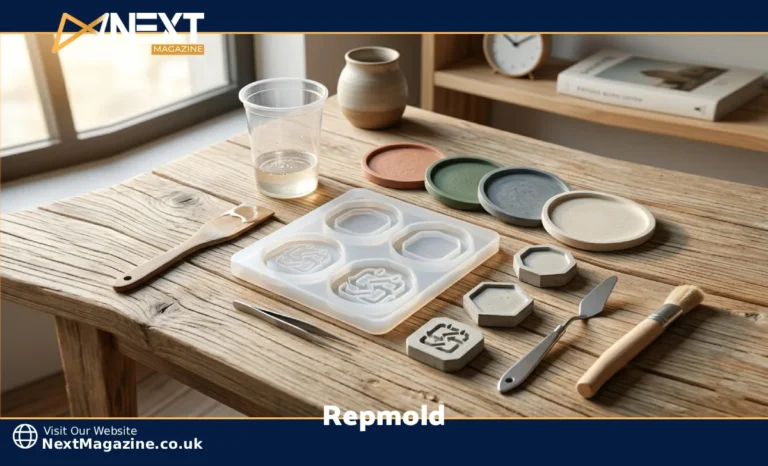
A repmold is a sturdy, reusable mold that lets you cast the same item over and over from a single master pattern. Instead of starting from scratch every time you want a duplicate, you pour your material into the same reliable form — dozens, sometimes hundreds of times.
I didn’t fully appreciate this until I was elbow-deep in a concrete planter project and realized I’d already burned through four cheap single-use molds trying to get one decent result. The moment I switched to a proper repmold, that frustration mostly went away. The setup took a bit more time upfront, but every cast after that felt almost easy.
That said, a repmold isn’t the right tool for every situation. If you’re making one decorative piece — a one-off sculpture, an experimental shape — a disposable mold is honestly simpler and cheaper. A repmold earns its place when repetition is the point: matching coasters, a series of garden ornaments, production batches of resin jewelry, or replacement parts for a hobby build.
Made from materials like silicone rubber, urethane rubber, or polyurethane plastic, a true repmold is built with longevity in mind. That’s what separates it from the basic mold you might throw together from hardware store silicone. Not all molds are repmolds. A purpose-built, durable reusable mold holds its shape, keeps its detail, and doesn’t let you down on cast number 47.
Why Choose Durable Reusable Molds?
The short answer: over time, they cost less and waste less.
The longer answer involves a bit of honest math. Say a decent silicone repmold costs you $80. A cheap disposable alternative might run $12. Sounds like a no-brainer until that cheap one warps after 8 casts, and you’re buying another. And another. By cast number 30 or so with a quality Repmold, you’ve already recovered what you spent — and you’re not done yet.
That’s not a theoretical number. That’s roughly what I worked out on a candle holder project where I needed 60 matching pieces for a home event. The repmold paid for itself around cast 28. Everything after that was just saving money.
Beyond cost, there’s consistency. When you’re making a set of anything — earrings, planters, tiles — you want them to look intentional. A repmold delivers that. Every piece comes out nearly identical because the mold doesn’t shift or degrade between uses, the way cheaper materials do.
There’s also less guilt involved. Throwing away mold after mold when you’re trying to build sustainably feels wrong. Reusable molds for resin casting and concrete projects mean you’re generating far less single-use waste over the course of a year.
One honest caveat: if you only need two or three copies of something with very fine, delicate detail, a disposable mold might actually protect that detail better. Some repmold materials — especially rigid ones — can stress fragile casts during demolding. Know what you need before you commit.
How a Repmold Works: The Basic Process
Let’s walk through this in a way that actually makes sense when you’re standing at your work table.
Step 1 — Create or find your master pattern. This is the original object you want to copy. It can be something you sculpted, bought, found, or 3D printed. Whatever it is, it needs to be clean and smooth, because the mold captures everything — every fingerprint smudge, every tiny scratch. I learned this the hard way with a plaster master I thought looked fine. It had a hairline crack I hadn’t noticed, and it showed up in every single cast.
Step 2 — Build the mold around it. You apply your mold material — silicone, urethane, or another compound — around the master. This is the step that requires the most patience. Getting the release agent right, avoiding air bubbles, and making sure the mold walls are thick enough all matter here. Rush this, and you’ll regret it.
Step 3 — Cure and demold. Let the mold set completely before you touch it. I’ve pulled molds early more than once, thinking they “looked done.” They weren’t. Full cure time is in the instructions for a reason. Once cured, remove the master carefully. A well-made repmold should release cleanly.
Step 4 — Start casting. Now you pour your working material — resin, wax, concrete, plaster, whatever fits your project — into the finished mold. Repeat as needed.
The process feels a little technical the first time. By the third mold you’ve made, it becomes second nature. If something goes wrong on the first try, check the cure time first. That’s almost always where beginners lose their results.
Materials Commonly Used for Repmolds
Choosing the wrong material for your repmold is one of the most common beginner mistakes, and it’s completely avoidable once you understand the tradeoffs.
| Mold Material | Best For | Main Tradeoff |
|---|---|---|
| Silicone Rubber | Resin, soap, candles, food-safe work, detailed shapes | Pricier upfront; some chemicals can damage it |
| Urethane Rubber | Concrete, plaster, high-volume work | Less flexible; moisture-sensitive during cure |
| Latex Rubber | Complex shapes, masks, decorative plaster | Degrades faster; needs multiple layers |
| Polyurethane Plastic | Rigid plastic parts, architectural elements | Not flexible; brittle if dropped |
For most hobby projects, a good-quality silicone repmold is the best starting point. It’s forgiving with detail, handles undercuts well, and works across a wide range of casting materials. If you’re specifically making reusable molds for concrete projects, urethane rubber tends to be the tougher choice — concrete is abrasive, and urethane stands up to that better than most silicones.
If you’re a beginner and can only buy one type of mold material to experiment with, start with platinum-cure silicone. It’s more stable, more forgiving of temperature changes, and less likely to cause curing problems with your casting material. Tin-cure silicone is cheaper but can interfere with certain resins during curing — something worth knowing before you pour $30 of resin into a new mold and wait 24 hours for nothing.
Material science in this space keeps improving. The options available now — in terms of detail, durability, and eco-friendliness — are noticeably better than what hobbyists had even a few years ago.
Where Repmolds Are Actually Used
Reusable molds show up in more places than most people expect. Here’s where they genuinely earn their keep:
- Home decor and crafts — Concrete stepping stones, plaster wall art, resin coasters, candle holders. Hobbyists doing small-batch production rely on these constantly.
- Resin jewelry — Flexible silicone Repmolds are ideal here. The detail is fine, the shapes are often complex, and you want every piece in a collection to match. Reusable molds for resin casting are practically standard in the jewelry-making community.
- Artistic reproductions — Sculptors use Repmolds to cast multiple copies of a piece in resin or wax without reworking the original every time.
- Prototyping — Makers and designers create several versions of a part for testing before committing to expensive tooling.
- Food work — Food-grade platinum silicone repmolds handle chocolates, gummies, and cake decorations. Always confirm food-safe certification; don’t assume.
- Cosplay and props — Armor pieces, masks, and props often come from urethane or silicone repmolds because they can be reproduced quickly and consistently.
- Custom hardware and parts — When you need 20 identical brackets or spacers and injection molding isn’t cost-effective, a Repmold gets the job done.
Match the mold material to the application. Concrete needs urethane or silicone tough enough to resist aggregate. Delicate resin jewelry needs flexible silicone that can peel away without snapping fine detail. That pairing matters more than the brand.
How to Pick the Right Repmold for Your Project
This is where most guides go vague. Here’s what I actually think through before choosing:
Casting material compatibility — Some resins won’t cure properly against certain silicones. This is a real problem, not a rare edge case. Check the manufacturer’s guidance before you buy. If you’re using a specific brand of resin, look up whether platinum or tin-cure silicone is recommended for it.
How complex is the original? — Deep undercuts and fine details need flexibility. Rigid molds are fine for simple geometric shapes, but they’ll destroy delicate features during demolding. If you’re unsure, err toward silicone.
How many casts do you actually need? — This is the honest question. If the answer is under 10, a cheaper mold might make more sense. If you’re looking at 50, 100, or more, invest in something built for volume. Best reusable casting molds for beginners don’t have to be the most expensive — they just have to be appropriate for the planned use.
Real cost per cast — A $100 urethane mold that lasts 500 casts costs $0.20 per cast. A $25 latex mold that dies after 30 casts costs $0.83 per cast. Run the numbers for your actual project before you buy.
Demolding ease — Think about how the cast will come out. If the shape has undercuts, you need a flexible mold or a multi-part design. A rigid mold on a complex shape usually means either a damaged cast or a damaged mold.
Temperature — Casting hot wax or high-exotherm resins? Make sure your mold material can handle the heat. Platinum-cure silicone generally wins here.
Starter tip for beginners: Try your first repmold on something simple — a smooth geometric shape with no undercuts. A square coaster, a small cylinder, a basic tile. Get familiar with the cure time, release agent, and demolding before you attempt something with fine detail. Ruining your first mold on a simple test project costs a lot less than ruining it on something you spent a week sculpting.
Making Your Repmolds Last: Care and Maintenance
This is the section most guides treat like a checklist. It deserves more than that, because how you maintain a repmold in the first month directly affects what it looks like after a year.
Cleaning — do it every time, not just when it looks dirty. Resin and wax leave residue that’s nearly invisible at first. That residue builds up, fills in fine detail, and quietly degrades your casts before you even notice the quality dropping. Warm water and mild dish soap handle most materials. Isopropyl alcohol works for tougher residue on silicone — test a small hidden area first. Never use abrasive scrubbers or harsh solvents; they micro-scratch the surface and shorten the mold’s usable life faster than almost anything else.
Inspect before every session, not just after. Check for small tears, nicks, or soft spots before you pour. A tiny tear in silicone can become a split by cast 15. Catching it early lets you decide whether to reinforce it or retire the mold before it ruins a batch of work.
Storage matters more than most people realize. Store molds flat or in a shape-supporting position. Stacking heavy objects on top, even for a few days, can permanently deform the mold surface. Keep them away from direct sunlight — UV exposure degrades silicone and urethane over time, faster than you’d expect. A cool, dry shelf or a dedicated storage box isn’t overkill; it’s just good practice.
Over a typical hobbyist timeline of two to three years, the difference between a well-stored mold and a poorly stored one is substantial. A mold stored correctly might still be giving clean casts at cast 400. The same mold left in a sunny window or compressed under a pile of supplies might be warping by cast 80.
Use mold release consistently. Even molds that technically don’t require it benefit from a release agent when you’re casting urethane or certain resins. It reduces surface stress during demolding, which is one of the main ways flexible molds accumulate wear. Test your release agent on a small area before applying it to a new mold.
Don’t over-stretch flexible molds. Silicone and urethane are forgiving, but yanking them aggressively during demolding causes micro-tears that accumulate into real damage. Peel slowly and steadily. If a cast is sticking, a little more release agent next time is the fix — not more force.
Final Verdict
A repmold is one of those tools that doesn’t seem essential until you’ve used one properly — and then it’s hard to imagine going without it. For anyone making multiple copies of the same item, whether that’s resin jewelry, concrete planters, candles, or custom parts, a durable reusable mold saves money, saves time, and produces better results than most alternatives.
It’s not magic. Wrong material choice, skipped maintenance, or rushing the cure will still cause problems. But when you set it up right and treat it well, a quality repmold turns what would be tedious repetition into something almost satisfying.
Start small if you’re new to this. Get one mold right, run it through a few test casts, and see how it handles your materials. That first successful session — where every piece comes out clean and consistent — is usually enough to convince most people it was worth it.
FAQs About Repmolds
What exactly is a repmold, and how is it different from regular silicone molds?
A repmold is specifically built for repeated use — dozens to hundreds of casting cycles — while holding its shape and detail. A basic silicone mold might handle a few casts, but it’s not designed with longevity in mind. The difference comes down to material quality, wall thickness, and how the mold is made. A repmold is more precise, more durable, and designed to perform consistently across many uses.
How many times can you actually reuse a repmold before it wears out?
It depends on the material and how well you maintain it. A high-quality silicone or urethane repmold, used with compatible materials and kept clean, can often deliver 200–1,000+ casts. Lower-end or latex molds might start showing wear after 20–50. Honestly, proper cleaning and storage probably extend mold life more than any other single factor.
Is a repmold worth it for small hobby projects or only for bigger production runs?
It depends on repetition, not scale. If you’re making 30 matching pieces for a home project, a repmold makes sense even if you’re not selling anything. If you need three copies of something, a disposable mold is probably simpler. The honest question is: how many times will I pour into this? Once you’re past 15–20 casts, a repmold almost always wins on cost and consistency.
What’s the easiest way for a beginner to start using repmolds at home?
Start with a flat or simple geometric shape — nothing with deep undercuts or fine detail. Use a beginner-friendly platinum-cure silicone kit, follow the cure time exactly (don’t guess), and do one small test pour before committing your actual casting material. Knowing how to use repmold for crafts properly from the start means fewer wasted materials and a lot less frustration later.
Can I make a repmold from a 3D printed object?
Yes, and it works really well. High-resolution resin 3D prints make excellent master patterns because the surface detail is precise and consistent. Just sand and seal the print properly before making the mold — some 3D print materials can interfere with silicone curing if they’re not prepared first.
Are repmolds safe for food use?
Only if they’re specifically certified food-grade, typically platinum-cure silicone that meets relevant health standards. Never assume a regular mold is food-safe. Check the product listing or manufacturer documentation before using any mold with food.
