
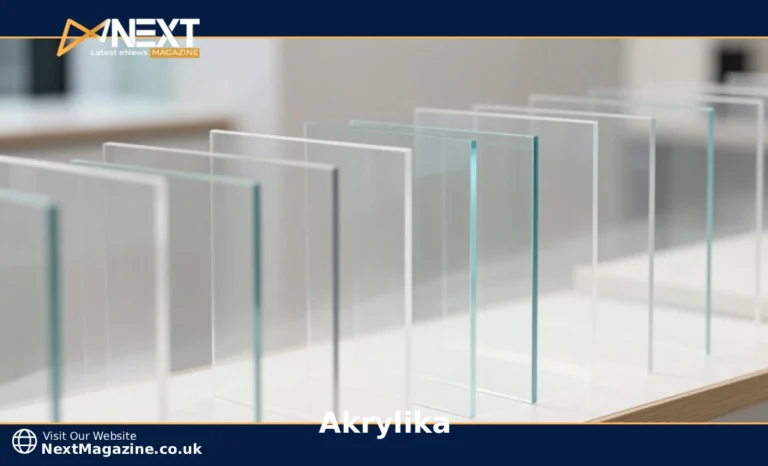
Akrylika refers to acrylic material, specifically PMMA (polymethyl methacrylate), a transparent thermoplastic. It offers 92% light transmission, weighs half as much as glass, and provides 17 times greater impact resistance. Common applications include signage, interior design, protective barriers, and displays.
You walk into a modern office building. The sleek partition wall catches your eye. It looks like glass, but something feels different. That’s Akrylika at work.
This material has quietly transformed how we design spaces, build displays, and create protective barriers. If you’ve stood behind a retail counter, looked through an aquarium panel, or admired a backlit sign, you’ve encountered Akrylika. Understanding what makes this material tick helps you make better choices for your next project.
What Akrylika Actually Means
Akrylika is the Greek and broader European term for acrylic material, specifically polymethyl methacrylate (PMMA). This transparent thermoplastic serves as a glass alternative across dozens of industries. The chemical structure consists of methyl methacrylate monomers linked into long polymer chains.
German chemist Otto Röhm developed the first commercial acrylic in 1933 under the patent name “Plexiglas.” The material gained prominence during World War II in aircraft windows and submarine periscopes. Today, you’ll find it sold under various brand names including Plexiglas, Lucite, and Perspex, depending on your region and manufacturer.
The confusion around “Akrylika” often stems from its dual meaning. In art contexts, it may refer to acrylic paints. In industrial and design contexts, it means the solid PMMA material we’re discussing here. This guide focuses on the latter, the rigid plastic sheets and formed products.
Key Properties of Akrylika
Akrylika transmits light at 92%, matching or exceeding standard glass performance. This optical clarity makes it ideal for applications where visibility matters. You can see through a 25mm thick sheet as clearly as through window glass.
The material weighs approximately 1.19 grams per cubic centimeter, roughly half the weight of glass. A square meter of 3mm Akrylika weighs about 3.6 kilograms compared to 7.5 kilograms for equivalent glass. This weight reduction simplifies handling, shipping, and installation.
Impact resistance ranks 17 times higher than glass in standard tests. When Akrylika breaks, it fractures into large, dull pieces rather than sharp shards. This safety advantage drives its use in protective barriers, machine guards, and public spaces.
UV resistance varies by grade, but quality Akrylika maintains clarity outdoors for years. Manufacturers add UV stabilizers during production to prevent yellowing. Weathering tests using international standards show minimal degradation after 5 to 10 years of sun exposure.
Temperature tolerance falls between 150°C and 260°C depending on the specific formulation, with a typical melting point around 227°C. The material softens at lower temperatures, allowing thermoforming. You can heat and shape Akrylika into curves and complex geometries.
Chemical resistance covers most household cleaners and mild acids. However, Akrylika degrades when exposed to acetone, certain solvents, and concentrated alkalis. Always test cleaning products on a small area first.
Cast vs Extruded Akrylika
Two manufacturing methods create distinct types of Akrylika with different characteristics.
Cast Akrylika forms when liquid MMA and PMMA pellets pour into glass molds. The mixture polymerizes under heat, then cools to create solid sheets. This process yields higher molecular weight material with superior chemical resistance and machining properties. Cast sheets cost 30% to 50% more than extruded alternatives but offer better clarity and can be produced in thicknesses up to 150mm.
Extruded Akrylika starts with pellets melted and pushed through an extruder. The material emerges as a continuous sheet, then cools on rollers. This method produces consistent thickness sheets at a lower cost. Maximum thickness typically reaches 20mm. Extruded material works well for signage, displays, and applications where extreme chemical resistance isn’t required.
Cast acrylic machines more cleanly and polishes to a higher gloss. Extruded acrylic bonds better with cement solvents, making it easier to create seamless joints. Your choice depends on your specific application requirements and budget.
Akrylika vs Glass vs Polycarbonate
Understanding how Akrylika compares to alternatives helps you select the right material.
Glass offers excellent scratch resistance and the lowest cost per square meter for basic applications. It transmits 90% of light, slightly less than Akrylika. The main drawbacks include fragility, weight, and dangerous breakage patterns. Glass weighs twice as much as Akrylika and shatters into sharp fragments.
Polycarbonate provides the highest impact resistance, roughly 250 times stronger than glass. It weighs slightly more than Akrylika but remains much lighter than glass. However, polycarbonate scratches easily, yellows faster under UV exposure, and transmits only 88% of light. It also contains BPA, a concern for some applications.
Akrylika strikes a balance between these materials. It costs more than glass but less than high-grade polycarbonate. The combination of clarity, moderate impact resistance, and ease of fabrication makes it versatile across industries. For outdoor signage, architectural panels, and display cases, Akrylika often represents the optimal choice.
| Property | Akrylika | Glass | Polycarbonate |
|---|---|---|---|
| Light Transmission | 92% | 90% | 88% |
| Weight (relative) | 1.0x | 2.1x | 1.1x |
| Impact Resistance | 17x glass | 1x | 250x glass |
| Scratch Resistance | Moderate | High | Low |
| UV Resistance | Good | Excellent | Fair |
| Cost (relative) | Medium | Low | High |
Common Applications in 2026
LED signage dominates Akrylika use in 2026. The material’s light transmission creates even, bright displays for retail storefronts and promotional features. Global LED signage market growth drives demand, particularly in developing markets.
Interior design applications expanded significantly. Architects specify Akrylika for partitions, room dividers, and furniture. The material offers transparency without glass weight and danger. Office renovations and hospitality projects increased demand for flexible, safe partition systems.
Protective barriers became standard across retail and service industries. Clear Akrylika shields at checkout counters and reception desks protect staff while allowing normal interaction.
Agricultural greenhouses increasingly use Akrylika panels for UV resistance, impact strength, and superior light transmission. Urban farming and hydroponic systems benefit in humid, temperature-variable environments. Greenhouse operations using Akrylika reduce structural costs by 15% to 20% due to weight savings.
Display cases and retail fixtures rely on Akrylika’s clarity and safety. High-end stores reduced material waste by 42% by switching to curved Akrylika for display cabinets. Thermoforming eliminates the need for frames and joints.
Medical devices use Akrylika for incubators, specimen containers, and diagnostic equipment. FDA-compliant grades meet food and medical contact requirements.
Choosing the Right Akrylika Type
Thickness selection depends on your application. Industry data shows 3mm to 8mm sheets account for 68% of market volume.
Signage and small displays work with 0.8mm to 3mm sheets. These thin materials provide uniform light transmission above 90% and are cost-effective.
Display cases and furniture need 5a mm to 8mm thickness for structural integrity. Frosted sheets prevent glare in bright environments.
Protective barriers and architectural panels use 8mm to 12mm material. A 2-meter partition with 10mm Akrylika remains stable without extra support.
Specialty applications may require 20mm to 50mm thickness for pressure resistance and long-term durability.
Surface finishes include clear, frosted, matte, and textured. Clear transmits maximum light. Frosted diffuses light and adds privacy. Mirror Akrylika offers reflective surfaces without glass weight.
UV-resistant grades extend outdoor life. Standard material yellows after 3 to 5 years of sun exposure. Protected variants maintain clarity for 10 years or more. Look for ASTM D4802 standard compliance.
Working with Akrylika
Cutting Akrylika requires sharp tools and a steady technique. For sheets under 6mm, score both sides with a utility knife and snap along the line. Thicker material needs power saws with fine-tooth blades. Keep protective film on during cutting to prevent scratches.
Drilling works best at medium speed with sharp twist bits. Support material on both sides to prevent cracking. Start with a small pilot hole and enlarge gradually to avoid heat buildup.
Thermoforming creates curved shapes by heating the material to 160°C to 180°C. Once pliable, form it over a mold and hold until cool. Practice on scrap first.
Cleaning demands gentle methods. Use mild soap and lukewarm water, avoiding abrasive materials and harsh chemicals. For bonding, solvent cements chemically weld pieces together. Apply with a needle applicator for precision.
Installation requires accounting for thermal expansion. Leave 3mm to 5mm gaps around edges when mounting. Temperature matters too; avoid working below 10°C or above 30°C for best results.
Advantages Over Traditional Materials
Safety improvements rank among Akrylika’s strongest benefits. Shatter resistance reduces injury risk in public spaces, schools, and homes. Emergency responders find Akrylika barriers easier to breach than tempered glass during rescue operations.
Cost-effectiveness emerges over the product lifecycle. While initial costs exceed glass, savings in shipping, installation, and replacement offset the difference. A commercial storefront using Akrylika saves 20% to 30% on total project costs through lighter structural supports and simpler installation.
Design flexibility enables creative solutions impossible with glass. Thermoforming creates compound curves and organic shapes. CNC machining produces intricate patterns. Edge lighting turns simple sheets into luminous features.
Environmental considerations lean positive. The material is recyclable through specialized facilities. Production energy falls below glass manufacturing. Transportation emissions decrease due to lighter weight. Manufacturers now offer recycled content grades with up to 30% post-consumer material.
Maintenance demands stay low. Small scratches polish out with plastic polish. Compare this to glass, where scratches mean replacement. Properly installed UV-resistant Akrylika maintains performance for 15 to 20 years outdoors. Indoor applications last for decades with minimal care.
Final Thoughts on Akrylika
Akrylika transformed from a wartime innovation into an everyday material that shapes modern spaces. Your choice to use it brings together clarity, strength, and practicality in applications from storefronts to greenhouses. The material’s versatility means you’re likely to find uses for it whether you’re designing, building, or creating.
The key lies in matching the right type and thickness to your needs. Cast or extruded, clear or tinted, thin or thick—each variation serves specific purposes. Understanding these differences ensures your project succeeds the first time.
As sustainable manufacturing advances and recycled content increases, Akrylika’s environmental profile continues improving. The material you choose today might be part of tomorrow’s circular economy, processed and reformed into new applications. That’s progress worth supporting.
