
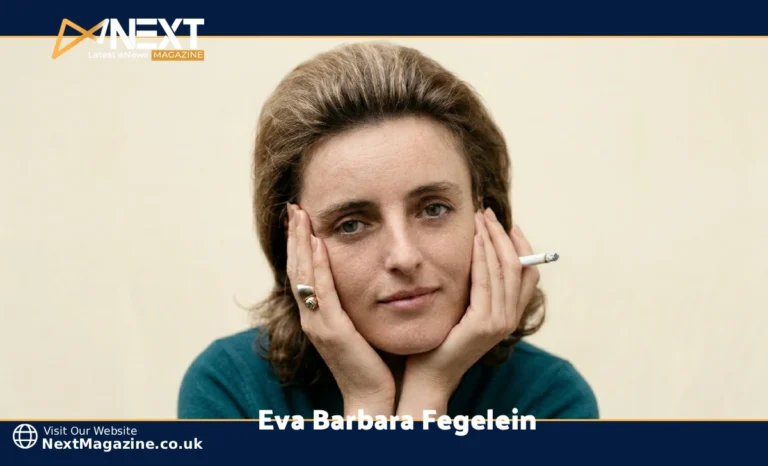
Eva Barbara Fegelein was born on May 5, 1945, to SS-Gruppenführer Hermann Fegelein and Gretl Braun, the younger sister of Eva Braun, Hitler’s companion. Her father was executed on Hitler’s orders six days before her birth. She lived privately after the war and is not publicly documented in any political role.
She never chose her family. She never chose the moment she was born into. And yet, Eva Barbara Fegelein entered the world as one of the most historically significant infants of the twentieth century — arriving just days before the collapse of the Third Reich, and carrying a surname that would remain tied to some of history’s darkest chapters.
This is her story — told as clearly and honestly as the available historical record allows.
Who Was Eva Barbara Fegelein?
Eva Barbara Fegelein was born on May 5, 1945 — three days after Adolf Hitler died in the Berlin bunker, and just three days before Germany’s unconditional surrender. Her birth, in the chaos of a collapsing regime, meant she never knew the world her parents had inhabited.
She was the daughter of two figures deeply embedded in the Nazi hierarchy: SS-Gruppenführer Hermann Fegelein and Margarete “Gretl” Braun — the younger sister of Eva Braun, Hitler’s longtime companion and briefly his wife.
That connection placed Eva Barbara, from the moment of her birth, at the very centre of one of history’s most scrutinised family webs.
Her Parents: Hermann Fegelein and Gretl Braun
Hermann Fegelein
Hermann Fegelein was a senior SS officer and one of Heinrich Himmler’s closest aides. By the final years of the war, he had risen to the rank of SS-Gruppenführer and served as Himmler’s official liaison to Hitler’s headquarters.
He was, by most historical accounts, charming, socially ambitious, and deeply ruthless. His military record included involvement in some of the most brutal SS operations on the Eastern Front.
His end came swiftly. In late April 1945, as Soviet forces closed in on Berlin, Fegelein abandoned his post and attempted to flee the city. He was discovered, brought back to the bunker, and court-martialed. On April 29, 1945 — the same day Hitler married Eva Braun — Fegelein was executed on Hitler’s orders.
Eva Barbara was born six days later. She never met her father.
Gretl Braun
Margarete “Gretl” Braun was the younger of the two Braun sisters. Less famous than Eva, she nonetheless occupied a privileged position within Hitler’s social circle by virtue of her sister’s relationship with the Führer.
She married Hermann Fegelein in June 1944 — a lavish ceremony attended by senior Nazi figures. The marriage was more a political alliance than a love story, according to most historians. Still, Gretl was pregnant with Eva Barbara when the war ended.
After the war, Gretl raised her daughter largely away from public attention. She died in 1987.
The Braun–Fegelein–Hitler Connection, Explained Simply
For readers unfamiliar with these overlapping relationships, here is a plain breakdown:
Eva Braun → Hitler’s companion and wife (married April 29, 1945; both died April 30, 1945)
Gretl Braun → Eva Braun’s younger sister; married Hermann Fegelein (1944)
Hermann Fegelein → SS general; executed April 29, 1945, on Hitler’s orders
Eva Barbara Fegelein → daughter of Gretl and Hermann; born May 5, 1945
This means Eva Barbara was, by marriage, Hitler’s niece-in-law — though that connection dissolved within hours of it technically forming, given the deaths of both Hitler and Eva Braun the day after their wedding.
It is a family tree defined almost entirely by tragedy, ambition, and collapse.
Born Into the Ruins: Eva Barbara’s Early Life
Eva Barbara Fegelein spent her early childhood in postwar Germany — a country processing collective shame, physical destruction, and the slow weight of accountability. Growing up with the Fegelein surname in that environment was not easy.
Historical records on her personal life are sparse. She was, understandably, a private individual who did not seek public attention. Gretl Braun raised her with a degree of discretion, and Eva Barbara largely avoided the media attention that occasionally came with her family name.
This kind of quiet navigation of a complicated legacy is not unique to WWII-era families. Across history, children of notorious or controversial figures have had to find their own path forward — separate from the decisions their parents made. For a parallel example from a very different context, profiles like Melva Porter show how individuals connected to prominent figures often spend their lives building identities entirely their own.
What Happened to Eva Barbara Fegelein After the War?
This is the question most people searching her name genuinely want answered — and the honest answer is that verifiable details are limited.
What is known:
- She was raised by her mother, Gretl Braun, in postwar Germany
- She lived a private life, rarely appearing in historical accounts or interviews
- She carried the weight of a surname linked to both SS leadership and the Braun family
- No credible public record places her in any political, ideological, or public role
Some biographical profiles of figures from this period note that children born into the Nazi elite often made deliberate choices to step away from public life — changing names, relocating, or simply refusing to engage with journalists or historians. Eva Barbara appears to have followed a similar path.
Her story is a reminder that history does not only happen to generals and dictators. It happens to the people born around them, too — people who had no say in the circumstances of their birth.
Historical Significance: Why Eva Barbara Fegelein Matters
At first glance, Eva Barbara Fegelein might seem like a footnote. She held no power, issued no orders, and shaped no historical events. But her significance lies in what she represents: the human cost of ideological extremism passed down through generations.
She was born into the innermost circle of the Third Reich — and then had to live the rest of her life in the aftermath of everything that circle had done.
Historians who study WWII-era families often focus on the major figures. But the relatives left behind — the children, the siblings, the spouses who survived — tell a different kind of story. Understanding figures like Eva Barbara helps complete the human picture of a period that is often reduced to military campaigns and political decisions.
For readers interested in how family identity and legacy intersect in the lives of relatives connected to famous or controversial figures, profiles such as Valerie Giuliani offer a contemporary window into that same dynamic — the experience of navigating a prominent family name in public life.
A Family Timeline
| Year | Event |
|---|---|
| 1920 | Gretl Braun was born in Munich |
| 1906 | Hermann Fegelein was born in Ansbach |
| 1944 | Gretl Braun and Hermann Fegelein marry |
| April 29, 1945 | Hermann Fegelein executed; Hitler and Eva Braun married |
| April 30, 1945 | Hitler and Eva Braun died in the Berlin bunker |
| May 5, 1945 | Eva Barbara Fegelein was born |
| May 8, 1945 | Germany surrenders; WWII in Europe ends |
| 1987 | Gretl Braun dies |
Common Misconceptions
“Eva Barbara Fegelein was related to Hitler by blood.” No. The connection was by marriage only — Hitler married Eva Braun, whose sister Gretl had married Hermann Fegelein. There is no blood relation.
“She was named after Eva Braun.” This is widely assumed but not definitively confirmed in historical records. The name “Eva” was common in the family, and any link to Eva Braun’s name remains speculative.
“She played a role in postwar Nazi networks.” There is no credible historical evidence of this. She appears to have lived privately and without political involvement.
Conclusion
Eva Barbara Fegelein did not choose the family she was born into. She arrived at the exact moment one of history’s most destructive regimes collapsed — fatherless from her first breath, connected by blood and name to figures who had shaped catastrophe.
What the historical record shows is a woman who chose privacy over prominence, quiet over controversy. That choice, in its own way, says something.
Her story is worth knowing — not because she was powerful, but because she was human, and because the full history of the Third Reich includes not just those who built it, but those who had to survive its wreckage.
FAQs
Who was Eva Barbara Fegelein?
Eva Barbara Fegelein was the daughter of SS-Gruppenführer Hermann Fegelein and Gretl Braun. She was born on May 5, 1945, days after Germany’s defeat in World War II. Her aunt was Eva Braun, Hitler’s companion.
How is Eva Barbara Fegelein related to Hitler?
She is not related by blood. Her mother’s sister, Eva Braun, married Hitler on April 29, 1945. That makes Eva Barbara’s connection to Hitler one of marriage — and an indirect one at that.
What happened to Eva Barbara Fegelein after the war?
She was raised by her mother, Gretl Braun, in postwar Germany. She lived privately and largely avoided public attention. Detailed records of her personal life are not widely available.
Did Hitler really execute Hermann Fegelein?
Yes. After abandoning his post and attempting to flee Berlin in the final days of the war, Fegelein was caught, court-martialed, and shot on Hitler’s orders on April 29, 1945 — six days before his daughter was born.
Who was Gretl Braun?
Gretl Braun was Eva Braun’s younger sister. She married Hermann Fegelein in 1944 and survived the war, raising Eva Barbara as a single mother. She died in 1987.
Why is Eva Barbara Fegelein historically significant?
She represents the human dimension of WWII history — a child born into the Nazi inner circle who had to build a life in the aftermath. Her story adds depth to how we understand the personal consequences of the Third Reich.
