
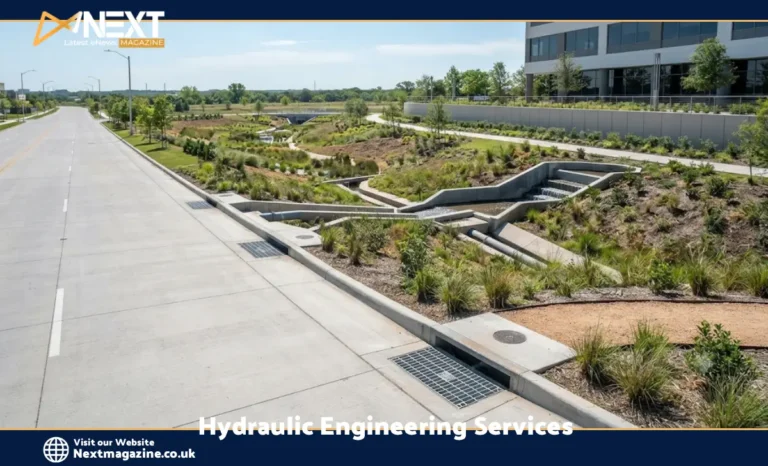
Every year, poor stormwater planning and outdated fluid systems cost communities and businesses billions of dollars in damage. Hydraulic engineering services exist to prevent that kind of loss before it happens.
Hydraulic engineering services cover the design, analysis, and management of systems that move or control fluids — water, hydraulic fluid, or air under pressure. These services show up almost everywhere: in the drainage system under a highway, the pump station behind a treatment plant, and the hydraulic press on a factory floor.
This guide breaks down what hydraulic engineering services actually include, the rules that govern them, what they cost, and how to pick the right provider for your project.
What Are Hydraulic Engineering Services?
Hydraulic engineering services help control how fluids behave inside built systems. That includes water moving through a stormwater pipe, hydraulic fluid powering a machine press, or wastewater flowing through a municipal sewer line. The goal is always the same: keep fluid moving where it’s supposed to go, at the right pressure and volume, without causing damage or breaking the law.
The field branches into several areas:
- Stormwater management — designing systems that handle rainfall runoff from roads, parking lots, and buildings
- Fluid power systems — hydraulic and pneumatic systems used in factories and heavy equipment
- Municipal utility infrastructure — water and wastewater systems that serve entire communities
- Flood control and water resources — large-scale systems like levees, dams, and channel improvements
Hydraulic engineering overlaps with civil and environmental engineering but focuses more narrowly on fluid behaviour. Most hydraulic engineers hold a civil, environmental, or mechanical engineering degree, and many carry a Professional Engineer (P.E.) license, which means they’ve passed state licensing exams and carry legal responsibility for their designs.
Core Principles of Hydraulic Engineering
Hydraulic engineers rely on a handful of core scientific principles to design safe, working systems.
Fluid mechanics basics cover pressure, flow rate, and velocity — the three measurements that determine how a fluid moves through a pipe, channel, or hose.
Engineers use established formulas to predict fluid behaviour. Manning’s equation estimates how fast water moves through an open channel. The Rational Method calculates peak stormwater runoff from a given site. Bernoulli’s principle explains how pressure and velocity trade off inside a closed system.
Systems generally fall into two categories:
- Open channel flow — water moving through a ditch, stream, or partially filled pipe, exposed to air
- Closed conduit flow — fluid moving through a fully sealed pipe or hose under pressure
Modern hydraulic engineers also lean on computer modelling software to simulate how a system will perform under different conditions before construction begins. For open-channel and flood studies, platforms like HEC‑RAS are common, while fluid power and component design frequently rely on AutoCAD Inventor, SIEMENS Solid Edge, and PARO HydroSym™ for dynamic circuit simulation. Finite Element Analysis (FEA) is also routinely applied to validate high-stress manifold and structural components under peak operating pressures.
Types of Hydraulic Engineering Services
Hydraulic engineering isn’t one single service — it’s a group of related specialities. Here’s how the main categories break down.
Stormwater Management and Drainage Design
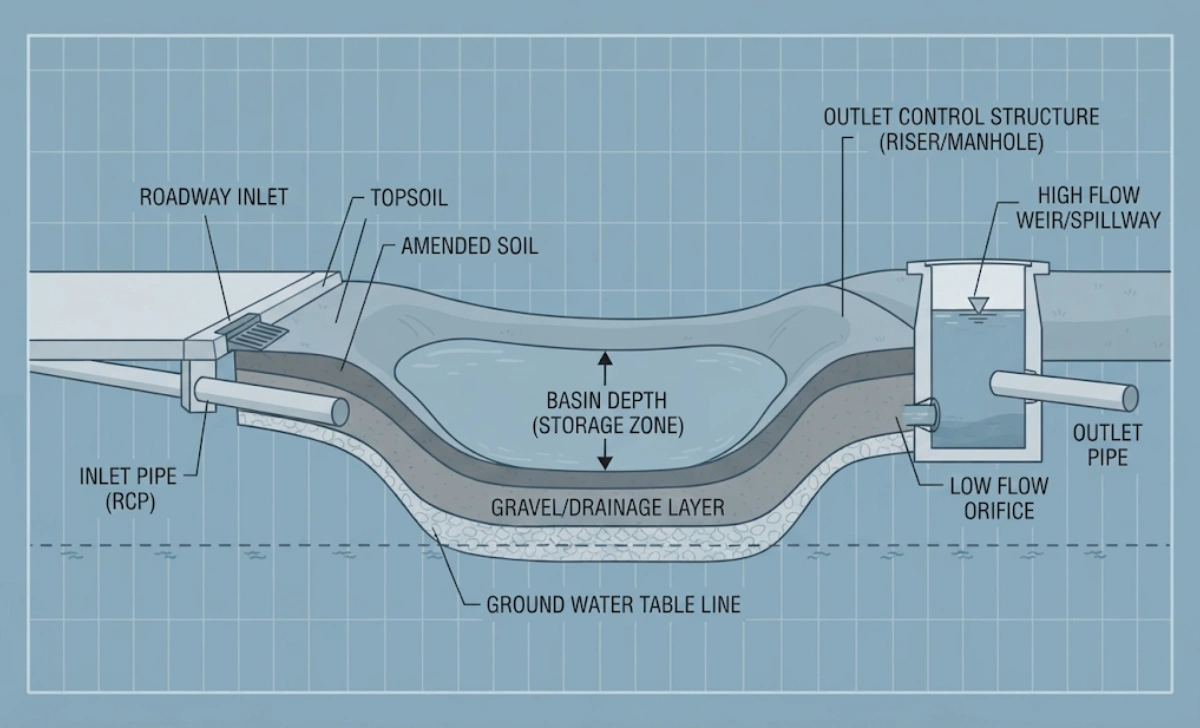
Stormwater management is one of the most common reasons people search for hydraulic engineering help. Any time a construction project adds pavement, rooftops, or other hard surfaces, it changes how rainwater moves across the land — and that change usually requires engineered controls.
Post-construction stormwater management refers to the permanent features built into a site to manage runoff long after construction wraps up, separate from the temporary erosion controls used during building.
A key part of this work is calculating contributing impervious area (CIA) — the total hard surface area that drains toward a single collection point. That number determines how large a detention pond, infiltration basin, or drainage pipe needs to be.
Fluid Power Systems Engineering
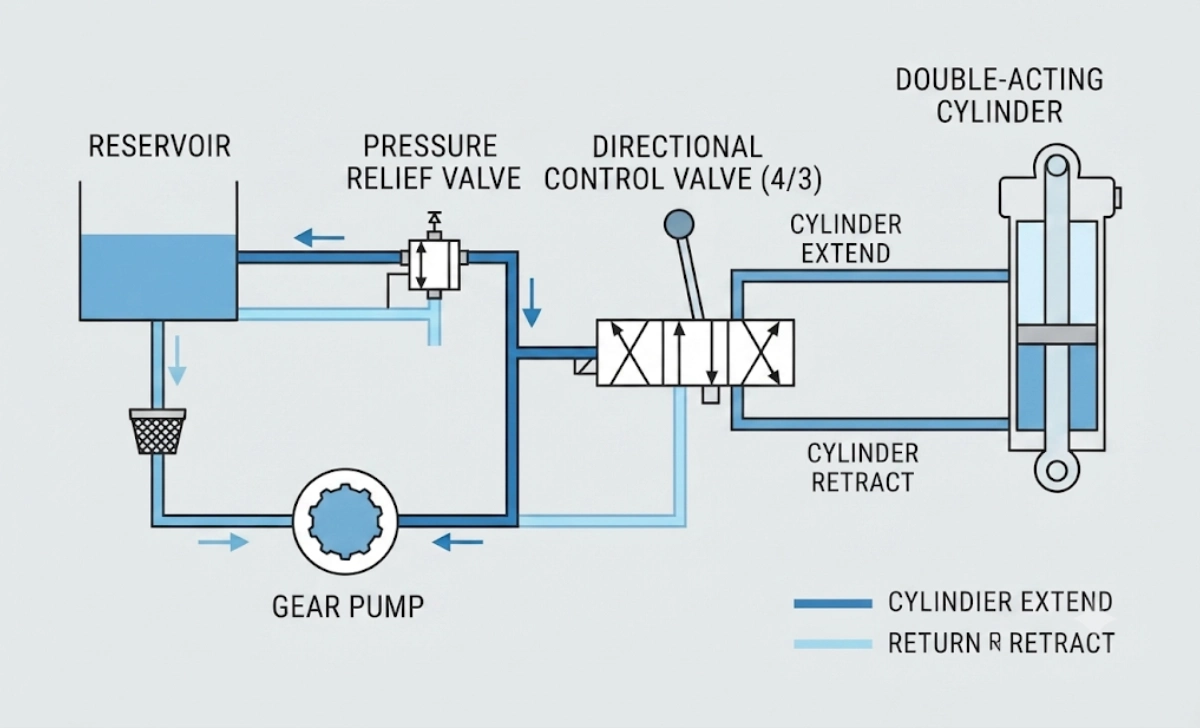
Fluid power engineering covers hydraulic and pneumatic systems used across manufacturing, construction equipment, and industrial automation. Hydraulic systems use pressurised liquid to generate force; pneumatic systems use pressurised air.
These services typically involve:
- Designing and troubleshooting hydraulic and pneumatic circuits, including open and closed‑loop architectures
- Selecting components like pumps, valves, cylinders, and actuators, with frequent specification of brands such as Bosch Rexroth and Danfoss for reliable performance
- Sourcing fluid conveyance equipment such as hoses, fittings, and filtration systems
- Integrating hydraulic systems with programmable logic controllers (PLCs) and motor control systems
Design work extends from compact manifold blocks and reservoir sizing to complex multi‑pump configurations. Engineering teams evaluate system architectures — choosing between fixed displacement pumps for continuous‑duty operation or load‑sensing and servo‑controlled pumps for applications that demand variable flow and precise pressure compensation.
Beyond new installations, a substantial portion of the work involves component‑level servicing: pump and motor rebuilding, cylinder honing and overhaul, valve re‑seating, complete system flushing, and high‑efficiency fluid filtering. Predictive condition monitoring — tracking pressure drift, temperature changes, and particulate contamination — helps identify wear patterns early, reducing unplanned downtime.
Hydraulic vs. pneumatic systems at a glance:
| Factor | Hydraulic Systems | Pneumatic Systems |
|---|---|---|
| Medium | Pressurised liquid (usually oil) | Pressurized air |
| Force output | Very high | Lower, but sufficient for many tasks |
| Precision | High, good for heavy, controlled motion | Fast, good for quick, repetitive motion |
| Typical use | Presses, heavy machinery, construction equipment | Assembly lines, sorting, light automation |
| Maintenance | Requires fluid monitoring, leak prevention | Generally simpler, fewer fluid concerns |
Choosing between the two — or combining them — depends on the force, speed, and precision a given application needs. A hydraulic engineer with fluid power experience can weigh those tradeoffs during the design phase rather than after equipment is already installed.
Municipal Utility Infrastructure Engineering
Municipal utility engineering supports the water and wastewater systems that keep a community running. This work includes planning, designing, and overseeing construction of capital improvement projects for public water and sewer systems.
Typical projects include:
- Water distribution and sewer line design, including force mains and trunk lines that convey flow across longer distances
- Septic-to-sewer conversion projects for growing communities
- Utility capacity analysis to plan for future development
- Water and wastewater master planning based on population growth projections
- Private development review, where engineers confirm a new subdivision or commercial project won’t overload the existing system
Specific infrastructure elements designed under this discipline include pumping stations, lift stations, and SCADA‑integrated control systems that allow remote monitoring and automated response to flow changes. Engineers also perform surge analysis (water hammer) to protect pipelines from damaging pressure transients caused by sudden valve closures or pump trips.
Utility engineers coordinate closely with state environmental agencies, since most public water systems operate under permits issued and enforced at the state level.
Growing communities often lean on this work heavily. As a town adds new subdivisions or commercial districts, its water and sewer systems need to keep pace, and utility engineers are the ones who model future demand, identify where capacity will run short, and design the upgrades needed to stay ahead of growth rather than reacting after a system fails.
Flood Control and Water Resource Engineering
Flood control engineering addresses larger-scale water management challenges, often at the watershed level rather than a single site. This includes flood risk modelling, levee and dam design, channel improvements, and streambank stabilisation.
These projects frequently intersect with environmental protection law, since work near rivers, wetlands, or other natural waterways can affect protected species and habitats. Engineers working in this space need to understand both hydraulic design and environmental compliance requirements together.
Flood control work also tends to require a broader, watershed-level view rather than a single-site design. A levee built in one location can shift flood risk downstream, so engineers model an entire drainage basin to understand how changes in one spot ripple through the rest of the system before recommending a design.
Regulatory Framework and Compliance Requirements
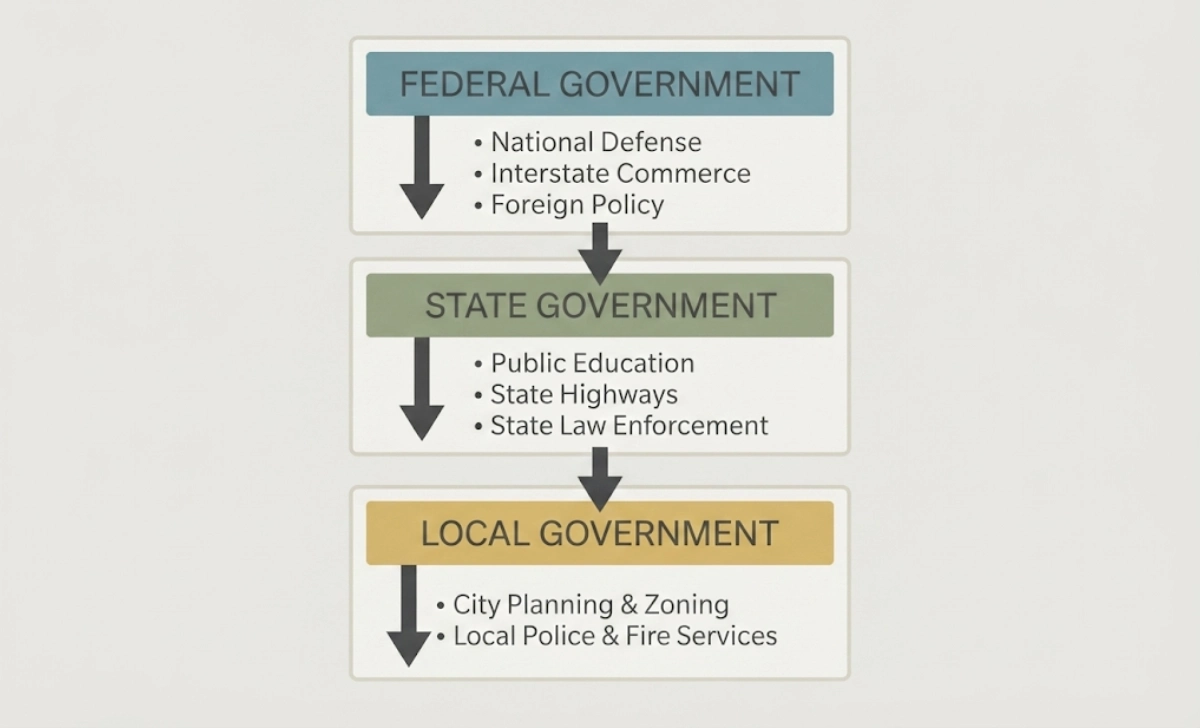
Regulatory compliance drives a large share of hydraulic engineering work, especially in stormwater and utility projects. Here’s how the rules stack up.
Federal level: The Clean Water Act (33 U.S.C. §1251 et seq.), passed in 1972, regulates discharges into jurisdictional waters and requires permits under the National Pollutant Discharge Elimination System (NPDES) for many projects. Projects near sensitive habitats may also need to comply with the Endangered Species Act, which can require a formal Biological Opinion before construction begins.
State level: State environmental agencies enforce their own water quality standards and permitting programs. States often issue Section 401 Water Quality Certifications and manage Underground Injection Control (UIC) systems for projects that involve stormwater infiltration.
Local level: Cities and counties frequently operate under Municipal Separate Storm Sewer System (MS4) permits, which set specific requirements for how stormwater is managed within city limits, including pollutant reduction targets known as Total Maximum Daily Loads (TMDLs).
Key terms worth knowing:
- Jurisdictional waters/waters of the state — bodies of water that fall under regulatory authority and require permits before nearby construction
- Regulatory instrument — any ordinance, rule, permit, or biological opinion that sets binding requirements for a project
Because these rules stack — federal, state, and local requirements often apply to the same project simultaneously — working with a provider who understands the full compliance picture saves significant time and rework.
Regulatory layers at a glance:
| Level | Typical Requirement | Governing Body |
|---|---|---|
| Federal | NPDES permits, Clean Water Act compliance | EPA, Army Corps of Engineers |
| Federal | Species and habitat review | U.S. Fish and Wildlife Service |
| State | Water Quality Certification, UIC permits | State environmental agency (e.g., DEQ, DEP) |
| Local | MS4 permit compliance, stormwater ordinances | City or county government |
A project rarely deals with just one of these layers. A highway drainage project, for example, might need a federal NPDES permit, a state water quality certification, and local MS4 compliance all at once — which is why permitting timelines often stretch longer than the design work itself.
Conclusion
Hydraulic engineering services touch nearly every part of the built environment, from the drainage system under a parking lot to the water lines running beneath an entire city. As infrastructure ages and climate patterns shift, the demand for skilled hydraulic engineering keeps growing — and so does the regulatory complexity around it.
These services aren’t something to shop for on price alone. Choosing a provider with the right licensure, specialisation, and regulatory knowledge protects your project from costly delays and failures down the road. If you’re planning a project that touches stormwater, fluid power, or utility infrastructure, start by defining your scope clearly, then reach out to a licensed provider for a consultation.
FAQs
What is the difference between hydraulic engineering and hydraulic engineering technology?
Hydraulic engineering is a professional discipline focused on designing and analysing fluid systems, usually requiring a bachelor’s degree and a P.E. license. Hydraulic engineering technology is a more hands-on field focused on installing, maintaining, and troubleshooting those systems, typically requiring an associate degree or certificate. Engineers design the systems; technologists build and service them.
What industries need hydraulic engineering services?
A wide range of industries rely on hydraulic engineering, including municipal water and wastewater utilities, transportation and highway infrastructure, manufacturing and semiconductor production, aerospace, defence, agriculture and irrigation, flood control, oil and gas, mining, and general construction. Any industry that manages fluid flow, stormwater, or fluid power systems needs this expertise at some point.
What regulations govern hydraulic engineering projects?
At the federal level, the Clean Water Act regulates discharges into jurisdictional waters and often requires NPDES permits. State environmental agencies enforce their own water quality and permitting rules, and local governments frequently apply Municipal Separate Storm Sewer System (MS4) requirements. Projects near sensitive habitats may also fall under the Endangered Species Act.
How long does a hydraulic engineering project take?
Timelines depend heavily on scope. A simple drainage design might take two to four months, while a full stormwater management plan for a large development could take six to eighteen months. Municipal utility master plans and flood control projects often span multiple years, largely due to the time needed for regulatory permitting.
What qualifications should I look for in a hydraulic engineer?
Start with an active Professional Engineer (P.E.) license, verified through your state’s licensing board. Beyond that, look for direct experience with projects like yours, familiarity with the regulations that apply in your area, hydraulic modelling software skills, and a clear commitment to professional ethics.
