
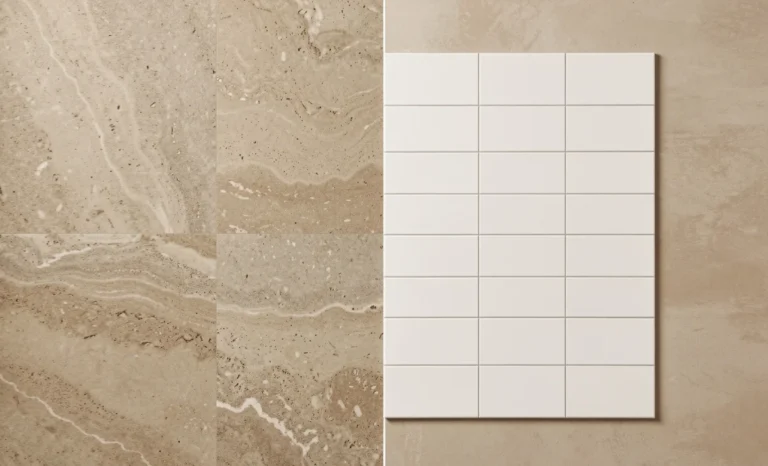
There are tile combinations that just work, not in the TikTok, influencer, ‘saw-it-on-the-internet’ kind of way, but in the completely appropriate, comprehensive, every surface belongs here kind of way. The reality is that certain options have been time-tested through decades of interior design, and not out of laziness but comfortable familiarity, designers continuously return to them. If one can understand how and why certain pairings come together, a poorly executed renovation can be avoided.
Why It Makes Sense to Think About Pairings
Most people will put a bulk of effort into finding one tile and assume the rest will come together. It rarely does. It’s the relationship between two tiles, or three or four, that floors, walls, and transitional areas boast that make it a cohesive space rather than a patchwork of individual decisions.
For anyone mid-renovation and feeling overwhelmed by options, browsing a specialist range of tiles melbourne, or elsewhere, can be genuinely useful for seeing how different finishes and formats sit next to each other in real life, rather than trying to picture it from swatches alone.
However, before visiting a showroom it’s best to get acquainted with the combinations most trusted by designers.
The Ultimate Pairing: Large Format Stone-Look + Slim Metro Tiles
This is perhaps one of the most seen pairings in bathrooms and kitchens for good reason. A large format tile, usually 600x1200mm space, marble-look or travertine-look, as a floor and slim rectangular metro tiles as a wall boast a fine balance between assertive and reserved.
While the floor does the visual heavy lifting, the wall tiles remain clean and do not compete with something so busy. As a result, one finds themselves looking at the combination and appreciating the timeless approach without it feeling outdated. Instead, with consistent or extremely close grout colours, or black contrasting grout on the metro tiles, keeps this pairing occupied with an unnecessary busyness.
Textured Feature + Plain Field Tile
Now it gets interesting. A textured tile, whether handmade ripple, fluted, tactile stone—from feature to field paired with a flatter field option is one of the best ways to implement depth without committing to pattern everywhere.
Designers pride themselves on making this pairing work as they use it in shower recesses and cut downs behind vanities as well as kitchen splash backs running behind open shelves that enforce depth without overwhelming the viewer. The easiest way to avoid disaster is to ensure that tones are from the same family; therefore, a warm sandstone textured tile next to a cool straight white field feels awkward. Same warmth, different texture will cause a harmonious existence.
Metro Brick + Gloss Black or Blue Tiles
Although neither are considered part of the most trustworthy, a conventional subway tile pattern meets gloss black or blue tiles typically considered for accents. However, when paired on walls inside laundry rooms or bathrooms on floors, homeowners are left with something graphic and intentional.
People may not think about this initially in their renovations as an option, which isn’t terribly tile-on-tile, but eventually once discovered, it’s hard to unsee how much it brings to the table.
Dark Grout + Light Tile
While this is not technically a tile-on-tile pairing it works as one from an aesthetic perspective. Light tiles, soft grey, off-white tiles, pale stone-look, paired with dark charcoal or black grout create an idealized grid that gives structure to a space.
It’s bold but not overwhelming, especially in floors. In laundry rooms or bathrooms where white subway tiles combine with dark grout there is something graphic and intentioned about it. Not many people realize this is an option at first glance during renovations, but once pointed out they can’t unsee how much it adds aesthetic value.
Before concluding, there needs to be a cautionary acknowledgment that light tiles on walls paired with dark grout take confidence to step forward with since it’s not easy to adjust down the line. But applied to floors it’s incredibly practical as it hides wear and maintains integrity over time.
Mixing Formats in The Same Tone Family
One final option is much less obvious but extremely effective; using two different tiles, mosaic and larger format, for example, in the same tone family creates interest without relying on pattern or conflicting contrast.
Designers will use this in bathrooms where a floor might boast a small-scale mosaic in soft grey while walls boast larger format in slightly tonal distinction. This feels rich and thoughtful, and it makes it obvious that real effort was put into the renovation.
Ultimately, the best pairings that come time and time again from reputable interiors aren’t complicated; they’re just well-matched. The tones, textures and scales must get over one another for a bathroom to feel finished versus simply tiled.
