
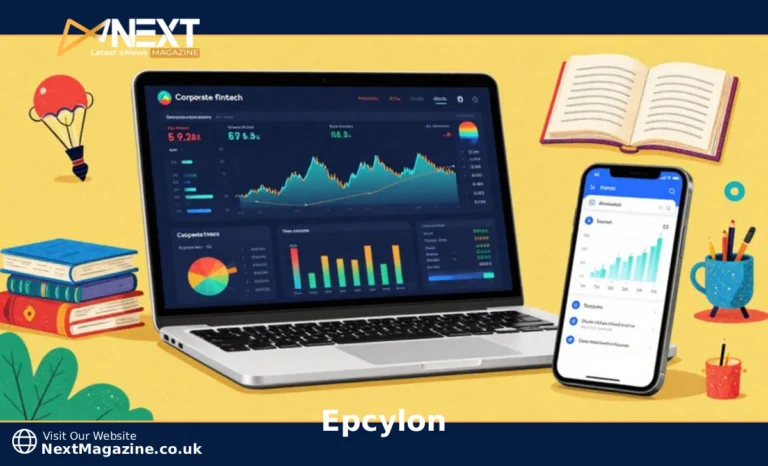
Epcylon Technologies, now operating as QuantGate Systems, develops AI-powered trading software that analyzes market sentiment instead of price charts. Their flagship products, Stealth Trader and Pilot Trading, use machine learning algorithms to identify trading opportunities across stocks, forex, futures, and crypto markets.
The company claims its technology processes over 5 billion calculations per second to detect shifts in trader psychology. Whether these tools deliver on their promises depends on understanding how they work and who benefits most from using them.
What Is Epcylon Technologies
Epcylon Technologies launched in 2009 as a fintech startup focused on bringing artificial intelligence to retail trading. The company built its reputation around a controversial idea: that you could predict market movements by analyzing trader behavior rather than studying price charts.
In 2019, the company rebranded as QuantGate Systems Inc., changing its stock ticker from PRFC to QGSI. Despite the name change, traders still search for information using the original Epcylon brand name.
The company operates through two main product lines. Stealth Trader serves as their desktop platform for active traders. Pilot Trading functions as their mobile app with automated signal capabilities. Both products claim to use the same underlying AI technology, just packaged for different user preferences.
Leadership includes Leonardo Cardoso as CEO and Doug McKay as Director of Trading and Education. The company partnered with major brokers, including Questrade and Interactive Brokers, to provide direct trading integration.
How Epcylon’s AI Trading Technology Works
Traditional technical analysis looks at price patterns, moving averages, and chart formations. Epcylon takes a different approach called sentiment-based trading.
The system analyzes order flow data to measure what the company calls “market participant perception.” This means tracking where traders place their orders, how quickly they execute, and whether they show commitment or hesitation.
Order flow analysis examines the electronic order book in real time. When large institutional orders appear at specific price levels, the software flags these as potential support or resistance zones. When retail traders pile into a position at the same time, the algorithm may interpret this as a contrarian signal.
The company bases its approach on mathematical psychology models. These models attempt to quantify emotional states like fear, greed, and uncertainty by measuring trading patterns. For example, rapid order cancellations might indicate nervousness, while steady accumulation suggests confidence.
Epcylon claims its servers perform 5 billion calculations per second to process this data. The number sounds impressive, but what matters more is whether those calculations translate into profitable trade signals. The company has published limited third-party verification of its performance claims.
The “chart-free” methodology means the software doesn’t rely on candlestick patterns or traditional technical indicators. Instead, it generates buy and sell signals based purely on behavioral analysis. This represents a fundamental departure from how most retail traders approach markets.
Stealth Trader Platform Features
Stealth Trader runs as downloadable software for Windows and Mac computers. The interface shows real-time sentiment indicators instead of price charts, though users can toggle chart views if they prefer traditional analysis.
The platform covers six major asset classes:
- Stocks (U.S. and international exchanges)
- Forex pairs (major and minor currencies)
- Futures contracts (commodities, indices, bonds)
- Cryptocurrency (Bitcoin, Ethereum, major altcoins)
- Options (equity and index options)
- ETFs (sector, commodity, and leveraged funds)
Integration with Questrade and Interactive Brokers allows direct order execution from within the platform. You connect your brokerage account through API credentials, then place trades without switching between applications.
The sentiment display uses color-coded meters that shift from green (bullish sentiment) to red (bearish sentiment). Traders can set custom alert thresholds to notify them when sentiment reaches extreme levels.
One notable feature: the platform tracks “trader commitment” by analyzing order modifications. If traders constantly adjust their limit orders, the system interprets this as weak conviction. Steady orders without modification suggest a stronger commitment to the position.
Pilot Trading App Capabilities
AI Signals Mode
Pilot Trading brings Epcylon’s technology to mobile devices through iOS and Android apps. The AI Signals Mode, launched in 2023, represents their push toward automated trading recommendations.
The app generates real-time alerts when the algorithm detects high-probability setups. Each signal includes:
- Entry price recommendation
- Suggested stop-loss level
- Target profit zone
- Confidence rating (percentage score)
- Expected hold time
Traders receive push notifications on their phones when new signals appear. The app claims to filter out low-quality setups by applying multiple confirmation layers before sending alerts.
Risk management tools include position sizing calculators based on account equity and maximum drawdown settings. Users can adjust their risk tolerance, and the app will scale position sizes accordingly.
Demo and Simulation Tools
The practice environment mirrors live trading without risking real money. New users can test strategies against historical data or paper trade in real-time market conditions.
Backtesting shows how the AI signals would have performed during past market periods. You can select specific date ranges, adjust parameters, and review detailed trade logs. The simulation includes realistic spread costs and slippage to avoid overly optimistic results.
The learning curve varies by experience level. Traders familiar with algorithmic systems typically adapt within a few days. Complete beginners may need several weeks to understand how sentiment signals differ from traditional technical analysis.
Pricing and Subscription Models
QuantGate Systems offers tiered pricing based on feature access and market coverage.
The basic subscription starts at $99 per month and includes access to stock market signals only. Mid-tier plans at $199 per month add forex and futures coverage. The premium tier costs $299 monthly and unlocks all six asset classes plus advanced backtesting tools.
Annual subscriptions provide a discount, reducing the monthly cost by roughly 20%. A 14-day free trial gives new users access to all features before committing to a paid plan.
White-label solutions exist for institutional clients who want to integrate the technology into their own platforms. Pricing for these partnerships is not publicly disclosed.
The company previously offered a demo mode with limited historical data access. Current policy requires a subscription to access real-time signals, though the 14-day trial serves as an extended test period.
Performance Data and Results
Epcylon has published case studies showing Sharpe ratios between 1.8 and 2.4 across different market conditions. A Sharpe ratio measures risk-adjusted returns—higher numbers indicate better performance relative to volatility.
The company’s marketing materials cite win rates ranging from 58% to 67%, depending on the asset class. Forex signals reportedly show the highest accuracy, while cryptocurrency signals have the most variance.
Independent verification of these claims remains limited. The company has not submitted to third-party audits from recognized financial research firms. User testimonials on their website show positive results, but these represent selective examples rather than comprehensive data.
One challenge with evaluating any trading system: past performance doesn’t guarantee future results. Market conditions change, and algorithms that worked during trending markets may struggle in choppy, range-bound environments.
The lack of transparency around losing trades raises questions. Most legitimate trading systems publish full track records, including drawdowns and consecutive losses. Epcylon’s public data focuses heavily on winning trades and best-case scenarios.
Who Should Use Epcylon’s Trading Software
Active day traders who prefer systematic approaches over discretionary decisions may find value in sentiment-based signals. The technology works best for traders who can monitor positions during market hours and execute quickly when alerts trigger.
Institutional traders at hedge funds and proprietary trading firms have shown interest in order flow analysis. Some firms use similar sentiment models as one component within broader trading strategies.
The system may not suit traders who rely exclusively on fundamental analysis or long-term buy-and-hold strategies. The signals focus on short-to-medium-term moves lasting hours to days, not months or years.
Experience requirements are moderate. You need a basic understanding of market mechanics, order types, and risk management. Complete beginners should start with the demo environment and paper trading before risking real capital.
Geographic restrictions apply in certain jurisdictions. Check whether your country allows algorithmic trading tools and whether local regulations require specific disclosures or registrations.
Epcylon Compared to Traditional Trading Approaches
Chart-free trading removes the reliance on technical patterns like head-and-shoulders, double tops, or moving average crossovers. Proponents argue this eliminates subjective interpretation and reduces false signals from chart formations.
Traditional technical analysts counter that price action contains all available information. They view sentiment analysis as just another indicator, not a complete replacement for established methods.
AI sentiment analysis offers advantages in processing speed and data volume. Human traders cannot monitor order flow across hundreds of instruments simultaneously. Algorithms handle this task without fatigue or emotional bias.
Limitations include the black-box nature of the system. Users don’t see the exact calculations behind each signal, making it difficult to verify accuracy or understand why specific trades were recommended.
Algorithmic trading also faces execution challenges. By the time retail traders receive a signal and place an order, institutional traders with faster connections may have already moved the market. This latency gap can reduce actual returns compared to backtested results.
The biggest risk: over-reliance on automation without understanding market context. Sentiment models may miss fundamental catalysts like earnings reports, central bank announcements, or geopolitical events that override technical factors.
