
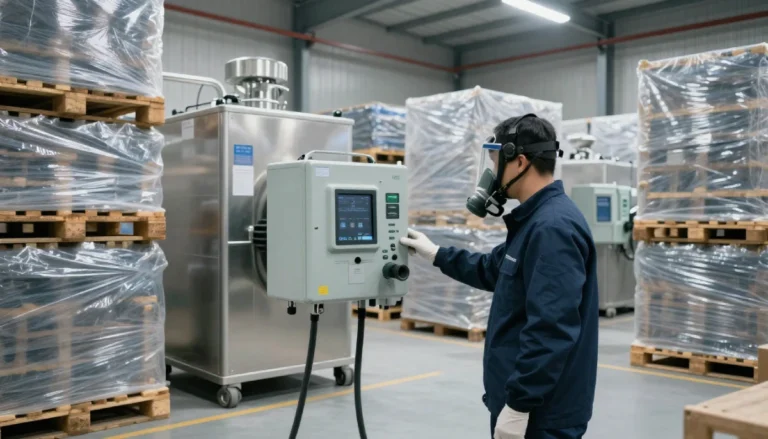
When operating a warehouse, food processing plant, or anything on that large scale, you’re faced with challenges that most business owners never see coming. Pest control is one of those things that seems innocuous until you’re trapped in a 50,000 square foot facility with millions on the line.
Pest control for offices and small retail spaces works just fine. Someone comes in monthly, sprays the perimeter, and checks some traps; good to go. But when you’re operating large scale? That method fails sooner or later.
That’s why commercial fumigation exists. Certain pest issues require a completely different solution. Not because they’re more aggressive or stronger pest populations, but because of the reality of what happens in large spaces and how hard it is for traditional solutions to reach them.
Why Large Facilities Face Different Pest Challenges
Large facilities are hard to protect—fact. There are multiple entry points. Loading docks are left wide open for hours at a time. Gaps surrounding utility lines. Doors that don’t shut properly because they open and shut dozens of times a day.
Pests need only the smallest space through which to enter. Once inside, the world is their oyster as they hide behind stacked pallets, inside corrugated cardboard packaging, in wall voids and ceiling spaces, between stored items. What’s worse? They breed.
A few beetles in a grain storage facility can turn into an infestation within weeks. By the time someone realizes there are beetles in the grain, there are already thousands present as they embed themselves inside cracks in the floor and deep inside the grain, within machinery that cannot easily be disassembled.
Standard solutions cannot touch those infestations. A simple spray on walls and floors may kill what’s visible above, but it does not solve the problem.
What Makes Fumigation Different
Fumigation works because it permeates the entire environment with gas. Not spray, not dust—gas that fills every crevice, crack, and void in the build. It gets behind walls, into packaging, through stacks of product, wherever air can go.
For those operations that need to control stored materials or have infestations, this commodity fumigation in St. Louis, MO, company offers the type of comprehensive service that surface applications simply cannot compete with. The fumigant penetrates wherever pests are.
That’s the point. Not to spray surfaces and hope pests crawl over it. The gas does the work by being everywhere at once.
This is especially critical for those businesses that can’t have any pest presence. Food manufacturers. Pharmaceutical warehouses. Companies looking to ship items internationally that require pest control certifications. A single contaminated shipment can lead to rejected contracts, regulatory fines, or loss of major clientele.
The Process Actually Makes Sense
First, seal off the entire facility—think industrial tarps, specialized sealing tools and equipment, and serious attention to detail. Once it is sealed, the fumigant is released into the area and held for a designated period of time.
For how long? It depends on what’s being treated, temperature extremes (or lack thereof), space size, the pests’ nature, and how deep they are in their products or structures. Some applications take 24 hours. Some require more time.
Whatever time is designated, pests die in all life stages—from eggs that haven’t yet hatched to larvae embedded within products to adults hiding in cracks. Fumigation exposes all stages.
Then aeration occurs, wherein the area is ventilated, and fumigant is let out into the open air, where professionals constantly measure gas levels to ensure safety before people return. Residue is not left behind on surfaces or products; the gas simply dissipates once aired out correctly.
When Fumigation Becomes Necessary
Most facilities don’t go straight to fumigation—they utilize standard pest control first and rightly so. Monthly service should stave off issues and catch potential problems in earlier stages. This works unless it doesn’t.
Fumigation becomes necessary where standard solutions fail to capture the issue—or when you’re finding beetles in your grain instead of just at the loading dock, or when your export gets rejected due to pest detections, or when repeat treatments fail to contain an issue or if you’re taking over a new warehouse and want to start fresh.
Some facilities utilize fumigation for proactive means—before introducing new products into a facility or before sending internationally (many countries ask for fumigation certificates). After discovering one potential contaminated lot and wanting to make sure there’s nothing else.
It all comes down to risk—and what it costs your business to contend with pest issues.
The Business Impact You Can’t Ignore
Product loss is clear—contaminated stock gets tossed—but that’s only the tip of the iceberg.
Imagine a food processing center sending out contaminated products. You’re looking at recalls, health department investigations, customers who no longer trust you again—and a strike that could take years to restore.
Or a warehouse that fails inspection pre-international shipment. The container sits at port racking up charges as you scramble to fix the problem—the buyer decides to cancel; good luck getting that client back.
Fumigation comes with some time down and expectations—but compare a day or two of scheduled treatment versus weeks of dealing with a crisis. Compare treatment costs to what it costs to lose one major client or fail an audit with an international regulatory authority.
The math isn’t even close.
Keeping Operations Running Smooth
Professional fumigation services recognize that shutting down facilities costs money and plans treatments around your schedule—during down times, scheduled maintenance shut downs, holidays or times of lower stocks.
The idea is not to create additional problems from an otherwise productive operation but instead to maintain a successful operation while treating for pests properly with due diligence, from prep work to application to monitoring and testing for clearance.
The reality is that large operations pose large pest dangers. Regular pest control staves off problems and manages minor issues. But when you need comprehensive eradication or are faced with high-stakes situations, fumigation is comprehensive enough to match what’s really at risk. It’s not overkill—it’s simply doing what’s right based on the problem at hand.
