
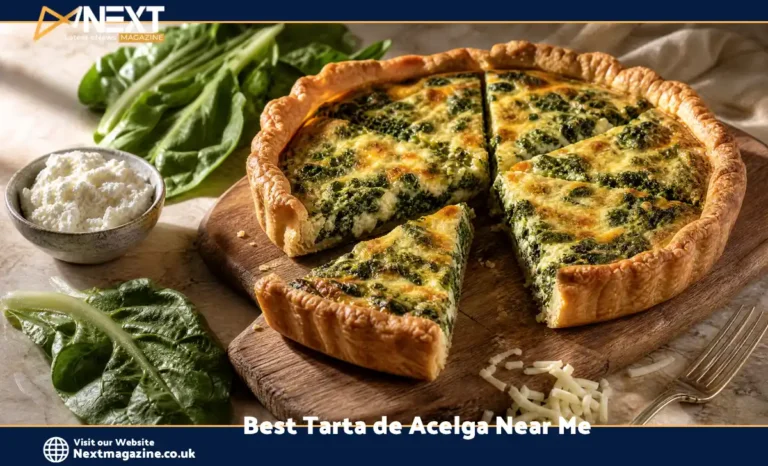
Tarta de acelga is a traditional savory tart made with Swiss chard, eggs, and cheese in a flaky pastry crust. Popular in Argentina, Peru, and Spain, it appears on bakery shelves and restaurant menus across Latin communities in the United States. To find the best tarta de acelga near you, check Latin bakeries, Argentine restaurants, and food delivery apps like Grubhub or DoorDash.
What Makes Tarta de Acelga Special
Tarta de acelga has earned its place as one of the most beloved savory pastries in Latin American and Spanish cooking. The name translates directly to “Swiss chard tart,” but the dish is far more than its simple name suggests.
At its core, the tart combines tender Swiss chard with a rich filling of eggs, cheese, and cream, all baked inside a buttery pastry shell. Some versions use a shortcrust pastry. Others use puff pastry or even bread as the base. The result is a golden, satisfying dish that works for breakfast, lunch, dinner, or as a snack.
What sets it apart from other vegetable-based tarts is its balance. The earthy flavor of chard pairs with the richness of cheese and eggs without becoming heavy. Each bite gives you something savory, slightly creamy, and deeply comforting.
The dish traces its roots to Spanish colonial cooking, where vegetable tarts were common in home kitchens. Over centuries, it traveled to South America and took on regional identities. Today, you will find distinct versions in Argentina, Peru, Uruguay, and Spain, each reflecting local ingredients and preferences.
Regional Versions Worth Knowing
Not all tarta de acelga is the same. The filling, crust, and seasoning change depending on where the recipe comes from. Here are the versions you are most likely to encounter.
Argentine Tarta de Acelga
In Argentina, the tart is a staple of bakery culture. Argentine bakeries, called confiterías, sell individual slices alongside empanadas, medialunas, and other savory items. The Argentine version typically uses a shortcrust or tart pastry filled with Swiss chard, onions, eggs, and a mix of mozzarella and ricotta cheese. Some recipes add a pinch of nutmeg for warmth.
Argentina’s bakery scene remains one of the most active in the Americas. The country’s dense network of neighborhood bakeries means tarta de acelga is rarely more than a short walk away in most Argentine cities. In the United States, Argentine bakeries in neighborhoods like Union City, New Jersey, and parts of South Florida carry on this tradition, making fresh tarts available to local communities.
Peruvian Pastel de Acelga
Peru takes a slightly different approach. Peruvian pastel de acelga often includes bread pieces in the filling, which absorb the egg and cream mixture during baking. This gives the interior a soft, almost custard-like texture. Recipes from Peru Delights describe a version called timbal de espinacas, which follows the same technique using spinach instead of chard.
Peruvian versions tend to be seasoned more boldly, sometimes with cumin or ají amarillo, depending on the cook. The crust is often a simple butter-based pastry, or the dish may be made entirely without a crust and baked in a water bath. Peruvian bakeries in cities with large South American communities, such as Paterson, New Jersey, and Falls Church, Virginia, frequently serve pastel de acelga as part of their daily rotating menu.
Spanish Tarta de Acelga
In Spain, Swiss chard tarts appear in northern regions, especially Asturias and the Basque Country, where vegetable-based pastries have deep roots. Spanish versions often use a thinner, crisper pastry and may include cured ham or chorizo alongside the chard. The cheese used is frequently a local variety such as Manchego or Tetilla.
Spain’s connection to fresh, high-quality produce extends well beyond tarts. The country is Europe’s leading blueberry producer, with Huelva province alone supplying over 94% of national output. You can read more about Spain’s agricultural strength and how its farming infrastructure supports a culture of fresh, locally sourced ingredients that also benefits dishes like tarta de acelga.
How to Find the Best Tarta de Acelga Near Me
Searching for “best tarta de acelga near me” puts you on the right track, but a few extra steps will help you find the strongest options in your area.
Check Latin bakeries first. Argentine and Uruguayan bakeries are your most reliable source. These shops make tarts fresh, often daily, and sell them by the slice or whole. Look for bakeries in neighborhoods with established Latin American communities. Cities like New York, Miami, Los Angeles, Houston, and Chicago all have well-known Argentine bakery scenes.
Use food delivery apps. Grubhub lists bakeries like Argentina Bakery Inc. in Union City, New Jersey, which offers delivery and specializes in Argentine baked goods. Searching “tarta de acelga” or “Swiss chard tart” on apps like Grubhub, DoorDash, or Uber Eats can surface options you might miss through a regular web search.
Visit farmers’ markets. Some Latin food vendors sell tarta de acelga at weekend markets, especially in cities with large South American populations. The advantage here is freshness and the chance to talk directly with the maker about ingredients and technique.
Ask at Argentine restaurants. Even if tarta de acelga isn’t listed on the main menu, many Argentine and Spanish restaurants offer it as a daily special or appetizer. Servers and chefs are usually happy to tell you when it’s available.
Search for “pastel de acelga” as well. Some bakeries, especially Peruvian ones, list the dish under its Peruvian name. Expanding your search terms gives you more results and a wider range of styles to try.
What to Look for in a Great Tarta de Acelga
Once you find a place that serves tarta de acelga, use these signs to judge whether it’s worth your time.
The crust should be flaky and golden. A soggy or pale crust suggests the tart was underbaked or reheated poorly. Good pastry holds its shape when sliced and has a crisp bite.
The filling should be set, not runny. The egg and cheese mixture should hold together when you cut a slice. If it spills out like liquid, the tart wasn’t baked long enough. A slight wobble in the center is acceptable; it will firm as it cools.
You should taste the chard. The Swiss chard shouldn’t disappear behind cheese and cream. A well-made tart lets the earthy, slightly mineral flavor of the greens come through. The chard should be tender, not stringy or tough.
Cheese quality matters. Ricotta should be creamy, not grainy. Mozzarella should melt cleanly. If the cheese tastes rubbery or bland, it likely came from a low-quality source.
Freshness is the deciding factor. A tart made that morning will always beat one that has been sitting in a display case for two days. Ask when it was baked. Bakeries that make tarts daily are your best bet.
Bakeries and Restaurants Serving This Dish
While availability depends on your location, a few types of establishments consistently serve quality tarta de acelga.
Argentina Bakery Inc. in Union City, New Jersey, is a well-known spot for Argentine baked goods, available through Grubhub delivery. Bergenline Avenue in Union City is home to several Latin bakeries, making it one of the strongest areas to search in the northeastern United States.
Latin bakeries in Austin, Texas, such as Latin Bakery Austin, specialize in Latin American baked goods including alfajores and seasonal pastries. Bakeries like this often take orders for savory tarts on request, even when the item isn’t listed on their public-facing menu.
Peruvian bakeries and restaurants in cities with significant Peruvian communities frequently serve pastel de acelga as a daily rotating item. Paterson and Union City in New Jersey, Falls Church in Virginia, and parts of Los Angeles and Houston are all strong areas to check.
Spanish restaurants in neighborhoods with Basque or Asturian populations may list tarta de acelga or closely related dishes. In the United States, Boise, Idaho, and parts of the San Francisco Bay Area have historical Basque communities that maintain traditional foodways, including savory vegetable tarts.
Your search may also lead you to Latin American food brands that sell frozen versions. While these won’t match a fresh bakery tart, they can fill the gap when no local option exists.
Making Tarta de Acelga at Home
If you can’t find a local source, making tarta de acelga at home is a practical alternative. The dish requires common ingredients and basic kitchen skills.
Ingredients you will need:
- 1 pound Swiss chard (or spinach as a substitute)
- 1 pre-made pie crust or shortcrust pastry
- 3 large eggs
- 1 cup ricotta cheese
- 1 cup shredded mozzarella
- 1 small onion, diced
- 2 tablespoons butter
- Salt, pepper, and a pinch of nutmeg
Steps:
- Preheat your oven to 350 degrees Fahrenheit.
- Wash and blanch the Swiss chard for one minute. Drain well, pressing out excess water. Chop it roughly.
- Melt butter in a pan over medium heat. Cook the onion until soft, about five minutes.
- In a bowl, combine the chopped chard, cooked onion, eggs, ricotta, mozzarella, salt, pepper, and nutmeg. Mix until smooth.
- Line a tart pan with the pastry. Pour in the filling.
- Bake for 35 to 40 minutes, until the center is set and the top is golden.
- Let the tart cool for at least 10 minutes before slicing.
This recipe serves six to eight people and keeps well in the refrigerator for up to three days. If you prefer a crustless version, Peruvian-style timbal de espinacas uses bread pieces instead of pastry. Cooking with intentional, structured approaches to your kitchen routine, including planning a dish like this ahead of time, makes the process smoother and more enjoyable.
Nutritional Benefits of Swiss Chard
Swiss chard is one of the most nutrient-dense leafy greens available. Including it in a tart is a practical way to get its benefits without eating a plain salad.
One cup of cooked Swiss chard provides:
- 214% of the daily recommended intake of vitamin K
- 53% of vitamin A
- 18% of vitamin C
- Significant amounts of magnesium, potassium, and iron
According to the USDA FoodData Central database, Swiss chard also contains betalains, which are antioxidant compounds that give the stems their distinctive red, yellow, and orange colors. Researchers have studied these compounds for their anti-inflammatory properties.
A 2023 review published in the journal Nutrients found that diets rich in leafy greens, including Swiss chard, were associated with improved cardiovascular markers and better gut health outcomes. For athletes and active individuals, the magnesium content in chard supports muscle function and recovery, a topic covered in detail in our supplement management guide.
Swiss chard also provides dietary fiber, which supports digestion. A single serving of tarta de acelga gives you a meaningful portion of these nutrients in a format that actually tastes good.
Frequently Asked Questions
What is the difference between tarta de acelga and pastel de acelga?
The two names refer to the same basic dish. “Tarta” is the term used in Argentina and Spain, while “pastel” is more common in Peru and other parts of South America. The ingredients and technique are very similar, though regional seasonings and crust styles vary.
Can I use spinach instead of Swiss chard?
Yes. Spinach is a common substitute and works well in the same recipe. The flavor will be milder and slightly sweeter than chard. Many Peruvian recipes use spinach or a mix of both greens.
Is tarta de acelga served hot or cold?
It tastes best warm or at room temperature. Many bakeries sell it at room temperature, which lets the filling set properly. You can reheat slices in a 300-degree oven for 10 minutes to refresh the crust.
Where can I order tarta de acelga online?
Grubhub and similar delivery platforms list Argentine bakeries that sell fresh tarts. Search for bakeries in your area or check if any Latin food delivery services ship frozen versions nationally.
How long does tarta de acelga last in the fridge?
Properly stored in an airtight container, it lasts three to four days in the refrigerator. Reheat individual slices in the oven rather than the microwave to preserve the crust texture.
