

Table of Contents
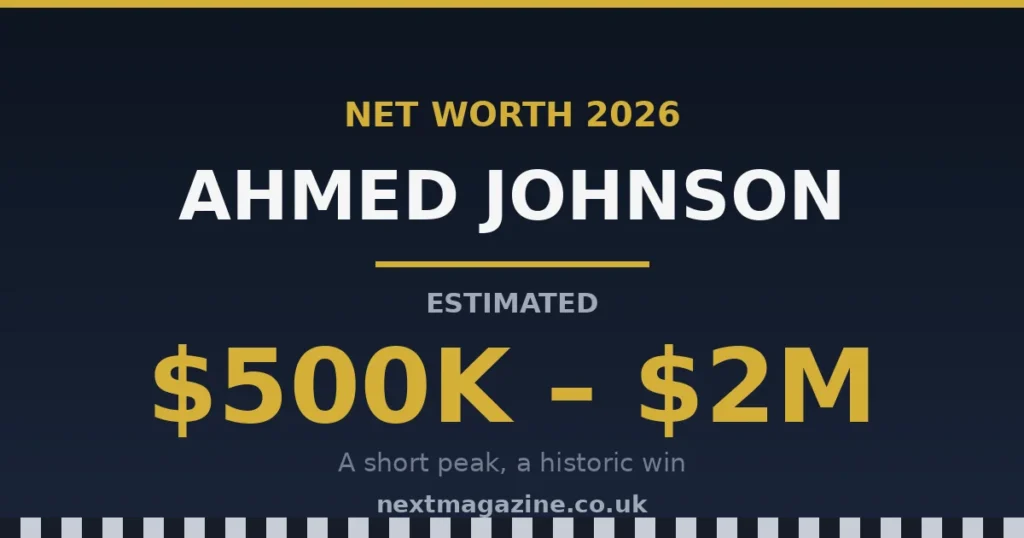
Quick Answer: Ahmed Johnson is an American former professional wrestler with an estimated net worth of $500,000 to $2 million in 2026. Published trackers disagree wildly — from $100,000 to $12 million — and no major outlet has verified a figure. His wealth traces to a short WWF peak in the mid-1990s, when he became the first African American singles champion in company history.
On June 23, 1996, at the MECCA Arena in Milwaukee, Ahmed Johnson pinned Goldust to win the Intercontinental Championship. He was the first African American to hold a singles title in the World Wrestling Federation. For about eighteen months, he was one of the most pushed acts in wrestling.
Then injuries ended it. His WWF run lasted barely three years, a brief WCW stint followed in 2000, and his final match came in 2003. That short window is the whole financial story. Modern wrestlers build wealth over decades of contracts, merchandise royalties, and Legends deals — a money machine that barely existed in Johnson’s day. He left before it arrived.
Net Worth at a Glance
From Football to the Ring
He was born Anthony Norris on June 6, 1963, in Kokomo, Indiana. (Some trackers list 1970, but most biographies give 1963.) He played college football and later had a brief stint with the Dallas Cowboys, according to biographical profiles.
When football did not work out, he turned to wrestling. He trained under veterans Skandor Akbar and Ivan Putski and made his professional debut in 1989. He ground through the independents for years, including a run in the Global Wrestling Federation as Moadib in the early 1990s.
The WWF called in 1995. He debuted that October, and the company pushed him hard from the start — a rare level of investment in a newcomer. Within months he was working main-event programs.
The WWF Peak (1995–1998)
The peak was intense but brief. The promotion put him in a heated feud with Goldust and made him the original leader of the Nation of Domination, one of the most talked-about factions of the era. In 1996 he was ranked No. 5 in the PWI 500 and named the publication’s Most Improved Wrestler of the Year.
The defining night came on June 23, 1996. At the King of the Ring event in Milwaukee, he defeated Goldust for the Intercontinental Championship — the first African American to hold a WWF singles title. He also won the company’s first Kuwait Cup tournament that year and picked up a Slammy Award.
Here is a detail that matters for the money story: he was never beaten for the title. A kidney injury forced him to forfeit it. The injuries piled up through his hardest-pushed years, and his WWF run ended in February 1998 — barely three years after it began. Champions earn more — bigger guarantees, better house-show percentages, more merchandise — so the title run was his highest-paid period. It lasted months, not years.
Contract Details
No contract figure from Johnson’s career has ever been made public. WWF deals of that era were guaranteed contracts with live-event percentages and merchandise cuts, but the numbers stayed private. An honest table therefore looks like this:
For context, reporting on mid-1990s WWF deals consistently places pushed mid-card wrestlers in the low six figures per year, with top champions earning more. At his hottest, Johnson sat above the mid-card tier. These are era benchmarks, not his personal numbers — his actual pay was never reported.
The WCW Stint and Retirement
In 2000 he resurfaced in WCW as Big T, one half of Harlem Heat 2000. The run lasted only months and paid a tag-team wage well below his WWF peak. WCW itself was collapsing — the company would be bought by the WWF the following year.
His final match came on November 8, 2003. By the early 2000s he was out of the business for good. The body had cashed its last checks: kidney problems and a string of injuries from his hardest-pushed years had taken their toll, something he has discussed in interviews since.
Endorsements
There are no endorsement deals of scale on the public record. The 1990s wrestling merchandising machine was a fraction of what it later became — no seven-figure video-game likeness deals, no Legends contracts paying retired stars for appearances. Those revenue streams arrived after he left.
He did appear as a playable character in the video games WWF In Your House and WWF War Zone, and took small acting roles: Walker, Texas Ranger (1993), Witness to the Execution (1994), and Too Legit: The MC Hammer Story (2001). These were minor credits, not meaningful income streams.
Net Worth Over the Years
These are modeled estimates, not records. No tax filings, contracts, or investment statements are public.
The 2026 band is deliberately wide. With no public business ventures, property portfolio, or endorsement income, the number rests on what a three-year 1990s peak could plausibly have left behind after taxes, expenses, and nearly thirty years of living costs.
How He Compares to Peers
The comparison that explains the number is career length. Wrestlers who stayed healthy and stayed employed built far larger fortunes from the same era:
Austin and Foley kept earning long after they stopped wrestling full time — merchandise royalties, Legends contracts, books, podcasts, and acting. Johnson’s earning window closed before most of those revenue streams existed. For a sense of how a short athletic peak affects long-term wealth in combat sports, see Mike Tyson’s net worth — a bigger star, but the same math of a brief prime.
Personal Life
After wrestling, Johnson took a path few expected: back to school. He earned a degree in criminology from Huston–Tillotson University in Austin, Texas. He has a daughter, Nina, and has lived in Texas in his post-wrestling life.
In July 2016 he was named in a class-action lawsuit against WWE alleging the company concealed the risks of traumatic brain injuries; a federal judge dismissed the suit in September 2018. Since then he has lived a notably low-profile life — no tell-all book tour, no podcast empire, no reality show. A quiet retirement is a respectable choice. It is just not a wealth-building one.
How the Net Worth Is Estimated
Nobody with a spreadsheet has ever modeled this fortune from primary documents. Here is what exists:
- CelebsMoney: $100,000–$1 million.
- NetWorthList: $3 million.
- Smaller sites: scattered guesses from $1.5 million up to an outlier $12 million, none showing a method.
- Major outlets: Forbes, Bloomberg, and Celebrity Net Worth have never published a figure for him.
Our $500,000–$2 million range sits between the low tracker band and the $3 million claim, grounded in the documented facts: roughly three peak earning years in the mid-1990s, a brief WCW run, and no public income streams since. When estimates disagree this wildly and nobody shows their work, a range with visible reasoning is the only credible answer.
Frequently Asked Questions
What is Ahmed Johnson’s net worth?
An estimated $500,000 to $2 million in 2026. Published trackers range from $100,000 to $12 million, and none has verified its figure.
Why did he leave the WWF?
Injuries. A kidney injury forced him to forfeit the Intercontinental Championship without losing it, and further injuries piled up until his run ended in early 1998.
What does Ahmed Johnson do now?
He lives a low-profile life in Texas. After retiring he earned a criminology degree from Huston–Tillotson University. There are no public business ventures or entertainment projects on record.
Disclaimer: All net worth figures are estimates based on publicly available information, not confirmed totals. No contract figures, tax records, or investment statements for Ahmed Johnson are public. Sources include CelebsMoney, NetWorthList, Slam Wrestling, Wikipedia, and Pro Wrestling Illustrated rankings. Where sources disagree, this article says so.
Last updated: October 13, 2026.

Samuel Clarke
Samuel covers finance, business, and property, centering his writing on the details that actually explain a topic. He gives readers context, plain definitions, and practical information in a format that's easy to follow from start to finish. Substance over style, every time.
View all articles →Get the Weekly Brief
The best guides and stories, delivered every Sunday.