

Imagine a child who gets a perfect score on a test and is met with a quick “Good job” before the parent turns back to their phone. Now picture another child who brings home a slightly lower grade and is met with a sigh, a lecture about trying harder, and a noticeable coolness for the rest of the evening. Both children are learning a powerful, silent lesson about their worth, but only one is being prepared for a life of genuine happiness.
As parents, we often focus on the big, visible mistakes. However, psychology reveals that the most damaging patterns are often the subtle, everyday attitudes we don’t even recognize as harmful. These are the psychological parenting ‘crimes’—not acts of malice, but patterns of interaction that quietly erode a child’s sense of self, security, and joy.
This isn’t about assigning blame. Most of these behaviors are cycles we inherited or reflexes born from love and fear. This is about awareness. By understanding the common parenting mistakes that foster unhappiness, we can consciously choose a different path. Let’s explore this from three angles: the underlying psychological principles, their real-world impact, and the practical strategies for change.
The Psychological Blueprint: What’s Really Happening Inside a Child’s Mind
At its core, much of this quiet damage stems from a violation of a child’s fundamental psychological needs. Psychologists have identified these needs as the bedrock of healthy child development: the need for unconditional love (secure attachment), autonomy, emotional validation, and a sense of authentic self.
When we practice conditional love—where affection feels tied to performance or good behavior—we teach a child that their worth is negotiable. Research, such as that from the University of Haifa, shows these children may comply in the short term but later struggle with resentment, anxiety, and fragile self-esteem. Their internal question shifts from “What do I feel?” to “What do I need to do to be loved?”
Similarly, overcontrolling or helicopter parenting, driven by anxiety, systematically deprives a child of autonomy. The message isn’t “I’m here for you,” but “You can’t handle this without me.” Studies consistently link this to higher anxiety and lower life satisfaction, as children never develop the confidence that comes from navigating small risks and solving their own problems.
Perhaps one of the most common parenting errors is emotional invalidation. Phrases like “You’re fine,” “Stop crying,” or “Don’t be silly” seem like ways to calm a child, but they actually communicate that their emotional reality is wrong. A study in the journal Emotion found that children whose feelings are regularly dismissed are more prone to depression and emotional outbursts later. The feeling doesn’t disappear; it gets stored in the body, often re-emerging as anxiety, unexplained headaches, or behavioral issues.
The Real-World Impact: From Kitchen Tables to Future Relationships
These psychological principles don’t exist in a vacuum. They play out in the mundane moments of daily life, shaping a child’s worldview and future.
- The Comparison Trap: At a school gate, a parent says, “Look how quickly your sister got ready. Why can’t you be more like her?” This seemingly harmless comparison isn’t heard as motivation. The child hears: “Your natural pace is wrong. You are less than.” Over time, this fosters shame and resentment, poisoning sibling bonds and creating an internal scoreboard they can never win.
- The Silent Treatment: After a disagreement, a parent gives the cold shoulder—a silent, icy distance that lasts for hours. This emotional withdrawal is sometimes seen as more “controlled” than yelling, but attachment research shows it triggers deep panic in a child’s brain. They learn that love is unstable and can vanish without a path to repair, a lesson that often leads to trust issues in adult relationships.
- Living Vicariously: A father, a former athlete, pours all his energy into his son’s sports career. The child’s schedule is grueling, and when asked what he likes about the sport, he says, “It makes my dad happy.” This parental projection robs the child of their own identity and intrinsic motivation. They may achieve externally but feel hollow inside, associating success with the burden of fixing a parent’s past.
- The Absent Presence: A family sits at dinner, bodies together but minds scattered across phone screens. This emotional absence teaches a child a painful lesson: “I am less interesting than that notification.” Attachment theory is clear; children build security through attuned attention. Without it, they can feel unmoored, leading to a constant, restless search for external validation.
The Strategic Shift: From Automatic Reactions to Conscious Responses
Breaking these cycles requires moving from autopilot to intentionality. The goal isn’t perfection, but conscious parenting. It starts with a simple, powerful internal question in tense moments: “Am I reacting to my child’s need, or to my own fear, ego, or unresolved history?”
The next step is mastering the art of repair. We will all make mistakes—we will yell, dismiss, or overreact. What matters infinitely more than the mistake is what happens next. A sincere, specific apology like, “I’m sorry I yelled earlier. I was frustrated, but that wasn’t a fair way to talk to you,” doesn’t weaken your authority. It builds immense trust and models emotional regulation and accountability.
Finally, we must practice skill-swapping. This means replacing unhelpful reflexes with constructive tools. Swap evaluation for curiosity. Instead of “Why would you do that?” try “What were you hoping would happen?” Swap dismissing for validating. Instead of “You’re overreacting,” try “This feels really big to you, huh?” These small swaps change the entire emotional climate of your home.
Your 5-Point Plan for Healthier, Happier Parenting
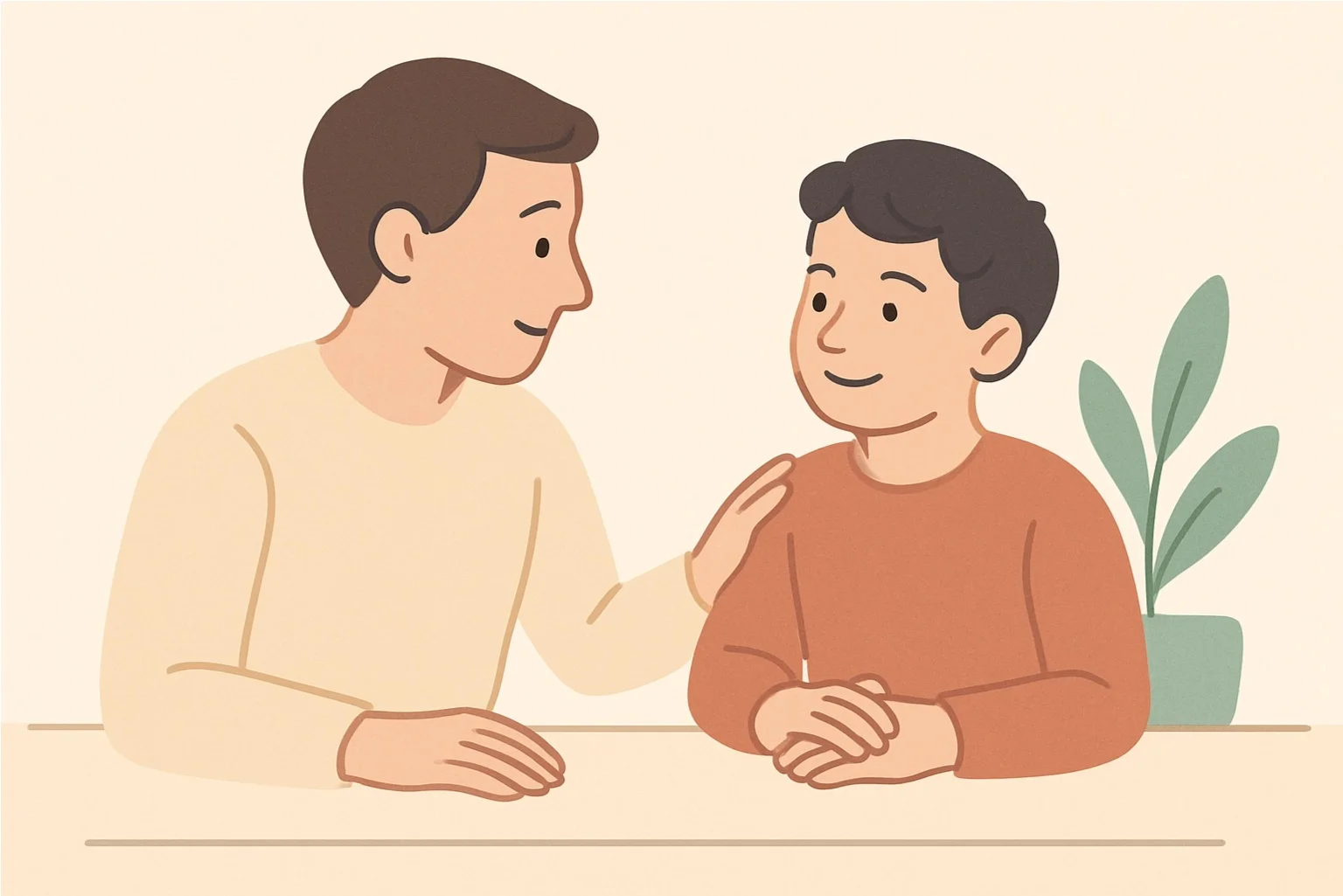
Turning awareness into action can feel overwhelming. Instead of trying to fix everything at once, focus on these five foundational rules.
- Separate the Deed from the Doer (Unconditional Regard): Make it explicitly clear that your love is not a prize for good behavior. This means connecting warmly even after a meltdown or a poor grade. You can dislike a behavior while fiercely protecting the bond. A simple, “I didn’t like what you did, and I love you,” is a powerful statement of unwavering worth.
- Become an Emotion Coach, Not a Judge (Validation): When your child is upset, your first job is not to fix it, but to name it. Say, “You look really disappointed,” or “It’s okay to feel angry.” This act of validation helps their nervous system calm and teaches them that all emotions are acceptable, even if actions need limits.
- Trade Control for Guided Autonomy (Empowerment): For every year of your child’s age, look for a new responsibility or choice they can own. Let a young child choose their clothes (even if they clash). Let an older child manage their homework schedule and face the natural consequence of forgetting it. Your role shifts from director to a trusted coach on the sidelines.
- Protect the Childhood Role (Boundaries Against Parentification): Your child is not your therapist, peer, or source of emotional fulfillment. It is your job to manage your stress, not theirs. If you find yourself leaning on them for support, seek help from other adults. Let them be children.
- Prioritize Presence Over Perfection (Attuned Connection): Commit to small, daily “micro-moments” of undistracted connection. Five minutes of focused play, a walk without phones, or a bedtime chat where you just listen. These moments of real attuned attention build more security than any extravagant gift.
Conclusion: The Path Forward Isn’t About Guilt, It’s About Growth
Recognizing these psychological parenting patterns in ourselves can be uncomfortable. But this discomfort is not guilt; it is the first sign of growth. You are breaking a cycle you did not start, and that is one of the most courageous things a parent can do.
Remember, the happiest families aren’t those without conflict or mistakes. They are the ones where everyone knows that after a rupture, there will be a repair. They are the ones where a child feels, deep in their bones, that they are loved for who they are, not for what they do.
Start small. Pick one of the five rules to practice this week. When you slip up—and you will—circle back and repair. Your child doesn’t need a perfect parent. They need a real, loving, and growing one. That is how we build homes where happiness isn’t a performance to earn, but a safe, steady feeling to inhabit.
