
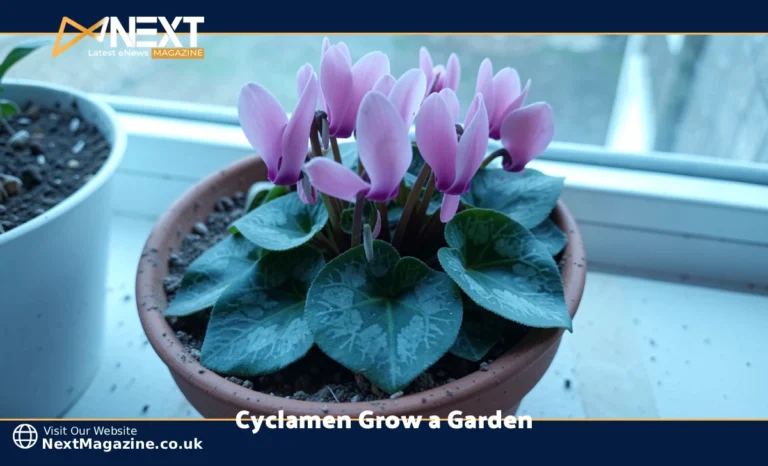
If you’ve ever picked up a cyclamen at a grocery store, brought it home full of hope, and watched it collapse within two weeks—you’re in good company. It happens to almost everyone the first time.
Here’s what I’ve learned after a few seasons of growing these plants: Cyclamen aren’t actually that difficult. They just don’t behave the way most houseplants do. Once you understand their rhythm, what looks like a dying plant starts making a lot more sense.
This guide covers everything that actually matters for cyclamen care—watering, light, temperature, dormancy, troubleshooting, and even growing them outdoors if you’re in the right climate. Let’s work through it step by step.
Why Cyclamen Are Different From Most Houseplants
Most houseplants follow a fairly predictable pattern. Water when dry, give them some light, feed them occasionally, and they’ll keep going. Cyclamen break that pattern—and that’s where the confusion starts.
These plants are native to the woodland floors and rocky slopes around the Mediterranean. In the wild, they grow tucked beneath tree canopy and shrubs where the soil is cool, humus-rich, and well drained. They experience cool, wet winters and hot, dry summers. That background matters because it explains everything about how cyclamen behave in your home.
When spring arrives, and your cyclamen starts looking tired and yellow? It’s not dying. It’s doing exactly what its ancestors did for thousands of years. It’s preparing to rest.
Choosing the Right Type Before You Start
Not all cyclamen are the same, and knowing the difference saves a lot of frustration later.
Florist cyclamen (Cyclamen persicum) is what you’ll find at most garden centres and grocery stores from October through February. These are showier, with large flowers in shades of pink, red, white, and purple. They’re best grown as indoor houseplants in most climates and won’t survive frost.
Hardy cyclamen are smaller, tougher, and meant for the garden. The three most reliable species are:
Cyclamen hederifolium (ivy-leaved cyclamen) blooms in early fall, often before the leaves even appear. The foliage is what makes this species special—the leaves are beautifully marbled in silver, pewter, and deep green, and they stay attractive through winter well after the flowers finish.
Cyclamen coum flowers in late winter and early spring with round, deep green leaves, sometimes marked with silver. It picks up right where hederifolium leaves off, which is why experienced growers often plant both for nearly year-round interest.
Cyclamen purpurascens is less commonly sold but worth seeking out. Unlike the other two, it blooms in summer—right when most cyclamen are dormant—and the flowers carry an intensely sweet fragrance. If you’ve ever thought cyclamen were purely visual plants, purpurascens will change your mind. It’s hardy in zones 5–7 and does particularly well in cooler, more northern climates.
Beyond these three, there are a handful of other hardy species worth exploring once you have some experience: C. mirabile (notable for pink-tinged young leaves), C. cilicium, and C. intaminatum. All are fall or spring bloomers suited to well-drained, shaded garden positions.
The foliage across hardy species alone is reason enough to grow them—variegation, silver markings, and leaf shapes ranging from ivy-like to nearly round. Even when there are no flowers, the leaves hold interest for six months or more.
First 30 Days: What to Do Right After Buying
This part most guides skip, and it’s where a lot of plants are lost.
When you bring a florist cyclamen home, do these things first:
- Remove the decorative foil or sleeve. It traps moisture and restricts drainage. Pull it off.
- Check for drainage holes. If the pot doesn’t have them, either repot into one that does or keep a close eye on how much you water.
- Don’t repot yet. Even if the plant looks a bit cramped, give it a few weeks to adjust to your home’s light and temperature before moving it to a new pot.
- Find a cool spot right away. A warm, sunny kitchen countertop will stress it out. A bright, cool windowsill—especially north or east-facing—is where it wants to be.
Many cyclamen drop flowers or wilt in the first week or two simply because they’ve gone from a cool greenhouse to a warm house. A little patience here goes a long way.
Getting the Light Right
Cyclamen want bright, indirect light. Think of an east-facing windowsill, or a spot near a south or west window filtered through a sheer curtain. Direct midday sun will scorch the leaves quickly.
A quick test I still use: hold your hand between the plant and the window. If the shadow is sharp and dark, the light is too intense—add a curtain. If it’s soft and blurry, you’re in a good spot.
Watch the plant for signals:
- Pale or bleached leaves = too much direct sun
- Long, floppy flower stems reaching toward the window = not enough light
During active growth in fall and winter, give them as much gentle brightness as possible. When they start going dormant in spring, a shadier spot is fine.
Cyclamen Watering: Where Most People Go Wrong
Cyclamen watering is the topic that trips up nearly every first-time grower, so let’s be specific about it.
The golden rule: water when the top inch of soil feels dry. Never let the pot sit in standing water.
Cyclamen grow from a tuber—a round, flat underground storage structure. If that tuber sits in soggy soil, it rots. Once tuber rot sets in, the plant rarely recovers. This is the most common way cyclamen die indoors.
The method that works best:
Bottom-watering. Set the pot in a shallow dish of water and let it sit for 15–20 minutes. The soil pulls up what it needs from below. Then remove the pot and dump out any remaining water from the dish.
Why bottom-watering? Because top-watering can splash water into the crown, the central area where leaves and flower stems meet the tuber. Water pooling there stays wet and invites mould and rot. Keeping the crown dry is one of the most important things you can do for these plants.
Never pour water directly over the centre of the plant.
During active growth (fall through early spring), water regularly but always check the soil first. During dormancy in summer, pull back significantly—just a light sprinkle every few weeks to keep the tuber from completely drying out.
Temperature and Humidity
This is where many indoor growers unknowingly work against themselves.
Cyclamen prefer daytime temperatures between 60–65°F (15–18°C) and nights a little cooler, around 50–55°F (10–13°C). Anything consistently above 70°F (21°C) causes bud drop, accelerated yellowing, and early dormancy.
Keep them away from heat vents, radiators, fireplaces, and warm kitchen counters. In my living room, once the central heat kicks on in winter, I move mine to the coolest corner of the house—often near an exterior wall or a slightly drafty window.
For humidity, a pebble tray with water works well. Set the pot on top of a shallow dish filled with pebbles and water, making sure the pot base sits above the waterline. This raises humidity around the plant without wetting the roots.
Soil and Potting
Drainage is non-negotiable. Cyclamen need soil that lets water move through quickly, not soil that holds moisture and stays damp for days.
For indoor pots, a standard potting mix with 30–40% perlite or coarse sand added works well. If you can get hold of leaf mould—decomposed leaves collected from a woodland floor—it makes an excellent amendment. It mimics the humus-rich conditions cyclamen naturally grow in and improves both drainage and moisture retention without making the mix heavy. The finished soil should feel crumbly, not dense or heavy.
Always use a pot with drainage holes. Terra cotta pots are a great choice because they’re porous—they help wick away excess moisture and reduce the risk of soggy soil.
When repotting, keep the top third of the tuber above the soil line. Burying it completely is one of the most common potting mistakes, and it dramatically increases the chance of rot. Think of the tuber as needing its “shoulders” above the soil to breathe.
Repot every couple of years, or when the tuber starts pressing against the pot sides. Go up only one pot size—cyclamen actually prefer being a little snug.
Fertilising: Less Really Is More
Cyclamen aren’t heavy feeders. During active growth from fall through early spring, a diluted liquid fertiliser at half strength, applied every three to four weeks, is plenty. Go with a low-nitrogen formula—something like a 5-10-10 or a tomato feed diluted further. Too much nitrogen pushes out soft, leggy growth that’s weaker and more disease-prone, and it doesn’t produce more flowers. What you want is steady, compact growth supported by higher phosphorus and potassium.
More fertiliser doesn’t mean more flowers. It usually means softer growth that’s more prone to problems—and a shorter-lived plant overall. I’ve noticed that cyclamen fed lightly tend to hold up better year after year than those given more aggressive feeding schedules. They seem to prefer calm, steady attention over intensive care.
Stop fertilising completely once the plant shows signs of dormancy—yellowing leaves, fewer new flowers. Resume only when fresh growth reappears in early fall.
Pruning and Keeping Things Tidy
Spent flowers and yellowing leaves should be removed regularly. This keeps the plant looking good and reduces the risk of mould.
The best method: grip the stem close to the base, twist gently, and pull. It should come free cleanly. Avoid cutting with scissors if you can help it—cut stubs left behind can attract rot, especially in the moist crown area.
Cyclamen Dormancy: It’s Normal, Not a Death Sentence
Around late spring, your cyclamen will start looking rough. Leaves turn yellow. Flowers stop coming. You might panic.
Don’t.
This is cyclamen dormancy, and it’s completely natural. It mirrors what the plant does in the wild when Mediterranean summers arrive. The plant is storing energy in the tuber, not giving up.
Here’s what to do:
- Move the pot to a cool, dark spot with decent air circulation—a basement, a shaded outdoor corner, or an unused room
- Cut back on watering significantly—just enough to keep the soil from going completely to dust
- Leave it alone for 8–10 weeks
Around late summer or early fall, you’ll notice tiny new leaves pushing up from the centre of the tuber. That’s your signal. Bring it back into bright, indirect light, resume normal watering, and within a few weeks, flower buds usually follow.
How to tell if your cyclamen is dormant or actually dead:
| Sign | Dormant | Dead |
|---|---|---|
| Tuber when pressed | Firm | Soft or mushy |
| Smell | Neutral | Unpleasant, rotten |
| Leaves | Yellowed and dying back | Collapsed and wet |
| Stem bases | Still attached cleanly | Dark, sunken, or black |
If the tuber is still firm and smells fine, your plant is almost certainly just resting. Give it time.
Seasonal Care at a Glance
Fall (September–November): Bring dormant plants back into bright, indirect light. Resume watering and fertilising. Watch for new leaves and buds.
Winter (December–February): Active blooming season. Keep cool, water carefully, and deadhead spent flowers. Enjoy.
Spring (March–May): Growth slows. Leaves begin to yellow. Reduce watering and stop fertilising.
Summer (June–August): Full dormancy. Move to a cool, dark spot. Water sparingly. Leave it alone.
Growing Cyclamen Outdoors
If you live in a mild climate, growing cyclamen outdoors is very much worth trying—and most guides barely cover it.
Hardy cyclamen like Cyclamen hederifolium, Cyclamen coum, and Cyclamen purpurascens can naturalise in zones 5–9. Over time, they’ll spread slowly—through seed dispersal and gradual tuber enlargement—and return each year reliably without much intervention.
For outdoor planting:
- Choose a sheltered spot with partial to full shade and excellent drainage—protected from harsh wind and drying sun
- The soil should be humus-rich and well drained. Amend with compost, leaf mould, and grit or coarse sand so water moves through freely. Heavy clay soil will need significant amendment or raised planting
- Plant tubers 1 to 2 inches deep. The top of the tuber should sit just at or slightly below the soil surface—not buried deep
- Orientation: the top of the tuber is usually slightly flattened or indented, while the bottom has smooth, root-like bumps. If you genuinely can’t tell which side is up, lay it slightly on its side—it will sort itself out
- Space them 6–8 inches apart
- In very wet winters, a light covering of dry mulch can protect the tubers from waterlogging
C. hederifolium blooms in early fall and has attractive marbled leaves that last through winter. C. coum flowers in late winter and early spring. Plant both for nearly continuous interest from September through March.
Florist cyclamen (C. persicum) are not suitable for outdoor planting in most climates. They can’t survive frost and will struggle in any region that dips below 28°F (–2°C).
Growing Cyclamen From Seed
Once you’re comfortable keeping cyclamen alive, growing them from seed is a rewarding next step. It’s not an instant-gratification project—it takes roughly two to three years from seed to a garden-ready plant—but it’s how you access a much wider range of species and varieties than you’ll ever find in shops.
The fresher the seed, the faster the germination. Seeds harvested in summer and sown promptly germinate more reliably than ones that have been stored for months. Specialist sources like the Cyclamen Society, NARGS (North American Rock Garden Society), and alpine plant clubs are the best places to find quality seed.
Before sowing, soak the seeds in room-temperature water for about 24 hours. This softens the seed coat and noticeably speeds up germination.
Sow on the surface of a well-draining seed compost—a standard potting mix with added perlite or grit works fine. Press them gently into the surface and space them out, because they’ll be in the same container for at least a year or two. Cover with a very thin layer of fine grit or vermiculite. Keep the soil consistently moist but never waterlogged.
FAQs
Why are my cyclamen leaves turning yellow?
If it’s late spring or early summer, yellow leaves are a normal sign of dormancy—nothing to worry about. If they’re turning yellow in winter, the most common causes are overwatering, soil that doesn’t drain well, or temperatures that are too warm at night. Check the soil first and adjust accordingly.
How do I get my cyclamen to bloom again next year?
Give it a proper dormancy period. Move it somewhere cool and dark in late spring, water very sparingly for 8–10 weeks, then bring it back into bright indirect light in early fall and resume normal watering and feeding. Skipping this step is the most common reason cyclamen don’t rebloom.
Can cyclamen be grown outdoors?
Hardy varieties like Cyclamen hederifolium, Cyclamen coum, and Cyclamen purpurascens, yes—they can be planted permanently in the garden in zones 5–9 and will naturalise over time. Florist cyclamen (C. persicum) should stay indoors or in a frost-free space in most climates.
Is cyclamen poisonous to pets or children?
Yes. All parts of the cyclamen plant can cause stomach upset if eaten, but the tubers carry the highest concentration of harmful compounds. Even a few bites can cause serious vomiting in dogs and cats. Keep cyclamen on a high shelf or in a room your pets don’t access if they tend to chew on plants. If you suspect your pet has eaten any part of the plant, contact a vet promptly.
How long does cyclamen bloom?
With good care—cool temperatures, appropriate light, and careful watering—florist cyclamen typically blooms for 2–3 months. Individual flowers last a couple of weeks, but new ones keep emerging as long as conditions are right. After a proper dormancy, they’ll come back and do it again the following season.
Why are my cyclamen flowers drooping even though the soil is wet?
Wet soil plus drooping flowers usually point to too much heat rather than thirst. Cyclamen are cool-weather plants, and warm rooms cause rapid wilting even when the roots have adequate moisture. Move the plant to a cooler spot and see if it recovers within a day.
Can I grow cyclamen from seed?
Yes, and it’s one of the most satisfying long-term gardening projects. Expect to wait two to three years from sowing to flowering-sized plants. Source fresh seed from specialist societies, soak it for 24 hours before planting, and sow in cool, dark conditions around 60°F (15°C). Germination can take three weeks to several months, so patience is key.
Disclaimer: Cyclamen care can vary based on your local climate, home conditions, and the specific variety you’re growing. The advice in this guide reflects general best practices for most indoor and garden growers. If your plant is behaving differently, observe it closely and adjust—your plant’s specific signals are always more reliable than any general rule.
