
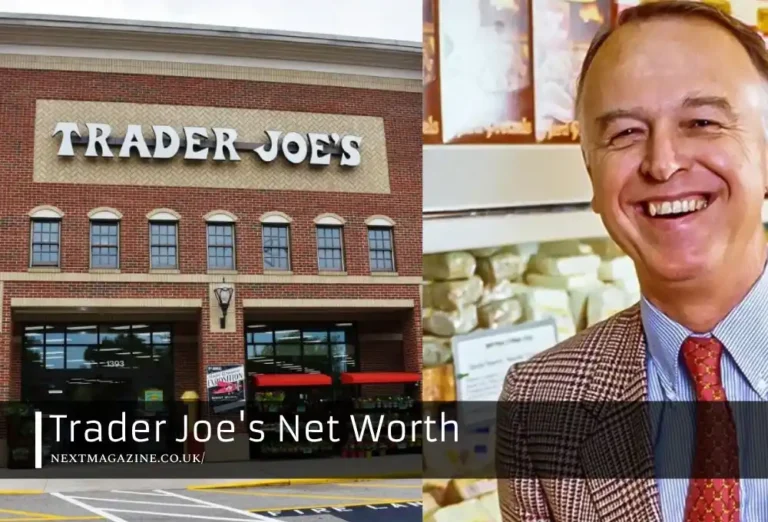
Trader Joe’s is one of the most profitable grocery chains in the United States — and also one of the most secretive. Because it operates as a privately held company, it files no public financial statements. That’s why estimates of Trader Joe’s net worth range widely, from $13 billion to over $25 billion, depending on the source and methodology.
What is clear: Trader Joe’s generates more revenue per square foot than almost any other grocery retailer in the country, operates over 570 stores nationwide, and has built a customer loyalty that most brands would struggle to match.
This article breaks down what is actually known about Trader Joe’s financial picture, how the company grew, who owns it, and what makes its business model so effective.
Who Owns Trader Joe’s?
This is the question most people ask first — and the article most competitors bury or skip entirely.
Trader Joe’s is owned by the Albrecht family, the heirs of Theo Albrecht, co-founder of the German discount grocery chain Aldi Nord. Theo purchased Trader Joe’s from founder Joe Coulombe in 1979 and held the company privately until he died in 2010. The Albrecht family continues to own it today.
This is why Trader Joe’s has no obligation to disclose revenue, profit, or valuation figures. It is not publicly traded, and it has no institutional investors demanding transparency. That structure is central to understanding why precise numbers are hard to find.
The Albrecht family’s broader fortune — which includes Aldi Nord and Trader Joe’s — has been estimated by Forbes at over $30 billion, making them one of the wealthiest families in the world. Trader Joe’s represents a significant portion of that value.
History and Growth
Trader Joe’s opened its first store in 1967 in Pasadena, California. Founder Joe Coulombe had been running a small convenience store chain called Pronto Markets, but he saw an opening for something different: a store that sold interesting, affordable specialty products to educated, cost-conscious shoppers.
The name, the nautical theme, and the Hawaiian-shirt-wearing staff were all deliberate choices to make grocery shopping feel like an adventure rather than a chore.
Key milestones in the company’s growth:
- 1967 — First Trader Joe’s opens in Pasadena, CA
- 1979 — Theo Albrecht acquires the chain
- 1990s — Expansion accelerates beyond California into the Northeast and Midwest
- 2000s — National expansion; store count surpasses 200, then 300
- 2024–2025 — Over 570 stores across 42 states
Growth has been deliberate rather than aggressive. Trader Joe’s has consistently chosen quality of location over speed of expansion, often entering markets with long waiting lists of interested cities.
Trader Joe’s Net Worth and Revenue Estimates
Because Trader Joe’s is a private company, every financial figure published is an estimate — not an audited disclosure. That caveat matters when you see wildly different numbers across sources.
What analysts generally estimate:
- Net worth/valuation: Approximately $13 billion to $25 billion, depending on the methodology used
- Annual revenue: Estimated at roughly $13–16 billion as of recent years
- Revenue per square foot: Often cited as among the highest in U.S. grocery retail — a figure that reflects both high pricing efficiency and strong customer traffic in compact stores
The old figure of “$2 billion in annual sales” circulating on many websites dates to estimates from the early to mid-2000s. It is not current and should not be used as a reference point.
For context, Whole Foods Market (now owned by Amazon) reported approximately $19 billion in revenue before its acquisition. Trader Joe’s, with a far smaller footprint and no e-commerce operation, approaching that range on pure in-store sales is a meaningful indicator of how well its model performs.
The Business Model: Why It Works
Trader Joe’s business model is built around a small number of interlocking choices that compound into a high cost and loyalty advantage.
Private Label Dominance
Approximately 80% of products on Trader Joe’s shelves carry the Trader Joe’s brand. This is the inverse of most grocery stores, where national brands dominate. By owning the product, Trader Joe’s controls pricing, quality, and margin without splitting value with third-party brands.
Shoppers can only buy these products at Trader Joe’s — which is a quiet but powerful loyalty mechanism.
Minimal SKU Count
A typical large American supermarket carries 30,000 to 50,000 distinct products. Trader Joe’s carries roughly 4,000. This sounds like a disadvantage but is actually a core efficiency driver: fewer products mean simpler inventory, better supplier relationships, faster turnover, and less wasted shelf space.
No Traditional Advertising
Trader Joe’s spends virtually nothing on conventional advertising — no TV spots, no billboard campaigns, no Sunday circulars. Its primary marketing channel is the Fearless Flyer, a product newsletter that reads more like a food magazine than a sales flyer. Word of mouth and social media do the rest.
The money saved on advertising feeds directly into lower prices and better product development.
Direct Manufacturer Sourcing
Trader Joe’s bypasses the standard distributor model and works directly with manufacturers and producers. This cuts a layer of cost out of the supply chain and gives the company more control over product quality and exclusivity.
Compact Store Format
Stores average around 10,000–15,000 square feet — significantly smaller than a conventional supermarket. Lower square footage means lower rent, lower staffing costs, and lower energy costs, all of which contribute to the company’s margin efficiency.
Employee Compensation
Trader Joe’s is consistently ranked as one of the better employers in retail. The company refers to employees as “Crew Members” and pays wages that exceed industry averages. As of recent reporting, starting wages at many locations are in the $18–$25 per hour range, with full-time employees receiving health benefits, retirement contributions, and substantial paid time off.
This is not purely altruistic. Happy, well-compensated staff reduce turnover, which is expensive in retail, and they contribute directly to the customer experience that Trader Joe’s depends on.
How Trader Joe’s Compares to Competitors
| Retailer | Est. Annual Revenue | Store Count | Model Type |
|---|---|---|---|
| Trader Joe’s | ~$13–16B | 570+ | Private label, compact |
| Whole Foods | ~$19B (pre-Amazon) | 530+ | Premium, full-service |
| Aldi (US) | ~$18B+ | 2,300+ | Discount, private label |
| Costco | ~$240B | 870+ | Membership warehouse |
Trader Joe’s sits in a distinct position: not the cheapest (Aldi undercuts it on many basics), not the most premium (Whole Foods targets a different buyer), but a middle lane that combines quality, discovery, and value in a way that generates exceptional loyalty.
Factors Behind Financial Performance
Several specific practices explain why Trader Joe’s consistently outperforms its footprint:
Curation over selection. By offering fewer choices, the company forces itself to only stock products that will sell well. Dead inventory is nearly eliminated.
Seasonal and limited products. Rotating items like Pumpkin Spice Everything in fall or Mandarin Orange Chicken year-round (one of the chain’s bestsellers) creates urgency. Shoppers buy now because it may not be there next week.
Location strategy. Trader Joe’s tends to open in dense urban neighborhoods or near universities — areas with a high concentration of young professionals and students who match the brand’s demographic.
No loyalty program or app. This is unusual. Most retailers collect data through loyalty programs. Trader Joe’s doesn’t, which reduces operating costs and avoids the privacy debates that follow such programs.
Controversies and Criticisms
Trader Joe’s reputation is largely positive, but it is not without legitimate criticism.
Packaging waste
The chain has faced repeated criticism for excessive plastic packaging on produce and other products. Environmental advocates have pushed for changes, and the company has made some commitments, though progress has been inconsistent.
Labor practices
In 2022, several Trader Joe’s locations began unionization efforts, citing concerns about wages, scheduling, and working conditions. The emergence of Trader Joe’s United, the company’s first independent union, marked a notable shift in the company’s labor relations landscape.
Limited accessibility
Trader Joe’s store location strategy, while smart for the brand, means it is overwhelmingly concentrated in wealthier, whiter zip codes. Critics argue this limits access for lower-income and rural communities.
Product inconsistency
The flip side of seasonal rotation is that beloved products occasionally disappear permanently, which frustrates loyal customers.
Trader Joe’s shows no signs of declining relevance. Its core model — private label, curated selection, staff-led experience — is difficult to replicate at scale because it depends on a culture and supply chain built over decades.
Expansion will likely continue at the measured pace the company has always preferred. Regions, including the Southeast and parts of the Midwest, remain underserved by the chain and represent logical growth targets.
The biggest open question is whether Trader Joe’s will eventually enter e-commerce. To date, it has deliberately avoided online ordering and delivery — another cost it doesn’t carry. Whether that remains sustainable as consumer expectations shift is worth watching.
The Albrecht family’s long-term ownership structure suggests no IPO is on the horizon, which means the financial opacity that defines Trader Joe’s today will likely persist.
FAQs
Is Trader Joe’s owned by Aldi?
Trader Joe’s and Aldi are separate companies but share a connection. Trader Joe’s was acquired in 1979 by Theo Albrecht, who co-founded Aldi Nord in Germany. The two chains operate independently and are owned by different branches of the Albrecht family.
How much is Trader Joe’s worth?
Estimates range from $13 billion to over $25 billion. Because Trader Joe’s is privately held, no verified figure is publicly available. These estimates are based on revenue multiples and comparable company valuations.
How many Trader Joe’s stores are there?
As of 2024–2025, Trader Joe’s operates approximately 570+ stores across 42 U.S. states.
Does Trader Joe’s have an online store?
No. Trader Joe’s does not offer online ordering, delivery, or curbside pickup. This is a deliberate business decision.
Note: All financial figures cited for Trader Joe’s are analyst estimates based on publicly available information. As a private company, Trader Joe’s does not publish financial statements.
