
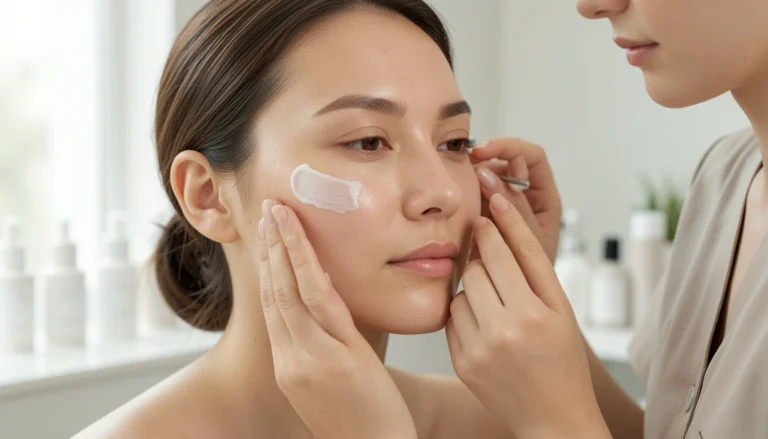
Skin does not usually fall apart all at once, but over time. For instance, you see a little more redness here or slower recovery there. Also, there might be uneven texture that does not quite go away, and breakouts that seem random until they are not.
That is part of why an aesthetician recommended skincare keeps coming up in treatment rooms. Basically, it is not just about prestige or stronger-looking labels. Rather, it is about whether a formula can actually move with skin behavior. This is important when the barrier is stressed or the routine is inconsistent.
In fact, clinical skincare is usually recommended because it is designed with outcome in mind, not just sensation.
Of course, texture and packaging matter. However, aestheticians are usually looking at structure. They want to know how a formula supports recovery, how it handles inflammation-prone skin, how it sits alongside exfoliation, and whether it helps keep progress from collapsing between appointments.
It is important to note that good skin is often maintained by systems rather than impulse buying.
What Clinical Skincare Actually Means
Clinical skincare is not simply a fancy term for active skincare. Essentially, a formula might contain actives and still be sloppy in how it delivers them. Aestheticians tend to recommend products that are built around function, tolerability, and sequencing.
That means the formula should do something specific while still respecting barrier biology. If it brightens, it should not leave the skin raw. If it hydrates, it should do more than sit on the surface for an hour and disappear by noon.
Meanwhile, if it supports post-treatment skin, it has to behave as if it understands inflammation rather than provoke more of it.
Many over-the-counter routines fail here. They chase visible effects without supporting the tissue that must carry them. So the skin may get smoother for a week, then reactive for two. Or clearer for ten days, then rough, shiny, and depleted.
Clinical skincare is recommended because aestheticians often see the effects of poorly designed routines before anyone else does. They see what happens when the barrier gets pushed, when acids pile up, when hydration is too light, or when someone confuses “strong” with “appropriate.”
Why Barrier Repair Actives Change The Conversation
Barrier repair actives are a big reason clinical skincare earns trust. Not because they sound technical. Rather, it is because they answer the actual problem. In fact, many skin complaints are linked to barrier disruption. These include:
- Redness
- Tightness
- Reactive breakouts
- Dehydration
- Rough texture
- Prolonged post-treatment sensitivity
Different faces, same underlying instability. When aestheticians choose formulas, they mostly gravitate toward ingredients that help restore balance before pursuing dramatic correction.
Barrier Repair Actives That Make Sense In Practice
| Barrier Repair Active | What It Helps Support | Why Aestheticians Look For It |
| Ceramide-supportive lipids | Moisture retention and surface resilience | Helps reduce that tight, shiny, overworked look |
| Panthenol | Comfort, hydration, and recovery support | Useful when the skin is irritated or post-treatment reactive |
| Squalane | Softness and moisture balance | Good for dry or stressed skin that still needs elegance |
| Ferments and microbiome-supporting ingredients | Skin balance and visible calm | Often chosen when skin feels unpredictable or sensitized |
| Bisabolol and soothing botanicals | Reduced visible irritation | Helpful when barrier strain shows up as redness and heat |
That is why the aesthetician recommended skincare options often feel less dramatic on day one than people expect. It may not sting or tingle. Also, it may not announce itself at all. But that quieter behavior is often the point.
In fact, skin that is trying to recover needs structure, consistency, and ingredients that prevent it from digging itself deeper.
The Best Skincare Products Work Inside A Treatment Logic
Aesthetician skincare products are not chosen in isolation. Rather, they are selected as part of a treatment logic.
For instance, a cleanser prepares the skin without stripping it. Meanwhile, a serum corrects, but within reason. Moreover, a moisturizer supports water balance, reduces friction, and helps buffer the tissue after more active steps. In addition, sunscreen protects the skin.
That sequence matters because skin does not experience products individually. Rather, it experiences the whole ritual as one cumulative event.
That is also why aestheticians talk so much about routine architecture. Of course, people sometimes find that annoying. But architecture is what determines whether a formula performs or backfires.
For instance, a beautiful serum placed inside a messy routine can still fail. A moderate-strength formula, when paired with a disciplined routine, can do a lot more than expected.
A Formula Aestheticians Tend to Respect
A microbiome-boosting moisturizer formula is built around the following ingredients:
- Lactobacillus Ferment Lysate
- Chlorella Vulgaris Extract
- Squalane
- Panthenol
- Bisabolol.
This moisturizer formula helps with hydration, visible redness, and post-treatment comfort. Also, it helps with moisture-barrier support.
Although it can fit into a daily routine, it also makes sense to use it after professional treatments. This is when skin needs to calm down and stay functional rather than being pushed into another cycle of irritation.
Clinical vs. Cosmetic Logic
| Decision Point | Cosmetic Logic | Clinical Logic |
| Product choice | What looks trendy right now | What the skin can tolerate and use consistently |
| Active strength | More is better | Appropriate is better |
| Moisturizer role | Optional finishing layer | Core support step for barrier stability |
| Recovery period | Seen as downtime | Seen as part of the treatment result |
| Long-term planning | Product hopping | Measured sequencing and repetition |
This is where the question arises: How Do Professionals Maintain Results?
They focus on stabilizing the skin so that corrective work can continue without interruption. That is why barrier repair activities matter so much.
What Aestheticians Usually Try To Prevent
A strong recommendation is often less about what aestheticians want to add and more about what they are trying to avoid. They are trying to avoid the following:
- Rebound dehydration
- Chronic low-grade inflammation that makes every new activity feel “too strong.”
- That worn, polished, over-exfoliated look that people mistake for a glow, only for the breakouts and redness to catch up.
At the outset, clinical skincare is usually chosen to reduce those risks, not just to create visible change in a vacuum.
Choosing Clinical Skincare
A few practical filters shape those recommendations:
- Support the barrier before increasing corrective intensity
- Keep routines tight enough that skin can actually adapt to them
- Choose formulas that still make sense after treatment, not only on the best skin days
That may sound conservative, since it is actually a good aesthetic practice. The skin usually rewards discipline more than drama.
Why the Recommendation Carries Weight
When aestheticians recommend clinical skincare, they are usually speaking from repeated pattern recognition. They see what lingers, what fades too fast, what creates irritation disguised as “activity,” and what helps skin stay stable long enough to improve.
That is why an aesthetician recommended skincare carries weight in a way that product trends do not. The recommendation is not only about ingredients.
Rather, it is about behavior:
- Formula behavior
- Skin behavior
- Routine behavior
Clinical Skincare Protects the Progress
The point of clinical skincare is not to make routines feel more complicated. Rather, it is to make them more dependable. Aestheticians recommend it because healthy skin is easier to treat, calmer, and easier to improve over time.
When barrier repair activities are built into the routine, the skin does not have to keep starting over. Hence, there are fewer setbacks, better tolerance, and more consistency. Also, in the middle of that, the logic behind an aesthetician’s recommended skincare becomes paramount.
