
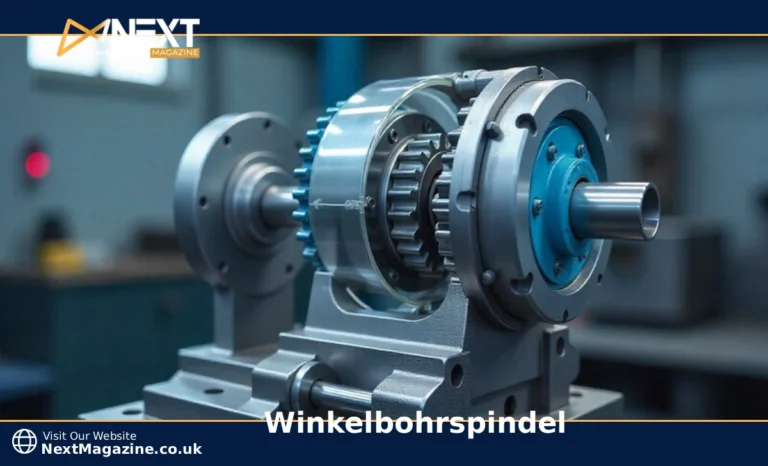
A Winkelbohrspindel is an angle drilling spindle that allows drilling or milling at specific angles (typically 90°) without repositioning your workpiece. This tool uses bevel gears to redirect power, enabling access to tight spaces and complex geometries. Choosing the right type depends on your machine compatibility, torque needs, and material requirements.
What Is a Winkelbohrspindel?
The term Winkelbohrspindel comes from German: Winkel (angle), Bohr (drill), and Spindel (spindle). This specialized attachment converts standard vertical or horizontal drilling into angled operations.
The tool solves a simple problem: reaching areas where traditional drill heads cannot go. Whether you need to drill sideways into an engine block or create angled holes in furniture joints, a Winkelbohrspindel eliminates the need to reposition heavy workpieces or invest in multiple machine setups.
Machine shops, fabrication facilities, and woodworking operations use these spindles daily. CNC machining centers, milling machines, and manual drill presses all accept Winkelbohrspindel attachments when operators need angular drilling capability.
How a Winkelbohrspindel Works
The mechanism relies on a bevel gear transmission. Your machine’s main spindle transfers rotational power to the Winkelbohrspindel input shaft. Inside the housing, precision-ground bevel gears redirect this rotation at your desired angle—most commonly 90 degrees.
High-grade bearings support the rotating components while handling both radial and axial loads. The output shaft holds your cutting tool through standard interfaces like HSK, CAT, or ER collet systems.
Most models include internal cooling channels. Coolant flows directly to the cutting zone, managing heat and extending tool life during continuous operations. Some lightweight models skip this feature to reduce size and weight.
The entire assembly mounts to your machine’s spindle nose. You secure it with the same mechanism you use for standard tool holders—no special modifications required.
Types of Winkelbohrspindel
Fixed-angle spindles lock at one position, usually 90 degrees. These units deliver maximum rigidity and handle higher torque loads. Manufacturing facilities running repetitive operations prefer fixed-angle models because they eliminate adjustment variables and maintain consistent positioning.
Adjustable-angle spindles let you change the drilling angle between operations. You might drill at 45 degrees for one feature, then switch to 90 degrees for another. This flexibility costs more and typically reduces maximum torque capacity compared to fixed versions.
High-speed models prioritize RPM over torque. Aerospace and medical device manufacturers use these for precision drilling in aluminum, titanium, and composites. Expect speed range from 8,000 to 24,000 RPM with lower torque ratings.
Heavy-duty spindles maximize torque for steel and cast iron. Construction equipment manufacturers and heavy machinery shops need this power. These units run slower (2,000-6,000 RPM) but handle larger drill bits and deeper holes.
Compact spindles sacrifice power for size. Tight machine enclosures or small workpieces require minimal overhang. Jewelry makers, electronics manufacturers, and small-part fabricators choose compact models.
Material choice affects performance, too. Steel housings provide maximum rigidity but add weight. Aluminum alloy models reduce mass while maintaining acceptable stiffness for most applications.
Industries That Rely on Winkelbohrspindel
Aerospace manufacturers drill angled holes in aircraft bulkheads and wing components where repositioning would compromise alignment tolerances. A single setup with a Winkelbohrspindel maintains position accuracy across multiple drilling operations.
Automotive plants use these spindles for engine blocks, transmission housings, and suspension components. Drilling bolt holes at precise angles prevents assembly issues down the production line. The time saved on each part multiplies across thousands of units.
Woodworking shops create furniture joints, cabinet hardware mounting holes, and decorative angled features. Adjustable-angle spindles let craftsmen experiment with different joint geometries without changing machines or fixtures.
Medical device manufacturers drill surgical instruments and implant components from materials like stainless steel and titanium. The high-speed, compact spindles they use maintain the precision these applications demand.
General metalworking operations—from custom fabrication shops to maintenance facilities—keep angle spindles on hand for one-off repairs and prototype development. The flexibility justifies the investment even for occasional use.
Key Benefits of Using a Winkelbohrspindel
You reach spaces that would otherwise require custom fixtures or multiple machine setups. Side drilling, angled tapping, and complex milling patterns become single-setup operations.
Repositioning workpieces wastes time and introduces positioning errors. Each time you move a part, you risk losing reference points. Angle spindles eliminate these movements, cutting cycle time by 30-50% on complex parts.
Precision improves when you maintain the original workpiece setup. Your reference surfaces stay constant. Tool path programming becomes simpler because you work from one coordinate system throughout the operation.
Productivity gains come from reduced setup time and faster operation cycles. One manufacturer reported cutting a 45-minute setup down to 8 minutes after adding angle drilling capability to their machining center.
Cost savings accumulate over time. You avoid purchasing dedicated angular drilling machines or building custom fixtures. Tool inventory requirements drop because standard cutting tools work in your angle spindle.
Common Mistakes When Choosing a Winkelbohrspindel
Buyers ignore machine compatibility and discover their spindle doesn’t fit after delivery. Check your machine’s spindle taper (CAT40, HSK-A63, BT50, etc.) before ordering. Verify maximum tool weight capacity too—some machines cannot handle heavier angle spindles.
Torque requirements get overlooked until the spindle stalls during operation. Calculate the torque needed for your largest drill bit in your toughest material. Match that to spindle specifications with a 20% safety margin.
Price-driven decisions lead to frequent replacements. An $800 spindle that fails after 200 hours costs more than a $2,400 unit lasting 2,000 hours. Factor in downtime costs and replacement frequency when comparing options.
Cooling system needs vary by application. Continuous drilling in steel requires through-spindle coolant. Intermittent aluminum work might not. Skipping coolant capability saves money upfront but limits operational flexibility later.
Material mismatches cause poor results. A high-speed spindle designed for aluminum will struggle with steel. A heavy-duty steel spindle wastes energy and precision on softer materials. Match spindle characteristics to your primary material requirements.
How to Choose the Right Winkelbohrspindel
Start with machine compatibility. Your machine’s spindle interface, maximum tool weight, and available power determine which spindles work. Contact your machine manufacturer if specifications aren’t clear.
Calculate the required torque and speed for your typical operations. Drilling a 1-inch hole in steel needs more torque than a 0.25-inch hole in aluminum. List your most demanding operations and ensure your chosen spindle handles them.
Decide between fixed and adjustable angles based on the application variety. If 90% of your work needs 90-degree drilling, buy a fixed-angle spindle for the rigidity and cost savings. Multiple angles justify the adjustable model’s higher price.
Consider the material types you machine regularly. Harder materials need higher torque at lower speeds. Softer materials allow higher speeds with less torque. Your spindle should optimize for your material mix.
Balance budget against quality, but recognize that reputable manufacturers like BENZ, OTT-JAKOB, and BIG Kaiser charge premium prices for valid reasons. Their spindles maintain accuracy longer and include better warranty coverage.
Weight matters for machine stability and tool changer capacity. Lighter spindles reduce inertia during tool changes but may sacrifice rigidity. Heavier units provide stability but stress tool changers and affect machine dynamics.
Maintenance Tips for Long Spindle Life
Clean your spindle after each work session. Metal chips trapped in the housing accelerate bearing wear. Use compressed air to remove debris from cooling channels and gear housings. Avoid high-pressure water that forces contaminants deeper into components.
Follow the manufacturer’s lubrication schedule precisely. Over-lubrication attracts debris and creates messy buildup. Under-lubrication causes premature bearing failure. Most spindles need regreasing every 100-200 operating hours.
Check alignment monthly if you use the spindle frequently. Mounting and dismounting gradually loosen connections. Misalignment creates vibration that damages bearings and produces poor surface finishes.
Inspect bearings for noise or unusual resistance. Smooth, quiet rotation indicates healthy bearings. Grinding sounds or rough spots mean replacement time has arrived. Replacing bearings early prevents catastrophic failures.
Store spindles in protective cases when not in use. Dust and moisture cause corrosion on precision surfaces. Keep them in climate-controlled environments if your facility experiences temperature swings or high humidity.
Document maintenance activities. Track lubrication dates, bearing replacements, and alignment checks. This record helps predict maintenance needs and proves valuable when warranty issues arise.
Winkelbohrspindel vs. Standard Drill Head
| Feature | Winkelbohrspindel | Standard Drill Head |
|---|---|---|
| Drilling Direction | Angled (typically 90°) | Vertical/horizontal only |
| Workpiece Access | Reaches tight spaces and side surfaces | Limited to direct line-of-sight |
| Setup Complexity | Single setup for multiple angles | Requires repositioning for angles |
| Cost | $800-$5,000+ | $100-$800 |
| Maintenance | Higher (gears, bearings, cooling) | Lower (fewer moving parts) |
Quick Buying Checklist
- Verify your machine’s spindle taper matches the Winkelbohrspindel interface.
- Calculate the maximum required torque for your toughest drilling operation
- Determine if you need fixed or adjustable angle capability
- Check if through-spindle coolant is necessary for your materials
- Confirm the spindle weight stays within your machine’s tool changer capacity
- Compare warranty terms from at least three manufacturers
- Request performance specifications in writing, not marketing estimates
Final Thoughts
A Winkelbohrspindel transforms your machine’s capability without requiring new equipment purchases. The right spindle pays for itself through reduced setup time and improved part quality.
Invest in quality when your production volume justifies it. A $3,000 spindle that runs reliably for five years costs less per part than replacing a $1,200 unit every 18 months.
The angle drilling technology continues to advance. Smart sensors now monitor spindle condition in real-time. Predictive maintenance systems alert operators before failures occur. These features will become standard as Industry 4.0 adoption grows.
Choose based on your actual needs, not aspirational ones. Start with a fixed-angle unit if that covers 90% of your work. Add an adjustable model later if your operation expands into varied angular drilling.
Test the spindle with your materials and typical operations before committing to high-volume use. Most suppliers offer trial periods or demo units. Use this opportunity to verify performance claims match your real-world conditions.
