
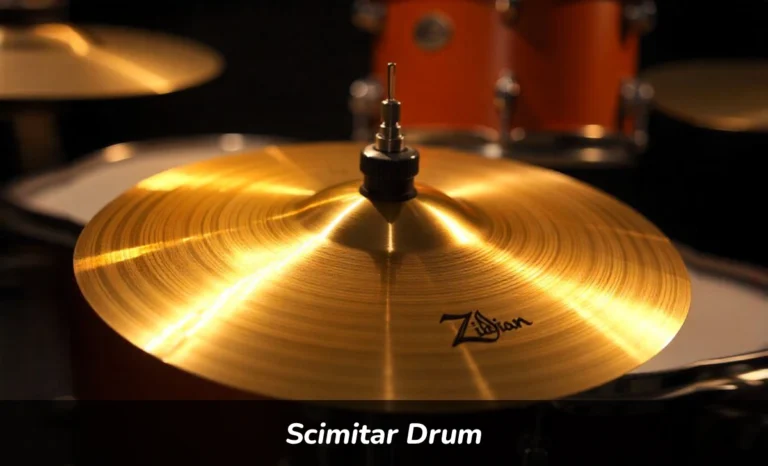
The scimitar drum refers primarily to Zildjian’s budget cymbal line produced from 1986 to 1997, not an actual drum. Made from CuSn8 sheet bronze, these entry-level cymbals offered affordable options for beginning drummers. The term also appears in fantasy contexts, describing sword-inspired percussion instruments.
You’ve probably encountered the term “scimitar drum” during your search for budget cymbals or fantasy instruments. The phrase creates confusion because it references two different concepts: a real product line from Zildjian’s history and a modern fantasy instrument idea.
Most drummers searching this term want information about Zildjian Scimitar cymbals. You need clarity on what these cymbals offered, why they disappeared, and whether buying used ones makes sense today.
What Zildjian Scimitar Cymbals Actually Were
Zildjian introduced the Scimitar line in 1986 as their first serious entry into budget cymbals. The company built its reputation on professional-grade products, but rising competition from cheaper imports forced it to respond.
The Scimitar series used CuSn8 alloy, commonly called sheet bronze in Zildjian’s marketing materials. This differs from the B20 bronze found in their professional lines. Sheet bronze costs less to produce and allows manufacturers to stamp out cymbals rather than hand-hammer them.
Zildjian discontinued the entire Scimitar line in 1997 after eleven years of production. The company replaced them with the ZBT series, which remains available today.
Scimitar Product Range and Pricing
The original Scimitar lineup included standard sizes:
- 14″ hi-hats (£60 retail in 1989)
- 16″ crash (£37)
- 18″ crash-ride (£45)
- 20″ ride cymbal (£52)
- Performance pack with 14″ hats, 16″ crash, and 18″ crash-ride (£142)
A 1989 review in Phaze 1 magazine noted the packaging made these cymbals accessible: “mighty strange it is to see the famous Zildjian name adorning a set of cymbals that don’t elicit a sharp intake of breath every time the price is mentioned.”
The bronze versions came later in the product cycle, offering slightly better construction than the original models.
Sound Characteristics and Performance
The 20″ ride received the strongest reviews. Testers praised its clear, dry sound with quick stick attack. One drummer used his Scimitar ride for 21 years before upgrading, showing these budget cymbals could serve beyond beginner needs.
The 16″ crash performed adequately for its price point. Reviewers described it as functional without overtones, though it lacked the brightness of professional models. The cymbal cut through most mix situations but wouldn’t dazzle anyone.
Hi-hats presented the weakest link. The bottom cymbal’s weight added projection but reduced responsiveness. The foot “chip” sound lacked focus compared to mid-range options.
The 18″ crash-ride failed at its dual purpose. You could crash it successfully, producing fuller, rounder tones than the 16″. Using it as a ride cymbal created problems—the lightweight construction produced a wash that buried stick definition.
The Fantasy Instrument Interpretation
Online searches for “scimitar drum” also return results about conceptual percussion instruments. These fantasy drums take inspiration from curved Middle Eastern swords called scimitars.
Writers describe these instruments as having:
- Curved frames resembling sword blades
- Sharp, punchy tonal qualities
- Decorative metal elements
- Theatrical performance applications
You won’t find these drums in music stores. They exist primarily in creative writing, concept art, and custom instrument building. Some performers commission unique pieces for stage shows or themed events.
The confusion between Zildjian’s cymbal line and fantasy instruments creates search problems. Understanding both meanings helps you find relevant information faster.
Should You Buy Used Scimitar Cymbals Today?
Used Scimitar cymbals appear regularly on marketplaces for $10-30 per piece. This pricing creates temptation for budget-conscious drummers.
Consider these factors before purchasing:
Age and condition matter more than brand: A 30-40-year-old budget cymbal may have stress cracks, keyholing, or tonal dead spots. Check photos carefully for visible damage.
Modern alternatives sound better: Current entry-level lines like Zildjian I Family, Meinl HCS, or Sabian B8X use improved manufacturing techniques. New cymbal packs cost $200-300 but include warranties and consistent quality.
Scimitars serve specific needs: Recording studios sometimes use vintage budget cymbals for lo-fi effects. The limited frequency range creates interesting tonal spaces in dense mixes. Home practice also works fine since you’re not competing with amplified instruments.
Upgrade path exists: Starting with used Scimitars lets you learn cymbal setup and maintenance cheaply. Save money now, then buy professional models one piece at a time as your skills develop.
One drummer’s forum post from 2020 summed up the general opinion: “I’ve got pie pans in the kitchen cupboard that sound better than most of those.” The harsh assessment reflects how cymbal manufacturing has improved since the 1980s.
Why Zildjian Discontinued the Line
The late 1990s saw massive growth in Asian cymbal production. Companies like Wuhan and Dream offered B20 bronze cymbals at prices Zildjian couldn’t match with their sheet bronze models.
Zildjian responded by developing the ZBT line using B12 bronze. This alloy provided better sound quality than sheet bronze while maintaining competitive pricing. The company positioned ZBTs as “professional sound at beginner prices.”
Market research also showed beginning drummers would rather save longer for better cymbals than compromise on sound. The Scimitar series occupied an uncomfortable middle ground—too expensive for absolute beginners, too limited for advancing players.
Comparing Scimitars to Modern Budget Options
Today’s budget cymbals surpass Scimitar performance across all metrics. Manufacturing improvements include:
Computer-controlled lathing: Creates consistent grooves that enhance harmonic response. Scimitars used uniform shallow grooves that limited tonal complexity.
Better bronze alloys: Modern brass and B8 bronze formulas produce clearer fundamental tones with controlled overtones. Sheet bronze sounds comparatively flat.
Quality control: Current production facilities test cymbals electronically. Defective pieces get recycled before shipping. 1980s-era quality control relied more on random sampling.
Design refinement: Decades of research shaped modern cymbal profiles for specific sounds. Scimitars used generic shapes that worked adequately but lacked specialization.
A 2024 review noted Zildjian I Series cymbals provide “near pro-level tone” starting around $250 for a basic pack. This represents what entry-level products can achieve with current technology.
The Collector and Nostalgia Factor
Some drummers seek Scimitar cymbals for sentimental reasons. Your first cymbal set creates lasting memories, even if the sound quality was questionable.
Collectors value certain Scimitar models, particularly first-generation pieces from 1986-1989. Complete boxed sets with original packaging command premium prices. Individual cymbals without historical significance remain cheap.
The blacksmith community discovered an unusual use for damaged Scimitars. B8 bronze composition matches historical armor materials, so craftspeople buy cracked cymbals for metalworking projects. This niche market provides an alternative to throwing damaged cymbals away.
Modern Context and SEO Confusion
Search engines struggle with “scimitar drum” because the phrase combines:
- A discontinued cymbal product (factual history)
- Fantasy instrument concepts (creative fiction)
- General percussion discussions (broad category)
Content creators targeting this keyword face choices about which interpretation to address. Some articles mix all three, creating further confusion.
You deserve clear information matched to your actual search intent. Drummers want cymbal specs and buying advice. Fantasy enthusiasts want creative inspiration. Rarely do these audiences overlap.
What Replaced the Scimitar Line
Zildjian’s current entry-level offerings include:
ZBT Series: Uses B12 bronze (88% copper, 12% tin). Costs $250-350 for starter packs. Provides brighter tones than Scimitars with better durability.
I Family: Released in 2020 as Zildjian’s new beginner platform. Computer-optimized designs create more musical sounds than previous budget lines. Prices start around $280 for three-piece sets.
Planet Z: The absolute cheapest Zildjian option. Uses brass alloy similar to Scimitars, but with modern manufacturing. Complete packs sell for under $200.
Professional drummers recommend spending more up front if possible. A $400 investment in Meinl Classics Custom or Sabian XSR cymbals serves you through intermediate skill levels. You’ll avoid the frustration of outgrowing your cymbals within months.
Final Thoughts
The scimitar drum search leads you down two paths: budget cymbal history or fantasy instrument concepts. Most drummers want the first category—practical information about affordable percussion gear.
Zildjian Scimitar cymbals represented a specific moment when legendary manufacturers entered budget markets. They served their purpose but couldn’t compete with modern entry-level technology.
Used Scimitars work for practice spaces and experimental recording. Avoid them for serious performance or if you’re advancing beyond beginner skills. Current budget lines offer better value, even at higher initial costs.
The fantasy interpretation provides creative inspiration but little practical application. Unless you’re building custom instruments for themed performances, focus your research on real cymbal options.
Your budget matters less than matching cymbals to your skill progression. Starting with adequate equipment lets you develop technique without fighting your gear. Whether that means used Scimitars or new budget lines depends on your specific situation and goals.
FAQs
What alloy were Zildjian Scimitar cymbals made from?
Zildjian Scimitars used CuSn8 sheet bronze, also called B8 bronze. This contains 92% copper and 8% tin, creating a less expensive alternative to professional B20 bronze formulas.
Are Zildjian Scimitar cymbals worth buying used?
Used Scimitars work for practice and experimental recording at $10-30 per cymbal. Modern budget options sound better, but used Scimitars serve temporary needs while you save for upgrades.
When did Zildjian stop making Scimitar cymbals?
Zildjian discontinued the Scimitar line in 1997 after eleven years of production. The ZBT series replaced Scimitars as Zildjian’s entry-level offering.
What does “scimitar drum” mean in fantasy contexts?
Writers and artists use “scimitar drum” to describe conceptual percussion instruments inspired by curved Middle Eastern swords. These fantasy instruments appear in creative works but aren’t commercially manufactured.
Which Scimitar cymbal sounded best?
The 20″ ride cymbal received the strongest reviews, offering clear, dry tones with good stick definition. Some drummers used Scimitar rides for decades before upgrading to professional models.
