
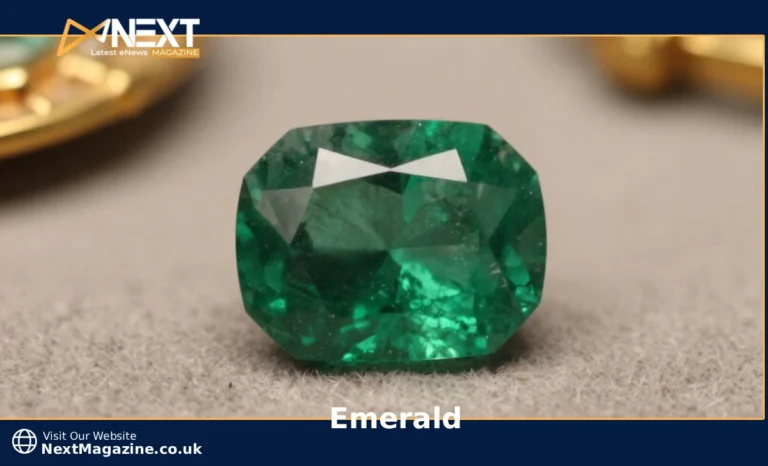
Emeralds symbolize renewal, wisdom, and prosperity across cultures. From Cleopatra’s royal collections to modern engagement rings, this green gemstone has represented power, love, and healing for over 4,000 years. Learn what emeralds mean historically and why they remain one of the world’s most sought-after gems today.
The Name Behind the Green
The word “emerald” comes from the ancient Greek “smaragdus,” meaning green. Over centuries, this evolved through Latin (“smaragdus”) and Old French (“esmeraude”) into the English word we use today.
You might see “emerald” misspelled as “emarand” or “emrald” online. The correct pronunciation is “EM-er-uld” with emphasis on the first syllable. This matters when you’re shopping for jewelry or discussing gemstones with jewelers.
The name itself became synonymous with the richest green color in nature. Ireland earned the nickname “Emerald Isle” for its lush landscapes. Seattle calls itself the “Emerald City.” Even Thailand’s most sacred religious icon is the Emerald Buddha, though it’s actually carved from green jadeite, not emerald.
What Emeralds Symbolized in Ancient Civilizations
Ancient Egyptians mined emeralds as early as 330 BC. Cleopatra didn’t just wear emeralds. She claimed ownership of all emerald mines in Egypt and used the gems as political tools. She adorned her palace with emeralds, wore them as displays of wealth, and gave them as diplomatic gifts to foreign rulers.
For Egyptians, emeralds represented fertility and rebirth. The green color connected to their agricultural cycles and the annual flooding of the Nile. They believed emeralds held protective powers and often buried them with the dead to ensure safe passage to the afterlife.
The Roman naturalist Pliny the Elder wrote in the first century AD that “nothing greens greener” than emerald. Roman gem cutters kept emeralds on their workbenches. After hours of detailed work, they would gaze at the stones to rest their strained eyes. The soothing green color offered relief, a practice that sounds remarkably similar to modern advice about looking at nature to reduce eye strain.
Emerald’s Sacred Meaning Across Religions
Hindu Traditions
Hindu texts describe emeralds as gifts worthy of the gods. Offering emeralds to Krishna would grant spiritual rewards and “Knowledge of the Soul and the Eternal.” In Hindu astrology, emeralds connect to the planet Mercury and appear in Navaratna jewelry, a nine-gem setting representing celestial bodies.
Christian Symbolism
The Book of Revelation describes emeralds among the foundation stones of the Heavenly City. Archbishop Rabanus Maurus of Mainz (786-856 CE) wrote that emeralds express “the strength of faith in adversity.”
Early Christian writers connected emeralds to John the Evangelist. Bishop Andreas of Caesarea (563-637 CE) wrote that emeralds, nourished with oil to maintain their beauty, symbolized how John’s teachings strengthened faith. Some theologians later associated the transparent green stone with Christ’s kindness and goodness.
Indigenous American Beliefs
The people of Manta, Peru worshipped a massive emerald called Umina, roughly the size of an ostrich egg. Priests displayed this “mother emerald” only during feast days. Followers brought smaller emeralds as offerings to honor the goddess.
When Spanish conquistadors arrived, they seized countless emeralds but never found Umina. The priests had hidden it too well. Ironically, the Spaniards destroyed many genuine emeralds by testing them on anvils, believing real emeralds could withstand hammer blows. They couldn’t. Emeralds can reach a hardness of 8 on the Mohs scale but remain brittle due to their natural inclusions.
The Mystical Powers People Believed Emeralds Held
Throughout history, cultures attributed supernatural abilities to emeralds:
Prediction and Wisdom: Emeralds supposedly granted foresight. Placing one under your tongue would reveal future events.
Truth Detection: The stones could expose lies and break through illusions. Lovers used emeralds to test the sincerity of romantic vows.
Enhanced Intelligence: Wearing emeralds sharpened wit, improved memory, and made speakers more eloquent.
Healing Properties: Ancient physicians believed emeralds could cure cholera and malaria. Modern crystal healing practitioners claim emeralds promote emotional balance and connect to the heart chakra.
None of these powers have scientific backing. But the consistent belief across unconnected cultures suggests emeralds held genuine psychological value. Wearing a stone associated with wisdom might have boosted confidence, creating a self-fulfilling prophecy.
Why Emeralds Still Matter Today
Modern Symbolism
Emeralds remain the birthstone for May and the traditional gift for 20th and 35th wedding anniversaries. The green color represents spring, renewal, and growth, making emeralds popular for major life transitions.
The symbolism has evolved. Today, emeralds represent:
Environmental Consciousness: The green color connects to nature and sustainability movements.
Non-Traditional Luxury: Couples choosing emerald engagement rings often want something unique that stands apart from diamond traditions.
Old Money Aesthetic: Emeralds carry associations with established wealth and refined taste, particularly in European aristocratic traditions.
Famous Modern Emeralds
Jacqueline Kennedy owned a 40-carat emerald engagement ring from Aristotle Onassis. The piece sold at auction for $1.26 million in 1996.
Elizabeth Taylor’s emerald and diamond suite from Bulgari fetched over $23 million at Christie’s in 2011. The collection included a necklace, earrings, ring, and bracelet.
Angelina Jolie wore emerald earrings to the 2009 Oscars that perfectly complemented her green Versace gown, sparking renewed interest in emerald jewelry among younger buyers.
What Drives Emerald Value Beyond Symbolism
Understanding emerald meaning helps, but practical factors determine what you’ll pay:
The 4Cs Applied to Emeralds
Color: The most critical factor. The ideal emerald shows a bluish-green hue with medium tone and vivid saturation. Too light and it becomes green beryl, not emerald. Too dark and the color appears black.
Clarity: Unlike diamonds, emeralds almost always contain visible inclusions. The French call these internal features “jardin” (garden). Clean emeralds command premiums roughly three times higher than comparable treated stones.
Cut: The emerald cut was developed specifically for these stones. The step-cut facets with truncated corners protect brittle edges. Today, emeralds appear in all shapes: oval, cushion, round, pear.
Carat Weight: Prices don’t increase linearly. A two-carat emerald costs more than double a one-carat stone of similar quality because larger sizes are exponentially rarer.
Treatment Reality
About 99% of emeralds receive clarity treatments. Jewelers fill surface-reaching fractures with oils or resins to improve appearance. This is standard industry practice and doesn’t mean the stone is fake.
Untreated emeralds with good color and clarity are extremely rare and expensive. Most people own treated emeralds and should expect them unless specifically buying untreated stones with gemological certification.
Origin Stories
Colombian emeralds traditionally command premium prices due to their pure green color with slight bluish secondary hues. Zambian emeralds tend toward bluish-green with slightly darker tones.
The origin matters less than the actual appearance. A beautiful Zambian emerald outperforms a poor-quality Colombian stone. Smart buyers focus on the individual gem, not just the mine location.
Choosing an Emerald Based on Personal Meaning
If you’re buying an emerald for symbolic reasons, consider what aspect of emerald lore resonates most:
For wisdom and clarity: Choose a stone with excellent transparency, even if it means accepting smaller size.
For renewal and growth: Select a vibrant green color that reminds you of spring foliage.
For connection to history: Consider Colombian emeralds from the same region Cleopatra and the Incas treasured.
For modern values: Look for ethically sourced emeralds with transparent supply chains.
The meaning you assign matters more than ancient legends. An emerald that connects to your personal story will hold more significance than one chosen purely for investment or status.
The Enduring Appeal of Green
Emeralds have survived 4,000 years of changing fashions. The green color itself explains much of this staying power. Green sits in the middle of the visible spectrum, making it naturally easy on human eyes. It’s the color of growth, life, and prosperity across virtually all cultures.
Unlike diamonds, which became engagement ring standards through 20th-century marketing, emeralds earned their status through millennia of genuine cultural significance. From Egyptian pharaohs to modern celebrities, people who could afford any gemstone have consistently chosen emeralds.
That’s not likely to change. As long as humans value nature, growth, and renewal, emeralds will symbolize these ideals. The stone Cleopatra wore 2,000 years ago means something remarkably similar to the emerald ring someone buys today. Few possessions can claim that kind of continuity.
