
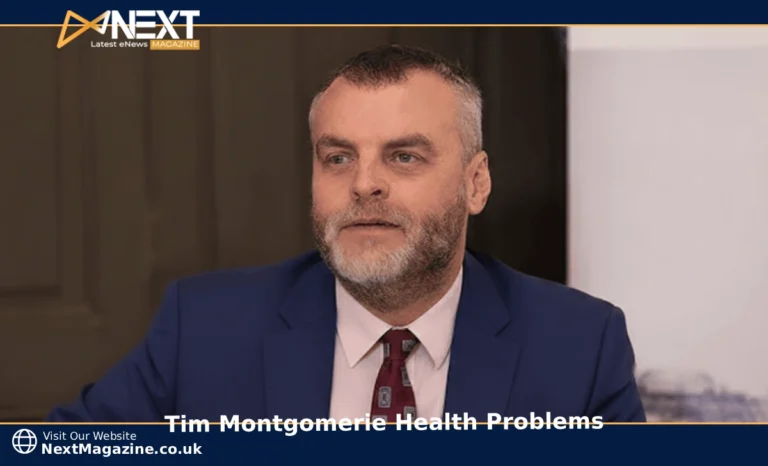
Tim Montgomerie’s health problems centre on mental health struggles he experienced during the COVID-19 lockdown. He disclosed this publicly in a June 2022 interview with the New Culture Forum. No credible source confirms any physical illness. Claims about cerebral palsy, Parkinson’s disease, or stroke are unverified and driven entirely by online speculation.
What the Searches Are Really Asking
Type “Tim Montgomerie health problems” into any search engine, and the results promise dramatic answers. Most deliver confusion. Some pages imply a mysterious chronic condition. Others list unverified diagnoses as though they were established medical facts. A few present pure speculation with the confidence of a press release.
The reality is far simpler. People search this term because Montgomerie is a well-known public figure who spoke openly about his well-being during COVID-19. That candour created a searchable trail. Sites built to capture search traffic filled that trail with guesswork, and the guesswork began ranking.
This article follows that trail to where it actually leads: one verified disclosure, one recovery, and no confirmed physical illness of any kind.
Who Is Tim Montgomerie
Tim Montgomerie was born on 24 July 1970 in Barnstaple, Devon. He grew up in an army family, moving frequently, and studied Economics and Geography at the University of Exeter. After graduating, he moved into Conservative Party politics and began his career as a speechwriter for party leader William Hague.
In 2004, he co-founded the Centre for Social Justice alongside Iain Duncan Smith, a think tank focused on poverty and social breakdown. A year later, he launched ConservativeHome, a website that became one of the most widely read platforms in British right-of-centre politics. It gave grassroots Conservatives a voice at a time when the party was struggling to rebuild after the Blair years.
He later joined The Times as a comment editor, broadening his reach beyond digital media. He briefly served as an adviser to Boris Johnson in Downing Street, though that relationship became strained. By 2017, Montgomerie had founded UnHerd, an online magazine designed to challenge mainstream political consensus from across the political spectrum.
His faith has been a consistent thread throughout his career. He is a practising Christian and has spoken publicly about how his beliefs shape his politics and, during the hardest period of his life, his recovery.
In December 2024, after years of growing frustration with the Conservative Party’s direction, Montgomerie joined Reform UK. He remains active in political commentary, writing, and broadcasting as of 2026.
The Only Confirmed Health Struggle
In June 2022, Montgomerie gave an interview with Peter Whittle for the New Culture Forum. What he shared was candid, specific, and sourced to his own words.
He described the COVID-19 lockdown as one of the most painful periods of his life. Living alone and cut off from his usual social and professional routines, he said he reached what he called “dark places.” The sustained isolation deepened feelings of depression and emotional exhaustion that had built over months rather than arriving suddenly.
He sought professional counselling. He was also prescribed short-term antidepressant medication to help him through the worst of it. This was not a vague “I struggled a bit” disclosure. He described specific symptoms, a specific trigger, and a specific course of treatment.
By June 2022, he stated publicly that he was getting on top of his struggles. He described the recovery as gradual, supported by therapy, medication, and the passage of time. He later discontinued his antidepressants under medical supervision, following a managed withdrawal rather than stopping abruptly.
He also used the interview to encourage others in similar situations. He said that even when it seems impossible to get through, people do get through. That message carried credibility precisely because he had been through it himself.
The Role Sir David Amess Played
One detail that almost all coverage ignores completely is the specific friendship that helped Montgomerie through this period.
He credited the late Conservative MP Sir David Amess as a key figure in his recovery. Amess rang him unprompted during the pandemic and said directly that he knew Montgomerie was not well. He worked to lift his spirits over the phone and made him promise to call whenever he felt himself falling into a dark place again. It was not a public gesture. It was a private one.
Sir David Amess was murdered at his constituency surgery in Leigh-on-Sea in October 2021. The fact that Montgomerie later spoke about Amess in this context, as someone who reached out when no one else knew how, adds a dimension to the story that no competitor article has handled with the weight it deserves.
Why Rumours About Physical Illness Spread
When a public figure discusses mental health honestly, that conversation lives online indefinitely. It generates searches. And where there are searches, there are sites designed to capture that traffic and monetise it.
The mechanism is straightforward. Montgomerie speaks candidly about depression and lockdown in a YouTube interview. The video gets clipped and shared. People notice changes in his appearance or manner over the years and search for explanations. Clickbait sites fill that gap with speculation. Once the word “Parkinson’s” or “cerebral palsy” appears in a headline next to his name, it begins to rank.
Google’s autocomplete and People Also Ask features then amplify the problem. A speculative term attached to a real person’s name starts appearing in search suggestions. Other sites copy the framing to chase the same traffic. Within weeks, a claim with no medical basis has a visible presence in search results. The claim spreads without ever being verified by a single credible source.
There is no medical record, no credible interview, and no statement from Montgomerie or anyone close to him confirming any chronic physical condition. No reputable outlet has reported a diagnosis of cerebral palsy, Parkinson’s disease, stroke, cancer, or any other serious physical illness.
Applying labels like these to someone without evidence does not just spread misinformation. It also trivialises serious conditions and misrepresents what it actually means to live with them.
Tim Montgomerie’s Struggles in a Wider Context
Montgomerie’s experience during the pandemic was painful. It was also, in statistical terms, far from unique.
The World Health Organization reported a 25% increase in anxiety and depression globally in the first year of the pandemic. In the UK, surveys from the Office for National Statistics found that nearly 1 in 4 adults reported depressive symptoms during lockdown periods. Among people living alone, those figures were consistently higher.
Sustained isolation is one of the strongest documented predictors of poor mental health outcomes. Montgomerie fit that profile exactly: a single person, removed from his professional network, cut off from the social rhythms that most people rely on without recognising it.
What made his experience notable was not that it happened. It was he named it publicly. Political commentators, and particularly those on the right of British politics, rarely discuss mental health in personal terms. His willingness to say he sought counselling, took medication, and needed support from friends challenged a cultural silence that costs lives.
His openness also gave permission, implicitly, to others who might have been going through something similar and had not yet named it. That is not a small thing.
Where He Stands Now
As of 2026, Tim Montgomerie shows no signs of any ongoing health problems, confirmed or otherwise.
He joined Reform UK in December 2024 and has remained publicly active since. He posts regularly on X, contributes political commentary across broadcast and digital media, and continues to engage substantively with debates about British conservatism, immigration policy, and the direction of the UK right. His output has not diminished. His presence in political media is, if anything, stronger now than it was two years ago.
There is no current reporting, statement, or credible source suggesting his mental health struggles have returned or that any physical condition has emerged. The most recent picture of his health, based on what he has disclosed and what has been reported, is one of recovery and sustained professional activity.
The searches will keep coming. New sites will keep publishing speculation to capture that traffic. But the facts have not changed since June 2022, and they are not complicated.
Montgomerie experienced a serious mental health crisis during one of the most isolating periods in recent memory. He got help. He recovered. He is still working.
That is the complete, verified story.
