
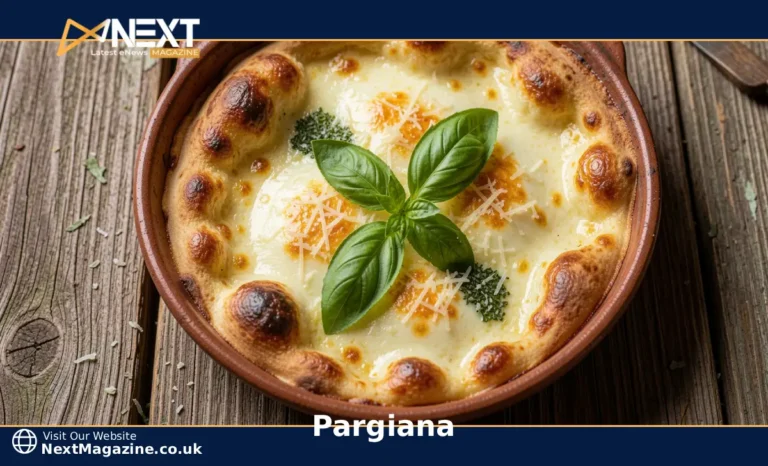
Pargiana, also known as parmigiana di melanzane or eggplant parmigiana, is a classic Italian baked dish made from layers of fried eggplant, rich tomato sauce, fresh basil, and melted cheese. It comes from southern Italy, most likely Sicily or Campania, and has been a family staple for generations. What makes it special is not any single ingredient but how they all work together once the dish comes out of the oven. The eggplant turns silky, the cheese pulls apart in satisfying strands, and the sauce holds every layer together.
It is also one of those dishes that gets better with time. Made on a Sunday, it tastes even deeper on a Monday. That combination of simplicity and reward is exactly why pargiana keeps earning fans, in Italian kitchens and everywhere else.
What Pargiana Actually Is
Most people have heard of eggplant parmesan. Pargiana is the real thing behind that name.
At its core, it is an Italian eggplant bake built from a few honest ingredients: sliced eggplant, a good tomato sauce, mozzarella, Parmesan, and fresh basil. You fry or grill the eggplant first, then layer everything in a baking dish and cook it until the top bubbles and turns golden.
It sounds simple, and it is. But the result feels like something much greater than the sum of those parts.
Pargiana is naturally vegetarian. It does not need meat to feel filling or satisfying. That quality is part of why it has held up so well across generations, and why more people are reaching for it as a main course today.
Where This Dish Really Comes From
The origins of pargiana are genuinely interesting, and there is still a friendly debate about them.
One school of thought points to Sicily. There, the word “parmiciana” refers to the overlapping wooden slats of traditional shutters. The layered eggplant slices reminded people of that same pattern, and the name stuck. Another theory traces the dish to Campania, the region around Naples, where tomato sauce became widely used in home cooking during the 19th century. That is when parmigiana di melanzane started to look the way it does today.
Both stories agree on this: pargiana was never a restaurant invention. It came from home kitchens where cooks used what was local, took their time, and fed people who were hungry. Eggplant itself traveled from Asia to the Mediterranean over centuries and found the climate and the cuisine that suited it perfectly.
The purist debate continues, too. Some cooks insist on fewer cheeses and let the eggplant and sauce carry the dish. Others go heavy on the mozzarella and see the cheese pull as part of the pleasure. Neither is wrong. It often comes down to family tradition, which is exactly how it should be.
Why Pargiana Tastes So Good
There is a texture contrast at work in every good pargiana that is hard to describe until you experience it.
The eggplant goes silky after frying and baking, almost melting into the sauce. The mozzarella stretches and pulls. The Parmesan adds a sharp edge that cuts through the richness. The basil brings a fresh note that lifts the whole thing. Every layer has a role, and when the timing is right, they all show up at once in a single forkful.
There is also a settling effect. Pargiana tastes good straight out of the oven, but it tastes even better after resting for 10 minutes. The layers compress slightly, the flavors connect, and the dish holds together cleanly when you slice it.
One more thing worth saying: pargiana has a way of slowing people down. When you serve it to family or friends, no one rushes through it. People take their time, refill their plates, and stay at the table longer. The dish does that on its own.
How to Make Pargiana at Home
Making a good eggplant parmigiana at home is not complicated, but it does ask for attention at each step.
Start with firm, glossy eggplants. Slice them about half an inch thick. Salt the slices and let them sit in a colander for 30 minutes. This draws out moisture and any bitterness, and it makes a real difference in the final texture.
Next, fry the slices in batches in hot oil. You want them golden on both sides, not pale and soft. Drain them well on paper towels after frying. This is where most soggy pargiana goes wrong: skip the draining, and the oil ends up between your layers, making the dish turn heavy and wet.
While the eggplant rests, make a simple tomato sauce. Simmer crushed tomatoes with garlic, a touch of onion if you like, salt, and a handful of fresh basil. Keep it light. The sauce should taste clean and bright, not heavy. If your tomatoes are quite tart, a small pinch of sugar balances them out.
Then assemble. Spread a thin layer of sauce across the bottom of your baking dish. Add a layer of eggplant, more sauce, torn mozzarella, grated Parmesan, and a few basil leaves. Repeat until you have used everything up. Finish with sauce and a generous layer of cheese on top.
Bake at around 375°F (190°C) for 30 to 40 minutes, until the top is golden and bubbling. Let it rest for at least 10 minutes before slicing.
A few practical notes from experience:
- Do not skip salting the eggplant. It changes the texture noticeably.
- Taste your tomato sauce as it cooks. Tomatoes vary a lot by brand and season.
- A good store-bought marinara works fine on busy nights.
- Always let the dish rest before serving. It holds together far better.
This is the kind of Italian eggplant bake that improves every time you make it. Once you understand how the layers should feel and taste, it becomes second nature.
Serving It Right and Making the Most of Leftovers
Pargiana works as a main course for vegetarians and meat-eaters alike.
Keep the sides simple. A green salad with olive oil and a squeeze of lemon cuts through the richness nicely. Crusty bread is practically non-negotiable for the sauce. If you want to add a drink, something Italian and not too heavy works well. A Chianti or a dry white wine both pair naturally with the dish.
Leftovers are genuinely one of the best things about this recipe. Cover the baking dish and refrigerate it. The next day, the layers have settled, and the flavors have deepened. Many people who make pargiana regularly will tell you that day two is better than day one. It keeps well for two to three days in the fridge and reheats cleanly in a low oven.
If you are cooking for a group, pargiana is one of the best make-ahead options in Italian cooking. Put it together the day before, refrigerate it unbaked, and bake it fresh before serving. It holds up well and actually benefits from the extra time.
FAQs About Pargiana
What is pargiana, and how is it different from regular eggplant parmesan?
Pargiana is the informal shorthand for parmigiana di melanzane, the Italian original. The versions most common in the US often include breadcrumbs on the eggplant before frying. The Italian original typically does not. It is simpler and lets the eggplant texture carry the dish.
Do you have to fry the eggplant, or can you bake it instead?
You can bake or grill the eggplant instead of frying if you prefer a lighter result. Brush the slices with olive oil and cook them in a hot oven or on a grill pan until soft and slightly golden. The texture is a little different, less rich, but the layered flavor comes through well. Both approaches are worth trying.
Why does my eggplant parmigiana turn out soggy or oily?
Two main reasons: not salting the eggplant before frying, and not draining it properly afterward. The salt draws out moisture, so the eggplant fries rather than steams in its own liquid. The draining removes excess oil. Skip either step, and the finished dish will be wet and heavy. Take both seriously, and the result stays balanced and clean.
How long do leftovers keep, and does it really taste better the next day?
Pargiana keeps for two to three days in the fridge. And yes, it genuinely tastes better on day two. The flavors settle and deepen overnight, making each bite more cohesive. It is one of those dishes where patience keeps paying off even after cooking is done.
