
Motivation is the internal and external force that starts, guides, and sustains goal-directed behaviour. It explains why people act, how much effort they apply, and how long they keep going. Motivation can be intrinsic (driven by personal satisfaction) or extrinsic (driven by outside rewards or pressure).
Most people think motivation is a feeling. It shows up, you get things done, and then it disappears again. But that idea causes more frustration than it solves, because it treats motivation as something you either have or don’t.
In reality, motivation is a process. It is the reason behind every choice you make, from getting out of bed early to finishing a project you don’t feel like touching. Understanding how it works changes how you use it.
This guide covers the true definition of motivation, its main types, the psychological theories behind it, and practical ways to build it so it holds up on hard days, not just easy ones.
What Is Motivation?
Motivation Definition
Motivation is the internal and external force that starts, guides, and maintains goal-directed behaviour. It explains why a person acts, how hard they try, and how long they keep going before they stop.
The word comes from the Latin “movere,” meaning “to move.” That root captures the idea well: motivation is what moves a person from thinking about something to actually doing it.
Motivation Meaning in Simple Words
In plain terms, motivation is your reason for doing something. It’s the push that gets you to study for an exam, apply for a job, go to the gym, or finish a task you’ve been putting off. Without a reason strong enough to act on, most people stay stuck in planning mode.
Motivation in Psychology
Psychologists study motivation as a set of mental processes that direct behaviour toward a goal. Rather than treating it as one single force, psychology looks at what triggers a behaviour, what keeps it going, and what causes it to fade. This is why some people are motivated by rewards, others by curiosity, and others by a sense of duty.
Why Motivation Is Called the Driving Force Behind Human Behaviour
Nearly every human action, from small daily habits to major life decisions, is tied to some form of motivation. It shapes:
- What goals a person sets
- How much effort they put in
- How they respond to setbacks
- Whether they keep going or give up
Because it touches almost every part of behaviour, motivation is often described as the engine behind human action.
How Motivation Works
What Drives Human Behaviour?
Human behaviour is rarely driven by one single cause. A person going to the gym might be motivated by health concerns, body image, stress relief, and social connection simultaneously. Motivation usually comes from a mix of needs working together, not from a single isolated reason.
Biological, Emotional, Social, and Cognitive Factors
Motivation draws from four main sources:
- Biological factors: hunger, sleep, energy levels, and physical health all affect how motivated a person feels.
- Emotional factors: mood, confidence, and past experiences shape whether a goal feels worth pursuing.
- Social factors: relationships, approval, and a sense of belonging often push people to act.
- Cognitive factors: beliefs about ability and expected outcomes influence whether someone even attempts a task.
How Motivation Influences Decision-Making
Motivation acts as a filter for decisions. When a goal feels meaningful, the brain assigns it more value, making related choices feel easier. When motivation is low, even simple decisions can feel exhausting, because the brain isn’t prioritising the effort required.
The Relationship Between Motivation and Goals
Motivation and goals depend on each other. A goal without motivation stays an idea. Motivation without a goal has no direction. Clear goals give motivation something to aim at, which is why vague ambitions (“get healthier”) often fade faster than specific ones (“walk 30 minutes, five days a week”).
Types of Motivation
Intrinsic Motivation
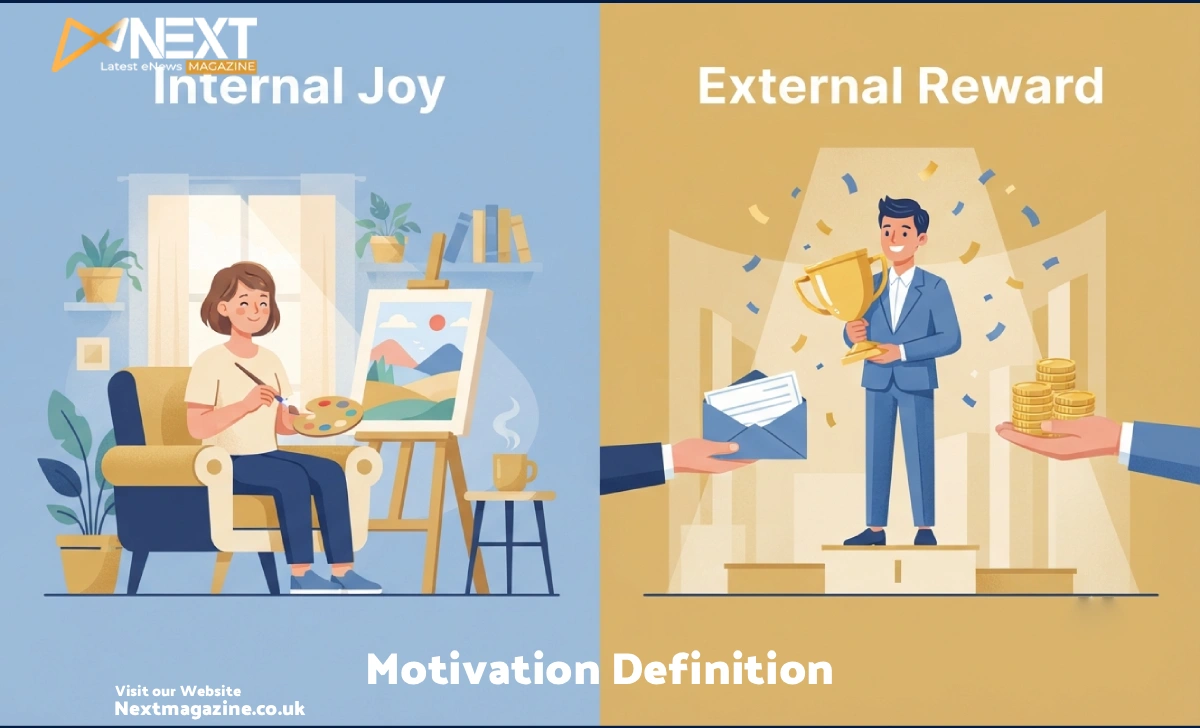
Definition: Intrinsic motivation comes from within. A person acts because the activity itself feels satisfying, interesting, or meaningful, not because of an outside reward.
Characteristics:
- Driven by curiosity, enjoyment, or personal values
- Tends to last longer than reward-based motivation
- Often linked to higher creativity and satisfaction
Examples: Learning a language for the joy of it, playing an instrument for fun, or volunteering because it feels meaningful.
Extrinsic Motivation
Definition: Extrinsic motivation comes from outside factors, such as money, grades, recognition, or avoiding punishment.
Characteristics:
- Driven by rewards or consequences
- Effective for short-term tasks or repetitive work
- Can fade once the reward is removed
Examples: Working overtime for a bonus, studying to avoid a bad grade, or exercising to win a competition.
Family Motivation
Meaning: Family motivation is driven by a desire to provide for, protect, or make life better for family members. It blends personal responsibility with emotional connection.
Examples: Working a difficult job to support children, saving money for a parent’s medical care, or pushing through a hard week because a family is depending on the outcome.
Positive vs. Negative Motivation
Positive motivation is built around rewards and encouragement, such as praise, growth, or achievement. Negative motivation is built around avoiding something unwanted, such as fear, criticism, or failure.
Both can produce results, but positive motivation tends to support long-term well-being, while negative motivation often creates short bursts of effort followed by stress or burnout.
Intrinsic vs. Extrinsic Motivation (Comparison Table)
| Factor | Intrinsic Motivation | Extrinsic Motivation |
|---|---|---|
| Source | Internal (interest, values) | External (rewards, pressure) |
| Longevity | Tends to last longer | Often short-term |
| Best suited for | Creative, meaningful work | Repetitive or measurable tasks |
| Example | Reading for enjoyment | Reading to pass an exam |
| Risk | Can fade without structure | Can fade once reward stops |
Why Motivation Is Important
Benefits in Personal Life
Motivation helps people build habits, follow through on goals, and recover faster after setbacks. It supports discipline in areas like finances, relationships, and personal growth.
Motivation in Education
Motivated students tend to engage more with material, complete assignments with more focus, and handle academic pressure better. Motivation often matters more than raw ability when it comes to long-term academic success.
Motivation in the Workplace
Employee motivation affects productivity, quality of work, and workplace morale. Teams with higher motivation usually show better collaboration and lower turnover.
Motivation in Health and Fitness
Sticking to a workout routine or healthy eating plan depends heavily on motivation, especially once initial excitement fades. Long-term health changes usually require motivation tied to identity (“I am someone who takes care of my body”) rather than short-term willpower alone.
Motivation for Career Growth
Career progress rarely happens by accident. Motivation drives people to seek new skills, take on responsibility, and pursue opportunities that feel uncertain but worthwhile.
Motivation and Mental Well-Being
Having a sense of purpose and direction is linked to better mental health. Motivation gives people something to focus on beyond daily stress, which can reduce feelings of stagnation or hopelessness.
Key Components of Motivation
Activation
Activation is the decision to begin a behaviour, such as starting a workout or opening a laptop to start working.
Persistence
Persistence is the continued effort toward a goal, even when it becomes difficult, boring, or inconvenient.
Intensity
Intensity refers to the amount of energy and focus a person puts into an activity. Two people can be equally motivated to run, but one may push harder than the other.
Major Theories of Motivation
Instinct Theory
This theory suggests that humans are motivated by innate, biological instincts, such as survival and reproduction, rather than learned behaviour alone.
Drive Reduction Theory
This theory proposes that motivation stems from a need to reduce internal tension caused by unmet biological needs, like hunger or thirst. The behaviour that satisfies the need is repeated.
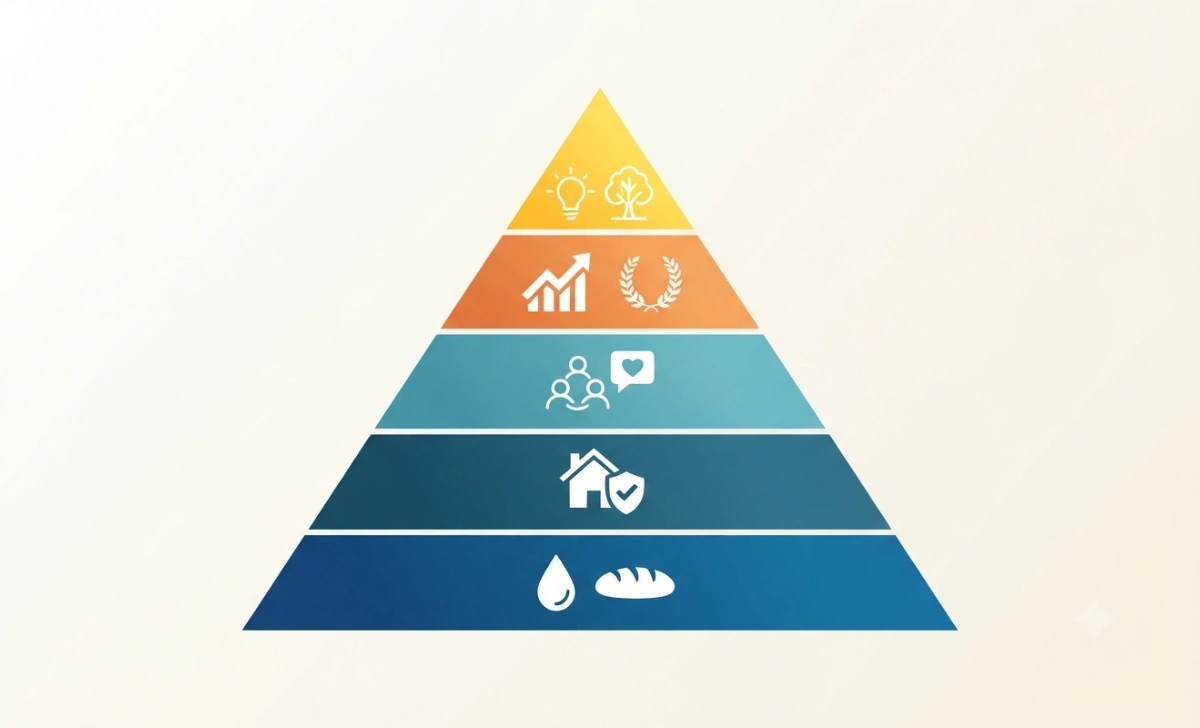
Maslow’s Hierarchy of Needs
Abraham Maslow proposed that human needs exist in a hierarchy, starting with basic survival needs and moving toward higher-level goals:
- Physiological needs (food, water, sleep)
- Safety needs (security, stability)
- Social needs (belonging, relationships)
- Esteem needs (respect, recognition)
- Self-actualisation (reaching one’s full potential)
According to this theory, lower needs generally must be met before higher-level motivation, like personal growth, becomes a priority.
Arousal Theory
Arousal theory suggests people are motivated to maintain an optimal level of mental and physical stimulation. Too little arousal leads to boredom, while too much leads to stress, and both push people toward behaviours that restore balance.
Daniel Pink’s Motivation 1.0, 2.0 & 3.0
Author Daniel Pink outlined three stages of human motivation:
- Motivation 1.0: driven by survival needs
- Motivation 2.0: driven by rewards and punishments
- Motivation 3.0: driven by autonomy, mastery, and purpose
Pink argues that Motivation 3.0 is more effective for complex, modern work than traditional reward-based systems.
Comparing Popular Motivation Theories
| Theory | Core Idea |
|---|---|
| Instinct Theory | Behaviour is driven by biological instinct |
| Drive Reduction Theory | Behaviour reduces internal tension |
| Maslow’s Hierarchy | Needs are met in a specific order |
| Arousal Theory | Behaviour maintains ideal stimulation levels |
| Motivation 3.0 (Pink) | Autonomy, mastery, and purpose drive modern motivation |
What Fuels Motivation?
Autonomy
People stay motivated longer when they feel in control of their choices, rather than forced into them.
Competence (Ability)
Motivation grows when people feel capable of improving. Visible progress, even little progress, reinforces the desire to continue.
Purpose and Personal Connection
Motivation tends to be stronger and more durable when a task connects to personal values or a larger reason beyond the task itself.
Rewards vs. Internal Satisfaction
External rewards can jumpstart motivation, but research in psychology consistently points to internal satisfaction, such as enjoyment or personal meaning, as the stronger long-term driver.
Factors That Affect Motivation
Confidence and Self-Belief
People are far more likely to pursue a goal when they believe they can succeed at it. Low confidence often kills motivation before action even begins.
Goal Setting
Clear, specific goals give motivation direction. Vague goals leave too much room for procrastination.
Environment
A cluttered, distracting, or unsupportive environment can quietly drain motivation, while an organised, focused space can help sustain it.
Habits and Routine
Motivation fluctuates, but habits don’t require daily motivation once they’re established. Strong routines reduce reliance on willpower.
Stress and Burnout
Chronic stress depletes the mental energy needed for motivation. Burnout in particular can make even simple tasks feel overwhelming.
Sleep and Physical Health
Poor sleep and physical health directly reduce motivation by limiting energy, focus, and emotional regulation.
Relationships and Social Support
Encouragement from others, whether a mentor, friend, or family member, often reinforces motivation, especially during difficult periods.
Common Causes of Low Motivation
Fear of Failure
When the fear of failing outweighs the desire to succeed, many people avoid starting altogether.
Perfectionism
Waiting for the “right” conditions or a flawless plan often delays action indefinitely, draining motivation over time.
Lack of Clear Goals
Without a defined target, effort feels aimless, which makes it harder to stay engaged.
Mental Exhaustion
Overworked minds struggle to generate the energy needed to start or sustain new tasks.
Distractions and Procrastination
Constant interruptions and low-effort distractions can quietly replace meaningful action.
Unrealistic Expectations
Setting goals that are too ambitious too quickly often leads to early burnout and lost motivation.
How to Improve Motivation

Set SMART Goals
Specific, Measurable, Achievable, Relevant, and Time-bound goals give motivation a clear direction and a way to track progress.
Break Big Goals into Smaller Steps
Large goals can feel intimidating. Breaking them into smaller, manageable steps makes starting easier and progress more visible.
Build Better Habits
Turning key actions into habits reduces the daily reliance on motivation alone.
Improve Self-Confidence
Small wins build confidence, and confidence fuels the willingness to take on bigger challenges.
Find Your Purpose
Connecting a task to a personal reason, not just an outcome, makes it easier to stay committed.
Use the Goldilocks Rule
Tasks that are too easy feel boring, and tasks that are too hard feel discouraging. Motivation tends to peak when a challenge is just slightly beyond current ability.
Practice Deliberately
Focused, intentional practice, rather than passive repetition, builds skill faster and keeps motivation engaged through visible improvement.
Develop Consistent Routines
Predictable routines lower the mental effort required to get started each day.
Create a Positive Environment
Surrounding yourself with supportive people and organised spaces reduces friction and supports sustained motivation.
Track Progress and Celebrate Small Wins
Recognising progress, even in small amounts, reinforces motivation and builds momentum toward larger goals.
Flow State and Peak Performance
What Is Flow?
Flow is a mental state of complete focus and immersion in an activity, often described as being “in the zone.” Time seems to pass differently, and the task feels effortless despite requiring skill.
Benefits of Flow State
Flow is linked to higher performance, greater enjoyment, and stronger intrinsic motivation, since the activity becomes rewarding on its own.
How to Achieve Flow More Often
Flow tends to happen when a task matches a person’s skill level closely, has clear goals, and offers immediate feedback. Reducing distractions and setting focused blocks of time can help create the right conditions.
Real-Life Examples of Motivation
Student Motivation
A student staying up late to finish a project driven by pride in their work, not just the grade, shows intrinsic motivation in action.
Employee Motivation
An employee who takes initiative on a project because they find it genuinely interesting, beyond their assigned duties, reflects strong workplace motivation.
Entrepreneur Motivation
Entrepreneurs often push through uncertainty and setbacks because of a strong personal connection to their idea or mission.
Athlete Motivation
Athletes frequently combine intrinsic motivation, love of the sport, with extrinsic motivation, competition and recognition, to sustain long-term training.
Everyday Life Examples
Motivation shows up in small daily choices too, like cooking a healthy meal instead of ordering takeout, or choosing to read instead of scrolling on a phone.
Motivation vs. Inspiration
Key Differences
Motivation is the drive to act, often built through effort, habit, and reasoning. Inspiration is a sudden spark of insight or emotion that sparks a new idea or desire, but doesn’t always come with follow-through.
Which One Lasts Longer?
Motivation tends to be more sustainable because it can be built and maintained through structure and habits. Inspiration is often short-lived unless it’s followed by consistent action.
When You Need Each One
Inspiration is useful for generating new ideas and creative direction. Motivation is what carries those ideas through the slower, less exciting stages of execution.
Common Myths About Motivation
Motivation Is Constant
Even highly successful people experience dips in motivation. What separates them is having systems in place that keep them moving anyway.
Money Motivates Everyone
Money can motivate short-term effort, but studies in psychology show it rarely sustains long-term engagement compared to purpose or mastery.
Successful People Never Lose Motivation
Loss of motivation is a normal part of any long-term pursuit, not a sign of failure or weakness.
Motivation Comes Before Action
For many people, action actually creates motivation, not the other way around. Starting a task, even without feeling ready, often builds momentum.
Conclusion
Motivation isn’t a fixed trait some people have, and others don’t. It’s shaped by biology, environment, habits, and the goals a person chooses to pursue. Understanding the type of motivation behind a goal, whether intrinsic, extrinsic, or tied to family, makes it far easier to build systems that support it.
Lasting motivation comes less from waiting to feel ready and more from building small, repeatable actions that don’t depend on mood. Start with one clear goal, break it into a manageable first step, and let consistent action build the momentum that motivation alone often can’t provide.
Frequently Asked Questions (FAQs)
What is the definition of motivation?
Motivation is the internal and external force that starts, guides, and sustains behaviour aimed at reaching a goal.
What are the main types of motivation?
The two primary types are intrinsic motivation (internal drive) and extrinsic motivation (external rewards or pressure). Family motivation is another common category tied to personal relationships.
Why is motivation important?
Motivation supports goal achievement, mental well-being, productivity, and personal growth in nearly every area of life.
What is intrinsic motivation?
Intrinsic motivation is the drive to do something because it feels personally satisfying or meaningful, not because of an outside reward.
What is extrinsic motivation?
Extrinsic motivation is driven by outside factors, such as money, grades, recognition, or avoiding negative consequences.
What are the key components of motivation?
The three key components are activation (starting a behaviour), persistence (continuing despite challenges), and intensity (the level of effort applied).
What causes low motivation?
Common causes include fear of failure, perfectionism, unclear goals, mental exhaustion, and chronic stress.
How can I stay motivated every day?
Building consistent habits, setting specific goals, and tracking small wins tend to be more effective than relying on daily motivation alone.
Which motivation theory is the most popular?
Maslow’s Hierarchy of Needs remains one of the most widely referenced motivation theories, though Daniel Pink’s Motivation 3.0 is increasingly cited for modern workplace behaviour.
What is the difference between motivation and inspiration?
Motivation is a sustained drive to act, often built through habits and structure. Inspiration is a short-lived spark that can start a new idea but doesn’t guarantee follow-through.
