

Table of Contents
- 1. Decide How You Will Actually Use the Room
- 2. Build the Color Palette Around Warm Neutrals
- 3. Use Wood Where It Has the Most Impact
- 4. Design the TV Wall Around Function, Not Just Appearance
- 5. Get the TV Height and Seating Distance Right
- 6. Choose Deep, Comfortable Seating Before Decorative Furniture
- 7. Layer the Lighting So the Room Can Change Mood
- 8. Use Textiles to Improve Both Comfort and Acoustics
- 9. Add Stone or Brick Only Where the Room Needs Visual Weight
- 10. Hide Wires Before Adding Decor
- 11. Plan Audio for the Room You Have
- 12. Create Activity Zones Instead of Making Everything Face the TV
- 13. Combine Open and Closed Storage
- 14. Make a Small Rustic Entertainment Room Feel Bigger
- 15. Add Personal Pieces Instead of Filling the Room With Rustic Decor
- What Should You Spend More Money On?
- Common Mistakes to Avoid
- Making Everything Brown
- Mounting the TV Too High
- Buying Furniture Before Measuring
- Using Only Overhead Lighting
- Overdoing the Theme
- Ignoring Storage
- Frequently Asked Questions
- What makes an entertainment room feel rustic?
- How do you make an entertainment room feel cozy?
- What colors work best in a rustic entertainment room?
- What lighting is best for a cozy media room?
- Can a modern TV work with rustic decor?
- How can I create a rustic entertainment room on a small budget?
- What should every entertainment room include?
- How can I make a small TV room feel rustic without making it dark?
- Final Thoughts
A cozy rustic entertainment room should feel comfortable enough for a long movie night, practical enough for gaming or family time, and warm enough that people naturally want to stay in it. The goal is not to fill the space with farmhouse signs or make every surface brown. It is to combine natural materials, soft textures, thoughtful lighting, and modern entertainment features in a way that feels relaxed rather than staged.
You can create that look in a large basement media room, a small TV room, or even a multipurpose family space. What matters most is choosing a few strong rustic elements and making sure the room still works well for watching, listening, playing, and relaxing.
Here are 15 practical ways to create a rustic entertainment room that feels cozy without becoming dark, cluttered, or overly themed.
1. Decide How You Will Actually Use the Room
Before choosing wall colors or buying a reclaimed-wood coffee table, decide what the room needs to do.
A rustic home theater used mostly for films will need good screen visibility, controlled lighting, and comfortable forward-facing seating. A family entertainment room may need a more flexible layout with space for conversation, board games, toys, or a gaming console. If friends gather there often, extra chairs or a small drinks station may matter more than a dramatic feature wall.
This first decision prevents one of the most common mistakes: designing a beautiful room that does not suit the way people actually spend time in it.
2. Build the Color Palette Around Warm Neutrals
Rustic spaces usually work best when the base colors come from natural surroundings. Warm white, cream, greige, taupe, muted olive, charcoal, tan, and soft brown all pair well with timber, stone, leather, and woven fabrics.
If the room is small or receives little daylight, keep most walls lighter and use deeper shades through furniture, curtains, rugs, or one accent wall. Dark colors can make a media room feel intimate, but using them everywhere may make a compact space feel closed in.
A simple combination such as cream walls, medium-toned wood, charcoal seating, and muted green accents gives you enough contrast without losing the cozy character.
3. Use Wood Where It Has the Most Impact
You do not need wood paneling on every wall to create a rustic look. In many rooms, one strong wooden feature is more effective.
That could be a solid entertainment console, reclaimed-wood shelving, a slatted TV wall, visible ceiling beams, or a substantial coffee table. Let that material provide the rustic foundation, then balance it with fabric, metal, painted surfaces, or stone.
Avoid buying a complete matching furniture suite just because the finishes are labeled rustic. Slightly varied wood tones often make the room feel more natural and collected.
4. Design the TV Wall Around Function, Not Just Appearance
The entertainment wall has to handle more than the television. It may also need space for a soundbar, streaming box, console, router, controllers, speakers, and cables.
Plan those details before adding decorative paneling or built-in shelves.
- Use closed cabinets for equipment that does not need to stay visible.
- Leave ventilation space around devices that generate heat.
- Add cable openings behind the media unit.
- Keep frequently used controls easy to reach.
- Avoid placing decorative objects where they block the screen or speakers.
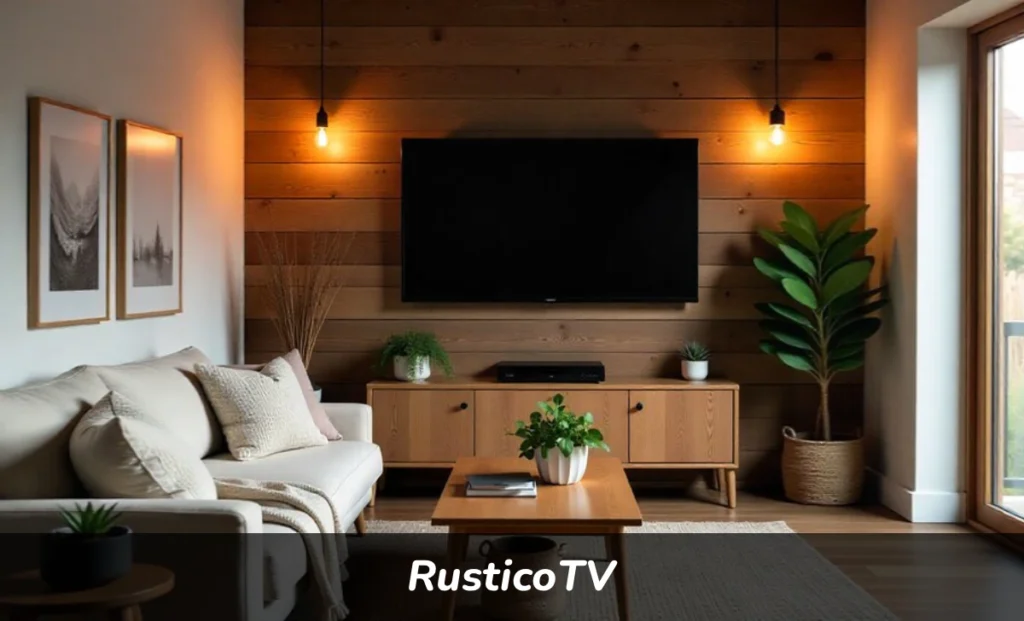
If you want a rustic TV wall, timber or stone can create a strong backdrop, but the screen should still remain the visual focus when it is in use.
5. Get the TV Height and Seating Distance Right
This is where many attractive entertainment rooms become uncomfortable.
The center of the screen should generally sit close to seated eye level rather than high above the furniture. Mounting a television too high can force viewers to tilt their heads during long movies or gaming sessions.
Viewing distance depends on screen size and resolution, but a practical rule is to test the setup before permanently mounting anything. Sit in the main seat, look straight ahead, and make sure the picture feels immersive without forcing you to scan the screen from side to side.
If you have multiple rows or a very large display, sightlines matter even more than decorative symmetry.
6. Choose Deep, Comfortable Seating Before Decorative Furniture
Comfort should receive more of the budget than decorative accessories.
A deep sectional works well in family-oriented spaces because several people can stretch out without needing separate chairs. Recliners can suit a dedicated media room, while a sofa plus two movable armchairs gives more flexibility for conversation.
Leather fits naturally into rustic interiors, but it can feel visually heavy in a dark room. Pair it with lighter cushions, a woven throw, or a soft rug to break up the surface.
Before buying anything large, measure the walking paths around the seating. A room feels less cozy and more cramped when people have to squeeze between furniture.
7. Layer the Lighting So the Room Can Change Mood
One bright ceiling fixture rarely creates a welcoming entertainment space.
Use several types of light instead. General lighting helps when cleaning or playing games, while floor lamps, table lamps, wall sconces, or hidden LED strips create a softer atmosphere when the television is on.
For most cozy interiors, warm-white bulbs in roughly the 2700K to 3000K range create a softer appearance than cool blue-white lighting. Dimmers are also useful because the same room may need bright light for a board game and very little light for a film.
When adding lighting around a screen, keep direct glare away from the display. Indirect light behind or beside the television usually feels more comfortable.
8. Use Textiles to Improve Both Comfort and Acoustics
Rugs, curtains, cushions, and throws are not only decorative. They also soften the sound of a room filled with hard surfaces.
If your entertainment space has timber floors, stone walls, large windows, or bare ceilings, sound can bounce around more than expected. A large rug, upholstered sofa, lined curtains, and fabric accessories can reduce that harsh feeling.
This is especially helpful in a rustic media room where wood and masonry are already prominent.
Choose materials such as wool, cotton, linen, chunky knits, or subtle faux fur. You can use plaid too, but it works better as an accent than as a pattern repeated across every cushion and curtain.
9. Add Stone or Brick Only Where the Room Needs Visual Weight
Stone and brick can make a space feel grounded, but they are easy to overuse.
Instead of covering every wall, consider placing the texture around a fireplace, on one feature wall, behind a bar area, or around part of the TV unit. This gives the room a stronger architectural character without making it feel like a themed lodge.
In a smaller rustic TV room, lighter stone or restrained brickwork usually works better than a full wall of very dark masonry.
10. Hide Wires Before Adding Decor
Visible cables can undo the effect of an otherwise polished entertainment room.
Handle them early.
Use cable channels, furniture with rear openings, sleeves, clips, or in-wall wiring where appropriate. Store spare charging leads, old controllers, adapters, and remotes in drawers instead of leaving them around the TV console.
A rustic entertainment center looks much more convincing when modern electronics are integrated quietly rather than becoming the messiest feature in the room.
11. Plan Audio for the Room You Have
A small space does not necessarily need a complex surround-sound system.
A well-positioned soundbar may be enough in a compact TV room, while a larger home theater can benefit from separate speakers. The important part is choosing equipment that suits the size and layout rather than buying the biggest system available.
Do not hide speakers behind thick cabinet doors or place furniture directly in front of them. If you want the technology to blend into the decor, incorporate speaker locations into shelves or the media wall from the beginning.
Soft furnishings will also help reduce echo, making dialogue and music feel clearer without changing the rustic character of the space.
12. Create Activity Zones Instead of Making Everything Face the TV
Not every entertainment room needs to behave like a cinema.
If the space is large enough, divide it according to how people use it. The main sofa can face the television while a smaller corner holds a card table, reading chair, board-game shelf, or drinks station.
You do not need walls to define those areas. A different rug, pendant light, console table, or change in furniture direction can separate one zone from another.
This approach makes the room more useful when different people want to do different things at the same time.
13. Combine Open and Closed Storage
Entertainment rooms collect clutter quickly. Games, blankets, charging cables, headphones, controllers, books, remotes, and snacks all compete for space.
The solution is not to hide everything or display everything.
Use closed cabinets or drawers for messy everyday items, then reserve open shelves for objects worth seeing: books, pottery, framed photos, records, plants, or a few vintage pieces.
Woven baskets are especially useful because they add texture while providing easy storage for throws, toys, or game accessories.
14. Make a Small Rustic Entertainment Room Feel Bigger
In a compact space, use fewer large ideas instead of many small ones.
A wall-mounted television, narrow wood console, one large rug, and a streamlined sofa often work better than several bulky pieces of furniture. Floating shelves can add storage without taking up floor area.
If the ceiling is low, avoid oversized beams or very tall cabinetry that makes the room feel even shorter. Keep the upper part of the walls visually lighter and concentrate richer textures lower in the room.
Renters can still create the look without permanent paneling. A timber console, framed landscape art, woven textiles, warm lamps, and removable decor can provide enough rustic character.
15. Add Personal Pieces Instead of Filling the Room With Rustic Decor
A room becomes more inviting when it reflects the people who use it.
Instead of buying a dozen generic signs or farmhouse accessories, use items that have some connection to your home: favorite books, travel pieces, film posters, sports memorabilia, family photographs, records, handmade pottery, or an old chest repurposed as a table.
Leave some shelves partly empty. A little negative space keeps the room from feeling crowded and helps the items you do display stand out.
The most convincing rustic interiors often look like they developed over time rather than being purchased in one afternoon.
What Should You Spend More Money On?
If the budget is limited, prioritize the parts you will use every day.
Comfortable seating is usually worth spending more on because poor cushions or weak support become noticeable quickly. A reliable television or sound system may also deserve a larger share of the budget if movies and gaming are central to the room.
You can save money on many decorative elements.
- Buy secondhand wood tables or cabinets.
- Refinish existing furniture instead of replacing it.
- Use inexpensive woven baskets for storage.
- Change cushions and throws instead of replacing a sofa.
- Add one feature wall rather than remodeling the whole room.
- Use lamps to improve the atmosphere before investing in major electrical work.
Rustic style is particularly forgiving when it comes to secondhand furniture because small signs of age can add character instead of making the room look worn out.
Common Mistakes to Avoid
Making Everything Brown
Wood is important, but a room with brown walls, brown flooring, brown furniture, and brown accessories can feel flat. Introduce contrast through cream, charcoal, muted green, black, rust, or soft gray.
Mounting the TV Too High
A television positioned for visual symmetry rather than viewing comfort can become irritating during long sessions. Test the seated sightline first.
Buying Furniture Before Measuring
Oversized sectionals and recliners can easily overwhelm smaller entertainment rooms. Measure the room, door openings, and circulation paths before ordering.
Using Only Overhead Lighting
Bright ceiling light tends to flatten texture and create glare. Layering lamps and dimmable accent lighting makes the same space feel much more comfortable.
Overdoing the Theme
Rustic does not require every object to look vintage. Too many distressed signs, lanterns, faux-antique accessories, and reclaimed surfaces can make the design feel forced.
Ignoring Storage
A room can look polished in photographs and still become frustrating in daily use if there is nowhere to put controllers, blankets, cables, games, and remotes.
Frequently Asked Questions
What makes an entertainment room feel rustic?
Natural materials are usually the strongest foundation. Timber furniture, stone or brick accents, warm neutral colors, textured fabrics, simple metal details, and a few aged or handmade objects can create the look without making the room overly themed.
How do you make an entertainment room feel cozy?
Start with comfortable seating, warm layered lighting, a large rug, curtains, cushions, and throws. Keep frequently used items within reach and avoid filling the room with furniture that restricts movement.
What colors work best in a rustic entertainment room?
Warm white, beige, greige, taupe, charcoal, soft brown, olive, and muted earthy shades generally work well. Darker colors can add intimacy, but they should be balanced with lighter surfaces in small or low-light rooms.
What lighting is best for a cozy media room?
Use layered lighting rather than relying on one bright fixture. Warm-white bulbs around 2700K to 3000K, dimmers, lamps, sconces, and indirect lighting near the TV can help create a softer atmosphere.
Can a modern TV work with rustic decor?
Yes. A modern screen can sit comfortably within a rustic interior when it is paired with a wood console, subtle wall paneling, stone, open shelving, or other natural textures. Clean cable management also helps the electronics blend into the design.
How can I create a rustic entertainment room on a small budget?
Focus on high-impact changes first. Repaint the room, add warmer lighting, bring in a secondhand wood table or media unit, use a large rug, and introduce textured cushions or throws. You do not need to remodel the entire space.
What should every entertainment room include?
At minimum, the room should have comfortable seating, a properly positioned screen or entertainment focal point, practical lighting, accessible power, storage, and enough clear space for people to move around comfortably.
How can I make a small TV room feel rustic without making it dark?
Keep walls relatively light, choose one main wood feature, use a medium or light rug, and bring in darker tones through smaller accents. Warm lamps can add atmosphere without requiring dark walls.
Final Thoughts
The best rustic entertainment room is not the one with the most wood, the biggest television, or the most decorative details. It is the one that feels comfortable, organized, and easy to use.
Start with how the room functions, then build the design around that. Choose a warm palette, introduce natural materials selectively, make the seating and screen comfortable to use, control clutter, and layer soft lighting and textiles around the harder surfaces.
When practical choices and rustic character support each other, the room becomes more than a place to watch TV. It becomes a space people actually want to spend time in.

Sophie Reynolds
Sophie has kept a journal since she was twelve, and most of her writing still feels like an extension of that habit. She's gentle with her readers, writing about slowing down and being kind to yourself in a world that rarely allows either. Her essays read less like advice and more like a quiet conversation over tea.
View all articles →Get the Weekly Brief
The best guides and stories, delivered every Sunday.