

Table of Contents
- What Is Social Media Marketing (SMM)?
- Definition of SMM
- How SMM Works
- Popular SMM Platforms
- Types of Social Media Marketing
- What Is Search Engine Marketing (SEM)?
- Definition of SEM
- How SEM Works
- Key Components of SEM
- Popular SEM Platforms
- Difference Between SMM and SEM
- SMM vs SEM Comparison Table
- Key Differences Explained
- Traffic Source
- User Intent
- Target Audience
- Marketing Goals
- Budget Requirements
- Time to See Results
- Content Strategy
- Performance Measurement
- Advantages of Social Media Marketing (SMM)
- Builds Brand Awareness
- Encourages Customer Engagement
- Supports Community Building
- Cost-Effective Brand Promotion
- Advanced Audience Targeting
- Advantages of Search Engine Marketing (SEM)
- Immediate Search Visibility
- High-Intent Traffic
- Faster Lead Generation
- Measurable Campaign Performance
- Flexible Budget and Bidding Options
- Challenges of SMM
- Declining Organic Reach
- Constant Algorithm Changes
- Ongoing Content Creation
- Slower Conversion Process
- Challenges of SEM
- Increasing Cost Per Click
- Highly Competitive Keywords
- Continuous Advertising Budget
- Requires Campaign Optimisation
- SMM vs SEM: Which One Should You Choose?
- Best for Brand Awareness
- Best for Lead Generation
- Best for Small Businesses
- Best for Startups
- Best for E-commerce Stores
- Best for Local Businesses
- Best for B2B Companies
- Can SMM and SEM Work Together?
- Benefits of Combining Both Strategies
- Creating an Integrated Marketing Strategy
- Using Remarketing Across Channels
- Building a Complete Customer Journey
- Real-World Examples of SMM and SEM
- Example of an SMM Campaign
- Example of an SEM Campaign
- When to Use SMM
- When to Use SEM
- Common Mistakes to Avoid
- Confusing SEM with SEO
- Choosing the Wrong Platform
- Ignoring Audience Intent
- Not Tracking Key Metrics
- Spending Budget Without Clear Goals
- Conclusion
- Recap of the Key Differences
- How to Choose the Right Strategy for Your Goals
- Why Combining SMM and SEM Can Deliver Better Results
- FAQs
- What is the main difference between SMM and SEM?
- Is SEM the same as SEO?
- Which is more affordable, SMM or SEM?
- Which delivers faster results?
- Can small businesses use both SMM and SEM?
- Is Google Ads part of SEM?
- Are Facebook and Instagram Ads considered SMM?
- Which strategy offers a better ROI?
- How do SMM and SEM complement each other?
- Should I invest in SMM, SEM, or both?
Digital marketing gives you dozens of ways to reach customers, but two channels come up in almost every strategy conversation: social media marketing and search engine marketing. Business owners often use the terms loosely, sometimes even swapping one for the other, which leads to confused budgets and mismatched expectations.
Here’s the short version. SMM builds relationships and awareness on platforms like Instagram and LinkedIn. SEM captures people who are already searching for what you sell and puts your business in front of them through paid search ads. One grows familiarity over time. The other captures intent right now.
This guide walks through what each channel actually does, how they’re built, what they cost, and how to decide where your next marketing dollar should go. By the end, you’ll know whether SMM, SEM, or a combination of both makes sense for your specific goals.
What Is Social Media Marketing (SMM)?
Definition of SMM
Social media marketing is the practice of using platforms like Facebook, Instagram, and LinkedIn to build your brand, connect with your audience, and promote your products or services. It covers everything from a founder posting behind-the-scenes photos to a paid ad campaign targeting a specific customer segment.
How SMM Works
SMM works by putting your brand where people already spend their time scrolling. Rather than waiting for someone to search for your business, you show up in their feed, spark interest through content, and slowly build recognition. Some of that engagement happens for free through organic posts. Some happens through paid placements that put your content in front of a wider, more targeted audience.
The relationship-building nature of SMM means results tend to build gradually. A single post rarely drives a sale on its own. Instead, consistent presence builds the kind of familiarity that makes someone comfortable buying from you later.
Popular SMM Platforms
- Facebook – broad reach across age groups, strong for local business promotion and community groups
- Instagram – visual storytelling, strong for lifestyle, retail, and beauty brands
- LinkedIn – professional networking, ideal for B2B marketing and recruitment
- X (Twitter) – real-time conversation, news, and customer service interactions
- TikTok – short-form video, strong reach among younger audiences
- Pinterest – visual discovery, effective for home, fashion, food, and DIY niches
Types of Social Media Marketing
Organic social media marketing covers free posts, stories, and interactions that build a following without direct ad spend.
Paid social media advertising uses platform ad tools to target specific demographics, interests, and behaviours, expanding reach beyond your existing followers.
Influencer marketing partners with creators who already have an audience’s trust, borrowing that credibility to introduce your brand.
Community management involves responding to comments, messages, and reviews to keep your audience engaged and your brand approachable.
What Is Search Engine Marketing (SEM)?

Definition of SEM
Search engine marketing is the practice of paying for visibility on search engine results pages, primarily through pay-per-click (PPC) advertising. When someone searches a term related to your business, SEM puts your ad at the top of the results, ahead of the organic listings.
How SEM Works
SEM works on an auction model. You choose keywords relevant to your business, set a bid for how much you’re willing to pay when someone clicks your ad, and write ad copy designed to match what the searcher is looking for. When someone searches that keyword, the search engine runs an auction combining your bid with your ad’s relevance and quality to decide who gets shown, and in what position.
Because SEM targets people actively searching, it captures demand that already exists rather than trying to create it. That’s why it tends to convert faster than social media campaigns.
Key Components of SEM
- Keyword research – identifying the exact terms your customers use when searching
- PPC advertising – bidding to appear in sponsored search results
- Ad copy creation – writing headlines and descriptions that earn the click
- Landing pages – the page a visitor reaches after clicking your ad, built to convert
- Bid strategy – deciding how much to pay per click and how aggressively to compete
- Performance tracking – measuring clicks, conversions, and cost against results
Popular SEM Platforms
Google Ads dominates SEM because Google handles the largest share of search traffic worldwide. It supports search ads, shopping ads, display ads, and video ads across its network.
Microsoft Advertising (Bing Ads) runs on a smaller but often less competitive search network, which can mean lower costs per click for certain industries.
Difference Between SMM and SEM
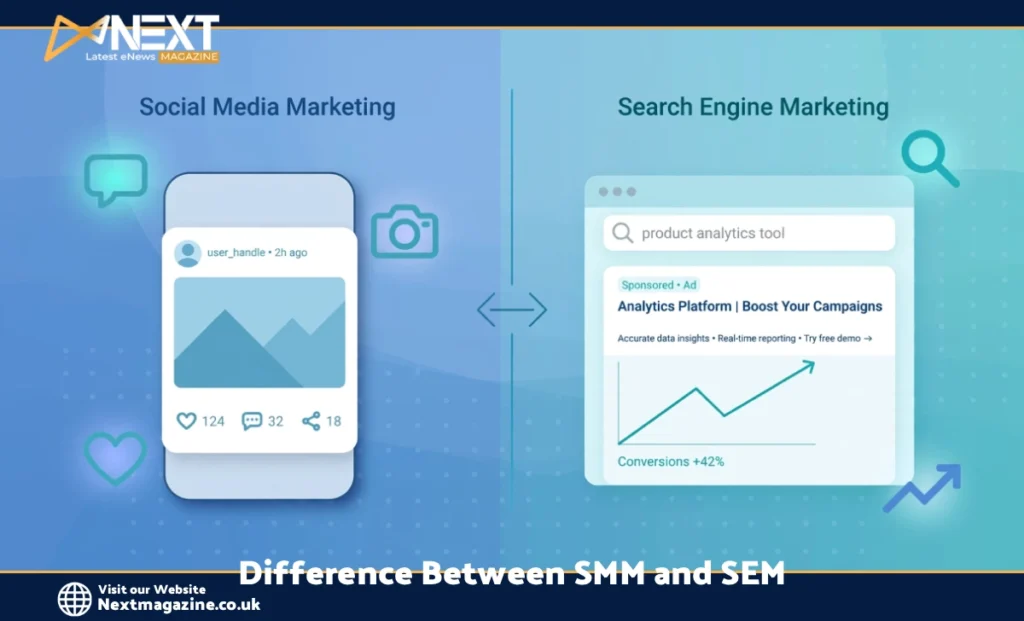
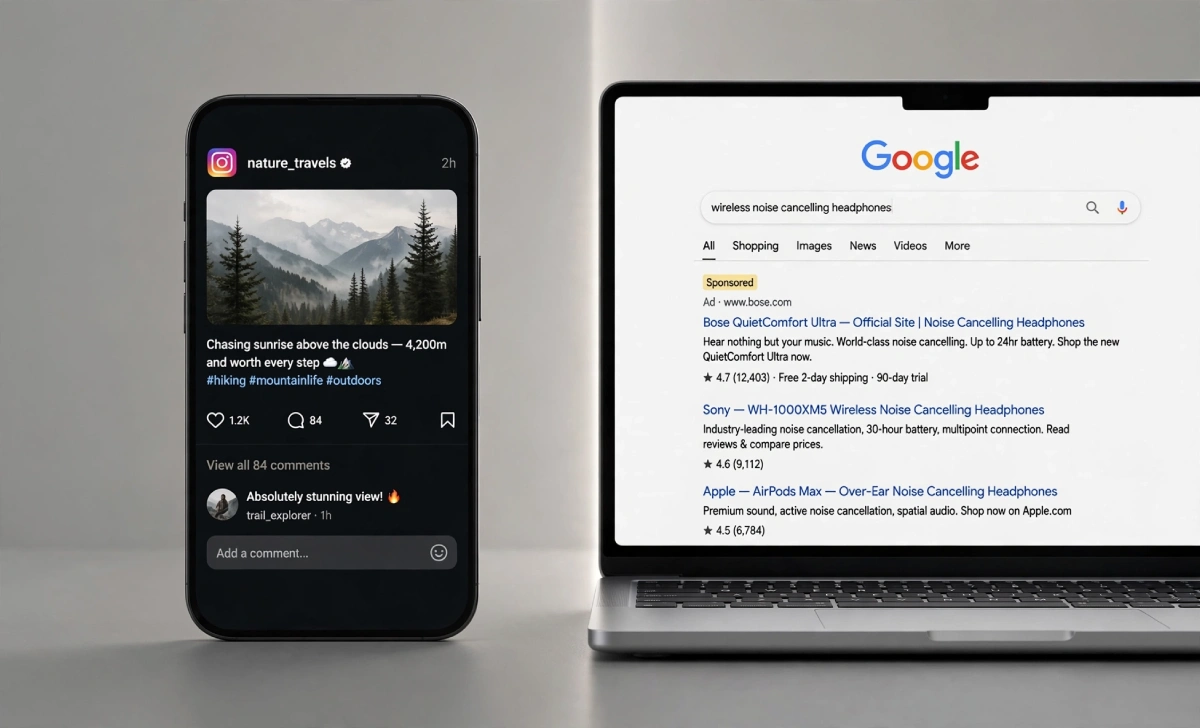
The core difference comes down to timing and intent. SMM reaches people before they know they have a need, building recognition so they think of you later. SEM reaches people at the exact moment they’re searching for a solution, capturing demand that already exists.
SMM vs SEM Comparison Table
| Factor | SMM | SEM |
|---|---|---|
| Primary objective | Build brand awareness and engagement | Capture active buying intent |
| Marketing channel | Social media platforms | Search engine results pages |
| Platforms used | Facebook, Instagram, LinkedIn, TikTok, X, Pinterest | Google Ads, Microsoft Advertising |
| Audience targeting | Interests, demographics, behavior | Keywords and search queries |
| Traffic source | Feed impressions, shares, discovery | Paid search clicks |
| Search intent | Low to passive intent | High, active intent |
| Organic vs paid opportunities | Both organic posts and paid ads available | Almost entirely paid (SEO covers the organic side) |
| Cost | Often lower cost per impression | Often higher cost per click, especiallyin competitive terms |
| Speed of results | Gradual, builds over weeks or months | Fast, can drive traffic within hours of launch |
| Conversion potential | Lower per interaction, higher over time | Higher per interaction due to buying intent |
| Best use cases | Brand building, community, engagement | Lead generation, direct sales, local intent capture |
| ROI | Long-term, compounding | Short-term, directly measurable |
| Key performance metrics | Reach, engagement rate, followers, shares | Click-through rate, cost per click, conversion rate |
Key Differences Explained
Traffic Source
SMM traffic comes from people scrolling their feeds who weren’t necessarily looking for you. SEM traffic comes from people who typed a specific query into a search bar, meaning they already have some level of interest or need.
User Intent
Social media users are often in discovery mode, browsing rather than buying. Search engine users are frequently in decision mode, looking to compare options or make a purchase.
Target Audience
SMM lets you target based on interests, behaviours, and demographics, which works well when you’re trying to reach people who don’t yet know they need your product. SEM targets based on what someone typed, which works well when you’re trying to reach people who already know what they want.
Marketing Goals
SMM goals typically centre on visibility, engagement, and relationship building. SEM goals typically centre on clicks, leads, and direct conversions.
Budget Requirements
Social ad budgets can start small and scale gradually as you learn what resonates. SEM budgets depend heavily on keyword competition. Some industries pay a few cents per click, while others, like legal services or insurance, pay significantly more due to high competition.
Time to See Results
SMM campaigns often need weeks of consistent posting before results become clear, especially on the organic side. SEM campaigns can generate traffic and leads within the first day of launch, since ads go live almost immediately.
Content Strategy
SMM depends on an ongoing content calendar covering posts, stories, videos, and community responses. SEM depends on tightly written ad copy and landing pages built around specific keywords, with less need for constant content production.
Performance Measurement
SMM success is measured through engagement signals like likes, shares, comments, and follower growth alongside eventual conversions. SEM success is measured directly through clicks, cost per click, and conversion rate, making return on investment easier to calculate.
Advantages of Social Media Marketing (SMM)
Builds Brand Awareness
Consistent presence on social platforms keeps your business visible to people who aren’t ready to buy yet but will remember you when they are.
Encourages Customer Engagement
Comments, shares, and direct messages create two-way conversations that build trust in a way static ads can’t.
Supports Community Building
A loyal social following can turn into a genuine community that advocates for your brand without being asked.
Cost-Effective Brand Promotion
Organic posting costs nothing beyond your time, and even paid social ads tend to have a lower entry cost than competitive search terms.
Advanced Audience Targeting
Platforms like Facebook and Instagram let you target by interests, life events, behaviours, and lookalike audiences based on your existing customers, giving you precision even when targeting people who haven’t searched for you yet.
Advantages of Search Engine Marketing (SEM)
Immediate Search Visibility
SEM puts you at the top of search results the moment your campaign goes live, without waiting for organic rankings to build.
High-Intent Traffic
Because SEM targets active searchers, the traffic it brings is closer to a purchase decision than most social media traffic.
Faster Lead Generation
Businesses that need leads quickly, such as service providers with open appointment slots, benefit from SEM’s speed.
Measurable Campaign Performance
Every click, cost, and conversion is trackable, making it straightforward to calculate exactly what you’re getting for your spend.
Flexible Budget and Bidding Options
You can adjust bids, pause campaigns, or shift spend toward better-performing keywords at any time, giving you control over daily and monthly costs.
Challenges of SMM
Declining Organic Reach
Platforms increasingly favour paid content in the feed, meaning organic posts reach a shrinking percentage of your followers over time.
Constant Algorithm Changes
What worked six months ago may not work today, since platforms regularly adjust how content gets shown.
Ongoing Content Creation
Staying visible requires a steady stream of new photos, videos, and posts, which takes real time and creative effort.
Slower Conversion Process
Because SMM often reaches people earlier in their decision process, it can take multiple touchpoints before someone actually buys.
Challenges of SEM
Increasing Cost Per Click
Competitive industries have seen click costs rise steadily, which can squeeze margins if campaigns aren’t managed carefully.
Highly Competitive Keywords
Popular search terms attract more advertisers, driving up both the cost and the difficulty of getting a strong ad position.
Continuous Advertising Budget
Unlike a social post that keeps existing after you stop paying attention to it, SEM traffic stops the moment you stop paying.
Requires Campaign Optimisation
Bids, keywords, and ad copy need regular review and adjustment, or performance tends to drift, and costs creep up.
SMM vs SEM: Which One Should You Choose?
Best for Brand Awareness
SMM wins here. Its strength is putting your business in front of people repeatedly until your name feels familiar.
Best for Lead Generation
SEM wins here. Capturing people who are already searching gives you a faster, more direct path to a lead.
Best for Small Businesses
A mix often works best, but if budget only allows for one, local service businesses usually see faster returns from SEM, since it captures people searching for exactly what they offer.
Best for Startups
SMM tends to be the more affordable starting point for building an audience before committing to paid search spend.
Best for E-commerce Stores
Both channels matter here. SMM drives discovery and repeat engagement, while SEM (particularly shopping ads) captures people ready to buy.
Best for Local Businesses
SEM, especially local search campaigns, tends to deliver faster results since it puts you in front of nearby customers actively searching for your service.
Best for B2B Companies
LinkedIn-focused SMM combined with targeted SEM for high-intent industry terms tends to perform well, since B2B buyers research extensively before reaching out.
Can SMM and SEM Work Together?

Yes, and in most cases they work better together than apart.
Benefits of Combining Both Strategies
SMM builds the awareness that makes people recognise your brand later. SEM captures them at the moment they’re ready to act. Used together, they cover both ends of the buying journey instead of leaving a gap in the middle.
Creating an Integrated Marketing Strategy
Start by mapping where your customers spend time and what they search for. Use SMM to introduce your brand and build trust, then use SEM to capture the demand that builds once people start actively searching for solutions like yours.
Using Remarketing Across Channels
Someone who visits your website through a search ad can be shown follow-up content on social media, and someone who engages with your social posts can later be targeted with search ads once they show buying signals. This kind of cross-channel follow-up keeps your brand present without duplicating effort.
Building a Complete Customer Journey
Awareness starts on social media. Consideration often happens through search research. Decision frequently gets triggered by a well-timed SEM ad. Mapping your channels to this journey helps you spend budget where it does the most good at each stage.
Real-World Examples of SMM and SEM
Example of an SMM Campaign
A boutique clothing brand posts styled outfit photos on Instagram several times a week, runs occasional giveaways, and partners with a handful of small creators to reach new followers. Over several months, this builds a loyal audience that regularly checks new posts and eventually starts buying.
Example of an SEM Campaign
A plumbing company runs Google Ads targeting searches like “emergency plumber near me.” When someone with a burst pipe searches that term, the company’s ad appears at the top of the results, and the searcher calls within minutes.
When to Use SMM
Use SMM when your goal is building recognition, nurturing an audience, or supporting a product that benefits from visual storytelling and repeated exposure.
When to Use SEM
Use SEM when your goal is capturing people who are already looking for what you offer, especially for time-sensitive needs or high-value transactions.
Common Mistakes to Avoid
Confusing SEM with SEO
SEM refers to paid search advertising. SEO refers to improving your organic search rankings without paying for placement. They’re related but not the same thing, and mixing them up leads to mismatched budgets and expectations.
Choosing the Wrong Platform
Not every platform fits every business. A B2B software company probably won’t get much from TikTok, just as a lifestyle brand probably won’t get much from LinkedIn.
Ignoring Audience Intent
Running SEM ads for broad, low-intent keywords wastes budget on clicks that were never going to convert. Match your keywords to genuine buying signals.
Not Tracking Key Metrics
Without tracking clicks, conversions, and cost per result, you can’t tell whether a campaign is actually working or just spending money.
Spending Budget Without Clear Goals
Jumping into either channel without a defined goal, whether that’s awareness, leads, or sales, makes it hard to judge success or know when to adjust.
Conclusion
Recap of the Key Differences
SMM and SEM solve different problems. SMM builds recognition and relationships over time through social platforms. SEM captures people who are already searching, turning existing demand into clicks and leads through paid search.
How to Choose the Right Strategy for Your Goals
If you need visibility and long-term brand building, start with SMM. If you need leads or sales soon, SEM will likely get you there faster. Match the channel to what you actually need right now, not just what’s popular.
Why Combining SMM and SEM Can Deliver Better Results
Used together, SMM and SEM cover both the early and late stages of the buying journey, giving your business a presence people recognise and a way to capture them the moment they’re ready to act.
FAQs
What is the main difference between SMM and SEM?
SMM builds brand awareness and relationships on social media platforms, while SEM captures active buying intent through paid search ads on engines like Google.
Is SEM the same as SEO?
No. SEM refers to paid search advertising, while SEO focuses on improving organic (unpaid) search rankings through content and technical improvements.
Which is more affordable, SMM or SEM?
SMM often has a lower entry cost, especially through organic posting, while SEM costs depend heavily on keyword competition and can range from a few cents to several dollars per click.
Which delivers faster results?
SEM typically delivers faster results since ads go live almost immediately and target people actively searching, while SMM usually takes longer to build momentum.
Can small businesses use both SMM and SEM?
Yes. Many small businesses use SMM to build an audience over time while running smaller SEM campaigns targeted at high-intent local searches.
Is Google Ads part of SEM?
Yes. Google Ads is the largest and most widely used SEM platform.
Are Facebook and Instagram Ads considered SMM?
Yes. Paid advertising on social platforms, including Facebook and Instagram, falls under social media marketing.
Which strategy offers a better ROI?
It depends on the goal. SEM tends to offer clearer, faster-measurable ROI on individual campaigns, while SMM often delivers stronger long-term ROI through brand loyalty and repeat customers.
How do SMM and SEM complement each other?
SMM builds familiarity and trust over time, while SEM captures people once that trust turns into active searching. Together, they cover more of the customer journey than either channel alone.
Should I invest in SMM, SEM, or both?
If budget allows, both channels tend to perform better together. If you can only choose one, base the decision on your immediate goal: awareness favours SMM, while direct leads or sales favour SEM.

Alexander Price
Blunt, no-nonsense Alexander doesn't believe in overnight success stories, and he won't pretend to sell you one. He writes about habits and discipline in plain, direct language — the kind of advice you'd get from a friend who's tired of watching people fall for shortcuts. If a piece of his doesn't make you slightly uncomfortable, he considers it a miss.
View all articles →Get the Weekly Brief
The best guides and stories, delivered every Sunday.