

Table of Contents
- What Is Dr. Dre’s Net Worth?
- The Compton Kid Who Heard Something Different
- The Chronic: The Album That Made Him the Sound
- Beats: The $3 Billion Masterstroke
- The Divorce That Cost a Reported $100 Million
- The Catalog Sale: $200–250 Million for the Royalties
- Gin, Juice, and the Twelve-Year Wait
- How His Wealth Breaks Down
- Net Worth Over Time
- Correcting the Record on Old Claims
- The Estimate, Honestly
In the spring of 2014, a shaky phone video did something nobody expected. Dr. Dre, sitting beside singer Tyrese Gibson, grinned into the camera and declared himself hip-hop’s first billionaire. This was hours before the biggest acquisition in Apple’s history was even announced.
Let that sink in for a second. The champagne was already open. The math, it turned out, was not.
Forbes ran the numbers and found Dre was a couple of hundred million dollars short. He was still the richest man in hip-hop — just not a billionaire. So the declaration hung there, taunting, for nearly twelve years. Then, in March 2026, Forbes finally made it official: Dr. Dre was on the World’s Billionaires List, worth exactly $1 billion. The celebration had simply arrived a decade early.
What Is Dr. Dre’s Net Worth?
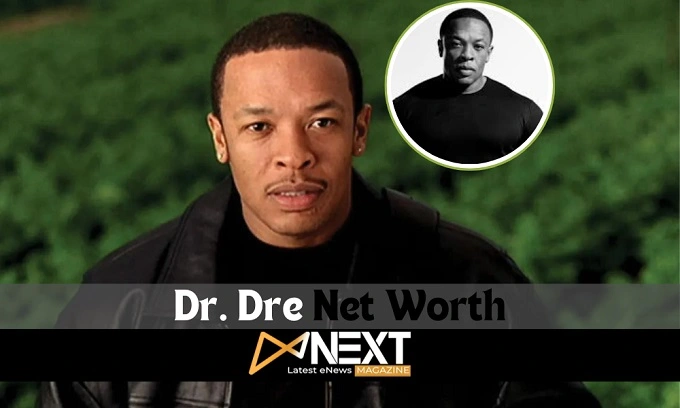
Dr. Dre’s net worth is estimated at $1 billion as of 2026, per Forbes’ 2026 World’s Billionaires List. The magazine ranked him 3,332nd in the world — tied with Beyoncé — and 22nd on its celebrity billionaires list. He is the sixth musician ever to make the cut, and the second-richest hip-hop artist after Jay-Z. That is the number we model with, and it is the most defensible figure available.
One note of honesty before we go further: Dre’s holdings are mostly private, so every outside estimate carries some uncertainty. The $1 billion is Forbes’ modeling, not a bank balance. But it rests on a paper trail that is unusually well documented for a musician: a $3 billion Apple deal with a known stake range, a reported $200–250 million catalog sale, and a reported $100 million divorce settlement. We will cite named sources for each of these along the way.
The Compton Kid Who Heard Something Different
Andre Romelle Young grew up in Compton, California, in the 1970s and 80s, and his way out was a turntable. He started DJing at parties and school dances, then joined the electro-funk group the World Class Wreckin’ Cru in the early 1980s. The records sold modestly. The education was priceless.
In 1986, Dre co-founded N.W.A alongside Ice Cube, Eazy-E, MC Ren and DJ Yella. Their 1988 debut, Straight Outta Compton, rewrote American music. Dre left the group in 1991 and founded Death Row Records with Suge Knight. The move was as much about ownership as art.
The Chronic: The Album That Made Him the Sound
Dre’s 1992 solo debut, The Chronic, did more than sell millions of copies. It invented G-funk — a slow-rolling blend of gangsta rap and funk that became the default sound of 1990s West Coast hip-hop. The album also introduced Snoop Dogg. And it set the pattern of Dre’s entire career: he made hits, and then he made the people who made hits.
He left Death Row in 1996 and founded Aftermath Entertainment, co-owned with Universal Music Group’s Interscope. In 1999 he signed a then-unknown rapper from Detroit named Eminem. In 2003 came 50 Cent. Later, Kendrick Lamar — through a joint venture between Aftermath, Interscope and Top Dawg Entertainment — became the flagship artist of a generation. Each signing was not just a cultural moment. It was a compounding royalty stream, and Dre held the label stake instead of selling it. When he sold music assets in 2023, his Aftermath ownership was left out of the deal on purpose.
Beats: The $3 Billion Masterstroke
In 2006, Dre co-founded Beats Electronics with Jimmy Iovine, the Interscope co-founder who had helped launch Aftermath. Headphones were, at the time, a low-margin commodity. Beats turned them into fashion — and by 2013 the company was reportedly selling around $1 billion a year in headphones. The pair later added the Beats Music streaming service, which Apple folded into what became Apple Music.
The Iovine partnership was the engine behind the whole thing. Iovine brought the music-industry machine; Dre brought the name, the ear, and the cultural weight. Both joined Apple as executives after the sale. Nobody disputes that the pair built the company together — the only debate has ever been over Dre’s exact slice of the equity at exit.
In May 2014, Apple acquired Beats Electronics and the Beats Music streaming service for $3 billion — Apple’s largest purchase ever — structured as $2.6 billion in cash, with $400 million in equity vesting over time. Now the stake math that the 2014 brag got wrong. Here is how the money actually broke down, according to the outlets that covered the deal at the time:
- Forbes estimated Dre’s stake at 20–25% of Beats at the time of sale. That implies a gross share of roughly $600–800 million of the deal.
- Complex magazine’s contemporaneous breakdown put him at 25% ownership, with roughly $480 million reaching him after capital gains taxes.
- Other outlets reported the figure as approximately $500 million after taxes. Dre also received around one million Apple shares, which have grown in value ever since.
Forbes put his total net worth at roughly $800 million once the deal closed. A fortune — but not ten figures. One rumor deserves addressing: a viral claim that Apple CEO Tim Cook cut $200 million from the price after the leaked celebration video. It comes from a biography of Cook’s Apple, not from anyone involved in the deal, and Apple has never confirmed it. Treat it as industry lore, not accounting.
The Divorce That Cost a Reported $100 Million
In 2020, Dre’s wife of 24 years, Nicole Young, filed for divorce. The split was bitter and public — support demands, frozen assets, court filings. In late 2021 the pair settled. Press coverage put the figure at approximately $100 million, reportedly paid in two $50 million installments. It remains one of the largest celebrity divorce settlements on record, and the single biggest documented dent in the billionaire math.
The same year, Dre suffered a brain aneurysm in January 2021 and was hospitalized. He made a full recovery. In February 2022 he headlined the Super Bowl LVI halftime show alongside Eminem, Snoop Dogg, Kendrick Lamar, Mary J. Blige and 50 Cent. The show won the Emmy for Outstanding Variety Special.
The Catalog Sale: $200–250 Million for the Royalties
In January 2023, Variety and Billboard reported that Dre was selling a bundle of music income streams to Shamrock Holdings and Universal Music Group in two separate deals. The bundle covered artist royalties from his two solo albums, his share of N.W.A. royalties, producer royalties, and the writer’s share of his song catalog. The assets generated roughly $10 million a year. The deal was pitched at $250 million, and sources close to Dre told Billboard the final number would land “well above $200 million.”
Universal’s portion included the master recording of The Chronic, which had reverted to Dre from Death Row. He kept his Aftermath stake — the engine that keeps printing money. That is why this sale did not end his music income the way catalog sales often do.
Gin, Juice, and the Twelve-Year Wait
In 2024, Dre and Snoop Dogg launched a premium spirits line — the Gin & Juice ready-to-drink cocktails and the Still G.I.N. brand. Forbes cited the venture, alongside Aftermath and his real estate, among the holdings that finally pushed him over the line.
Property has played its part too. Dre bought a Brentwood estate in Los Angeles for a reported $40 million in 2014. He has since sold off pieces of his portfolio, including a Malibu property reported to have sold for $16.5 million. Real estate is the quietest line on his balance sheet — and one of the steadiest.
Then came March 10, 2026. Forbes confirmed Dre on the World’s Billionaires List for the first time: $1 billion, the second-richest hip-hop artist after Jay-Z, and only the sixth musician ever to make the cut. Twelve years after the video, the record had caught up to the brag.
How His Wealth Breaks Down
| Component | Estimated value | Basis |
|---|---|---|
| Apple-Beats proceeds | ~$500M after taxes, plus Apple stock | Forbes/Complex 2014 estimates |
| Aftermath Entertainment stake | Significant, undisclosed | Co-owned with Interscope; excluded from catalog sale |
| 2023 catalog sale | $200–250M | Variety/Billboard reporting, Jan 2023 |
| Real estate | Tens of millions | Reported LA purchases and sales |
| Spirits ventures | Undisclosed, growing | Gin & Juice / Still G.I.N. (2024) |
| Remaining music income | Ongoing | Aftermath royalties, unsold rights |
Net Worth Over Time
| Year | Estimate | What happened |
|---|---|---|
| Pre-2014 | ~$550M | Forbes’ estimate before the Apple deal |
| 2014 | ~$800M | Forbes’ post-deal estimate after the Apple-Beats sale |
| Early 2020s | High hundreds of millions | Estimates varied; 2021 divorce took ~$100M |
| 2023 | Rising | $200–250M catalog sale to Shamrock/UMG adds cash |
| Mar 2026 | $1B | Forbes World’s Billionaires List debut, #3,332 |
Correcting the Record on Old Claims
A few figures in older profiles need retiring. The Apple-Beats deal closed in 2014, not 2012. The music-rights sale went to Shamrock Holdings and Universal Music Group — not to a company called “Axis Entertainment,” a name that appears in some low-quality profiles with no basis in the actual reporting. And the claim that Dre was already worth $1 billion in 2024 is simply premature. The credible milestone is Forbes’ 2026 list. He was rich in 2024. The ten figures arrived in 2026.
The Estimate, Honestly
Dr. Dre’s estimated net worth of $1 billion is a modeled figure, not a disclosed fortune. Private company stakes, Apple shares held across stock splits, property values, and tax bills all move the number. Forbes’ methods are careful by design — which is exactly why it took twelve years to confirm what Dre announced in 2014.
What is not uncertain is the shape of the story. A producer stopped selling his labor and started owning the machinery. He turned headphones into an Apple acquisition. He kept the label, sold the royalties, and outlasted his own premature announcement. The billionaire declaration wasn’t wrong. It was just early.

Samuel Clarke
Samuel covers finance, business, and property, centering his writing on the details that actually explain a topic. He gives readers context, plain definitions, and practical information in a format that's easy to follow from start to finish. Substance over style, every time.
View all articles →Get the Weekly Brief
The best guides and stories, delivered every Sunday.
One Response