

Table of Contents
Fly fishing is an intricate sport where details matter, and choosing the right hook is among the most critical decisions an angler must make. The market offers a multitude of hook options, which can be overwhelming even for experienced fishers. Selecting the appropriate hook affects not just the type of fish you’ll catch, but also the overall experience and success rate.
Diving into the particulars of hook size, shape, material, and sharpness can provide fly fishers with a strategic advantage on the water. Below, we explore these key considerations, helping both novices and seasoned anglers make informed decisions about their fly fishing gear.
Selecting the Right Size for Your Fly Fishing Hooks
When it comes to fly fishing, hook size can make or break the day. The correct size depends largely on the type of fish you’re targeting and the size of the bait you are imitating. A hook that’s too large may intimidate fish, while one that’s too small could fail to properly secure them.
For example, tiny hooks in the range of size 18 to 22 are suitable for small flies and delicate presentations, often used in clear waters where fish are wary. On the other hand, larger hooks, such as sizes 1 to 4, are typically used with bigger flies to target larger species like bass or pike. Choosing the right fly fishing hooks is crucial for optimizing your catch rate.
An actionable tip for anglers is to carry a variety of hook sizes in their tackle box to be prepared for different scenarios. A good rule of thumb is to match the hook size with the hatch you’re imitating, ensuring the presentation of your fly looks as natural as possible to the fish.
Understanding Hook Shapes and Their Impact on Fly Fishing Success
The profile of a hook—the bend, the shank, the point—plays a significant role in the type of fly you can tie and the effectiveness of the hook. Shape influences how the hook moves through the water, its visibility, and its ability to hook and hold fish.
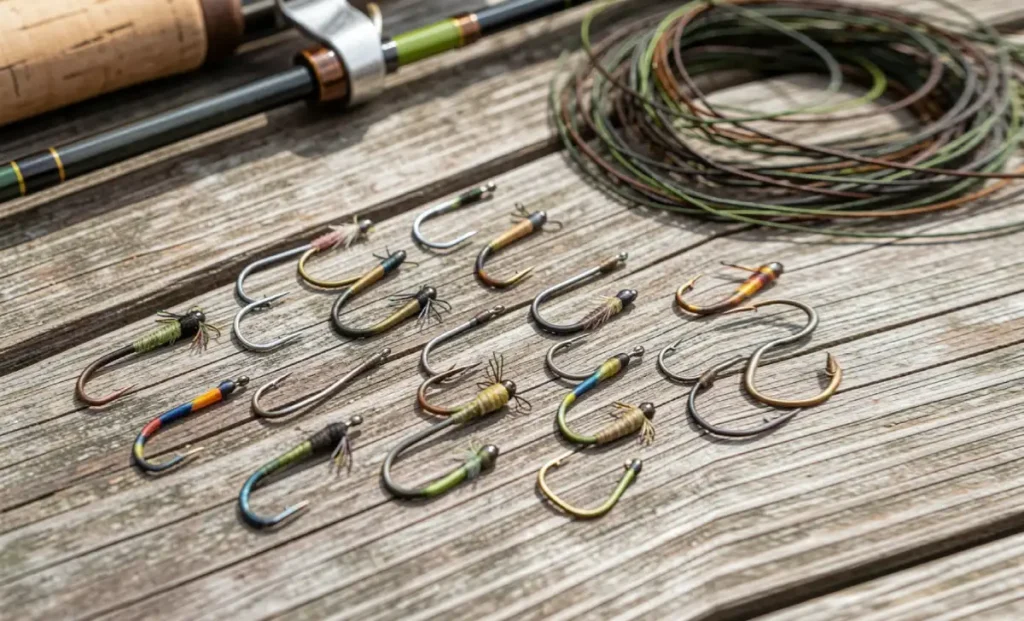
Hooks come in various shapes, such as straight-shank, curved, or wide-gap, which are crafted for specific types of flies and fishing techniques. For example, scud hooks with their curved shanks are perfect for tying freshwater shrimp imitations, while wide-gap hooks facilitate better hooksets on large-mouthed species. Selecting the right hook shape is fundamental for targeting specific species and fishing conditions.
As a piece of actionable guidance, analyzing the behavior of the target fish and the type of water you’re fishing in can guide your choice of hook shape. Use straight-shank hooks for general use, but don’t hesitate to switch to specialty shapes as needed.
Material Matters: Evaluating the Best Hook Composition
Not all hook materials are created equal, and the right composition can lead to increased strength and durability. Fly fishing hooks are typically made from high-carbon steel, but they are often treated with different coatings to prevent corrosion and enhance performance.
While traditional hooks may be made from carbon steel, modern variations include stainless steel, vanadium, and other alloys, which offer superior rust resistance and strength. Understanding the nuances in hook material technology can give anglers an advantage, especially in saltwater environments where corrosion is a significant factor.
Choosing a hook with the appropriate material for the fishing conditions is essential. For instance, if you frequently fish in saltwater, investing in hooks with anti-corrosive properties would be wise to ensure your hooks last longer and perform better.
Sharpening Your Edge: The Role of Hook Sharpness in Fly Fishing
The sharpness of your fly fishing hook is a critical factor that should never be overlooked. A sharp point is necessary to penetrate a fish’s mouth quickly and effectively, which means hook sharpness directly correlates with catch rates.
Many anglers carry hook files and use them regularly to maintain a razor-sharp point on their hooks. Even new hooks can benefit from a quick sharpening, as they may not be at peak sharpness straight from the package. Inspecting and touching up hook points should be a routine part of every angler’s preparation.
An easily applicable recommendation is to test the sharpness of your hooks before each fishing trip by lightly dragging the hook point across your fingernail. If the hook scratches the nail without pressure, it’s adequately sharp. If not, it’s time to hone the point until it meets this standard.
Ultimately, by paying close attention to the size, shape, material, and sharpness of fly fishing hooks, anglers can improve their success rate and enjoy a more productive outing. These factors, seemingly minor on their own, collectively influence the outcome of every cast and every potential catch on the water. With the right equipment and attention to these crucial aspects, fly fishers set themselves up for a rewarding experience.

Emily Dawson
Emily writes culture, entertainment, and people-focused stories with an instinct to look past the headline. She gathers context most quick coverage skips and uses it to give readers a fuller introduction to whoever or whatever she's covering. Her pieces favor depth and accuracy over the fastest possible take.
View all articles →Get the Weekly Brief
The best guides and stories, delivered every Sunday.