

Table of Contents
- Anchor Decisions on Published Benchmarks
- Clarify production needs and technical fit.
- Applications, materials, and joints
- Thickness, penetration, and heat input
- Part mix and automation readiness
- Assess process capability and parameter control.
- Validate materials compatibility and quality assurance.
- Standards awareness without the alphabet soup
- Safety, risk controls, and compliance
- Enclosures and bystander protection
- Fire, fume, and optical safety practices
- Integration questions to take to any laser welding machine supplier
- Service, training, and documentation
- Facility readiness and utilities
- Trials, samples, and validation
- Maintenance, consumables, and lifecycle cost
- Due Diligence Checklist
- Conclusion
Suppose you’re shopping for a laser welding machine supplier. In that case, you’re likely juggling the same three pressures: you need reliable penetration on your mix of parts, you must protect people and property, and you can’t afford surprises after installation. The stakes are higher now—tighter tolerances, more materials, and leaner staffing mean your first welds need to be your best. This article provides a practical approach to evaluating vendors, enabling you to select a system that aligns with your specific needs, floor space, and growth plan.
Anchor Decisions on Published Benchmarks
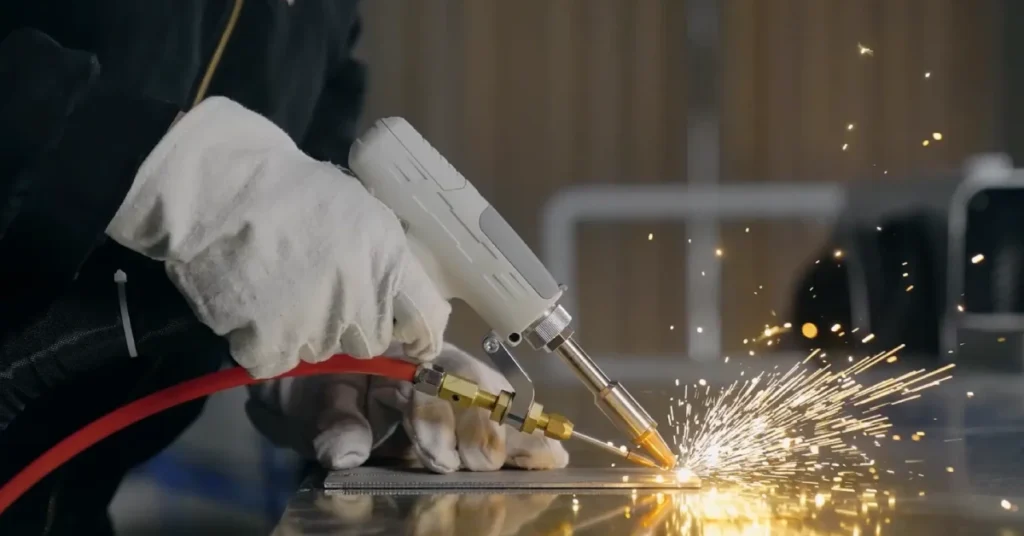
As you compare options, it helps to anchor on a published reference point. The Denaliweld laser welding machines pages outline handheld and cell-ready systems, including air‑cooled units and cobot‑compatible configurations. That kind of transparent product detail—along with safety, training, and sample‑weld support—lets you benchmark any proposal you receive. Use the specifics you find there to shape your questions: Can the vendor replicate your welds, document parameters, and train your team to run them consistently?
Clarify production needs and technical fit.
You’ll get the best outcome when you define success before you read a quote. Start with the parts on your desk and work backwards to the parameters.
Applications, materials, and joints
List the alloys you actually ship (for example, 304/316 stainless, carbon steel, aluminum) and the joints you run (lap, fillet, butt). Ask the laser welding machine supplier for sample welds on your exact material spec and surface finish. If you also require surface preparation or post-weld cleaning, confirm whether the platform supports welding, cleaning, and seam cleaning in a single head or through a companion tool.
Thickness, penetration, and heat input
Penetration isn’t negotiable. Request macroetch photos and cross-sections that demonstrate full penetration at your specified thicknesses, along with measured heat-affected zones (HAZ). Lower heat input typically results in less distortion and rework. Insist on parameter sheets that note power, speed, spot size, focus position, gas, and any pulsing details—then keep those as your baseline.
Part mix and automation readiness
If your roadmap includes higher volumes or tighter tolerances, ask how you’ll scale from handheld to cobot or full robot. You want fixturing, vision, and motion options that grow with you. A good vendor will demonstrate how the same source can be transitioned from a benchtop setup to a guarded cell without requiring a restart.
Assess process capability and parameter control.
Consistency is where laser welding pays for itself. Your vendor should demonstrate stable parameters and provide a straightforward method for accessing them.
At minimum, you should be able to set and save power, travel speed, wire feed (if used), focus position, and gas flow. The interface should let you name and version “recipes” so operators can load them without guessing. If you run variants of the same part, you’ll want quick toggles and guardrails to prevent accidental overwrites.
If you operate in an audited environment, plan for basic traceability: recipe IDs tied to jobs, operators, and lots—plus the ability to export data. Even outside of regulated work, parameter logging helps you troubleshoot, reduce scrap, and train more efficiently.
Validate materials compatibility and quality assurance.
Reflective alloys (such as aluminum) and coated steels need tighter control of focus, power density, and shielding gas. Ask for worst‑case samples—thin‑to‑thick transitions, corners, and gaps. You’re looking for smooth beads, minimal spatter, and consistent penetration without burn‑through.
Standards awareness without the alphabet soup
You don’t need to memorize every safety or quality standard, but your supplier should design products in accordance with modern laser safety classifications and provide clear documentation. Ask them to walk you through enclosure options, eyewear selection, and operator training materials so nothing is left to chance.
Safety, risk controls, and compliance
Most production‑grade laser welders are Class 4 systems, which means you owe your team real protections: correct eyewear, controlled access, and procedures. Your vendor should properly size protective gear, label the area, and train your team before the first arc.
Enclosures and bystander protection
If you aren’t buying a fully enclosed (Class 1) cell, you’ll need barriers or curtains, interlocks, and signage. Ask how enclosure integrity is verified and how stray‑beam and reflection risks are mitigated—especially near reflective parts and tooling.
Fire, fume, and optical safety practices
Cover fume extraction, filtration, and emergency stops during layout reviews. Build a pre‑flight checklist for every shift: clear the area of combustibles, verify eyewear, and test interlocks.
Integration questions to take to any laser welding machine supplier
Clarify which robot brands and controllers are supported and how the welder exchanges data with your PLC or MES. Request a layout that shows robot reach, tool center point, and maintenance access.
Plan your cell like a kit: consider factors such as table size, tooling, rotary positioners, seam tracking or vision, wire feeding, scanners, fume extraction, and safety scanners. Decide what you need on day one and what can be added later.
Inquire about secure remote diagnostics, recipe backups, and update policies. Agree on response times and escalation paths before you sign.
Service, training, and documentation
You should see applications engineers adjust parameters to your parts, run live demos, and provide sample welds with written settings. Mid-sized teams benefit from structured on-site training that covers safety, maintenance, and first-level troubleshooting.
Documentation must match the exact configuration you purchased, not a generic model. For consumables and spares, confirm local stock and realistic lead times. Your technicians should know where to locate lens kits, nozzles, tips, and filters, as well as how to replace them.
Get warranty terms in writing and ask about loaner availability for critical operations. It’s worth mapping a spare‑parts plan now—even a small kit can turn a day of downtime into an hour.
Facility readiness and utilities
Match chiller or air‑cooled requirements to your site’s power and ambient temperatures. If you’re considering an industrial laser welder that’s air‑cooled, make sure intake paths won’t clog and verify performance at your hottest and coldest conditions.
Agree on shielding gas type and flow, fume extraction capacity, filter replacement intervals, and placement of ducting and silencers. This is a good time to finalize your floor plan, access paths, and lockout points.
Trials, samples, and validation
Don’t buy brochures. Ship parts that mirror your tolerances and request a simple report: parameters, travel speed, cross‑sections, acceptance criteria, and photos. Keep those in your quality files.
If you work under regulated requirements, align on the process and operator qualification before installation. Decide what artifacts you’ll keep (parameter sheets, training records, and part cross‑sections) and where they live.
Maintenance, consumables, and lifecycle cost
Create a weekly cleaning routine for optics and nozzles, inspect gas lines and electrical connectors, and schedule lens replacements—track costs for wear items to ensure accurate budgeting.
Request recommended spares and mean time between failure data where available. Back up recipes, keep firmware current, and practice restoring a system from backup so a hiccup doesn’t become a halt.
Due Diligence Checklist
| Criterion | Why it matters | What to ask |
| Materials & joints | Proves real‑world capability | “Will you weld my alloys and joints and provide cross‑sections?” |
| Safety & compliance | Protects people and uptime | “How will you help us meet modern laser safety requirements and train operators?” |
| Data & traceability | Supports audits & quality | “What parameters are logged and how do we export them?” |
| Integration | Future‑proofs the cell | “Which robots/controllers and accessories do you support today and later?” |
| Service & parts | Reduces downtime | “Where are your nearest spares and who trains my team?” |
Mid‑sized manufacturers often prefer vendors that publish clear upgrade paths from handheld tools to guarded cells. The Denaliweld COBOT Series is an example of how a supplier can document automation options upfront, allowing you to phase capital spending over time.
Conclusion
Choosing a laser welding machine supplier is less about chasing the highest wattage and more about finding the right fit, ensuring safety, and receiving reliable support. Define your parts and joints first. Validate penetration and HAZ on real samples. Plan your enclosure, PPE, and training so day one is safe. Lock in data logging, spares, and response times to keep you running. Use published product pages to benchmark what “good” looks like—then hold every proposal to that standard. When you’re ready to compare specifics, you can pressure-test any quote against the product details and support scope shown on Denaliweld and make the choice that best serves your line.

Leo Richardson
Leo writes technology, digital culture, and consumer guides for readers who want the important part first. He enjoys breaking down unfamiliar subjects into what actually matters before someone dives deeper. His pieces work as a solid starting point — clear, current, and free of unnecessary technical throat-clearing.
View all articles →Get the Weekly Brief
The best guides and stories, delivered every Sunday.