

Table of Contents
- The Three Types of Lighting Every Home Needs
- Lumolog Lighting Solutions for Every Home
- Bulb Type Comparison
- Room-by-Room Lighting Guide
- Kitchen and Living Room
- Bedroom, Bathroom, and Home Office
- Choosing the Right Color Temperature
- How Smart Lighting Fits Into Your Home
- Lighting Mistakes Most Homeowners Make
- Where to Start Your Lighting Upgrade
Lighting affects how a room looks, feels, and functions. Lumolog’s home lighting solutions combine energy-efficient LED technology with smart controls to cover every room. Whether you’re updating a single lamp or planning a full home lighting upgrade, this guide walks you through the process from start to finish.
Most people choose light bulbs the same way they choose a grocery store brand: quickly, without much thought. But the wrong light in the wrong room can make a kitchen feel dim and unsafe, a bedroom feel cold, or a living room feel flat. Lighting shapes your experience of every space in your home, and getting it right does not have to be complicated.
The Three Types of Lighting Every Home Needs
Every well-lit room uses at least two of three lighting types, and the best rooms use all three together.
Ambient lighting is the base layer. It fills the room with general light and lets you move around safely. Think ceiling fixtures, recessed lights, or LED panels. Without a solid ambient layer, no other lighting will perform the way you want.
Task lighting targets specific areas where you need precision. Under-cabinet strips in the kitchen, a desk lamp in the home office, and vanity lights in the bathroom all serve a clear purpose: helping you see what you are working on without straining your eyes.
Accent lighting draws attention to what matters. It adds depth, highlights features like shelving, artwork, or architectural details, and gives a room its personality. Wall sconces, track lights, and LED strips behind furniture all fall into this category.
Layering these three types is the foundation of good lighting design. Rooms lit by a single overhead fixture tend to feel flat and one-dimensional. Rooms with layered light feel finished.
Lumolog Lighting Solutions for Every Home
Lumolog builds its product line around this layered approach. Their LED range covers ambient fixtures, dimmable bulbs, under-cabinet strips, and smart-ready options that work with voice assistants and mobile apps. The focus is on practical performance: efficient output, long lifespan, and compatibility with modern home systems.
LEDs in general use up to 75 percent less energy than standard incandescent bulbs and last significantly longer, according to the U.S. Department of Energy. Lumolog’s LED products carry those same advantages while adding smart integration as a standard feature rather than an afterthought.
Bulb Type Comparison
| Feature | LED Bulbs | CFL Bulbs | Incandescent |
| Lifespan | 15,000–25,000 hrs | 8,000–10,000 hrs | 750–1,000 hrs |
| Energy Use | Very low (8–10W) | Low (13–15W) | High (60W) |
| Heat Output | Minimal | Moderate | High |
| Smart Compatible | Yes | Limited | No |
| Dimmable | Yes (most) | Limited | Yes |
| Annual Cost* | ~$1.20/yr | ~$1.60/yr | ~$7.20/yr |
Room-by-Room Lighting Guide
Kitchen and Living Room
The kitchen needs more task lighting than most rooms do. Counter surfaces, the range area, and the sink all benefit from dedicated light sources, not just the overhead fixture. Under-cabinet LED strips solve the shadow problem that a ceiling light alone creates. If your kitchen has an island, pendant lights positioned directly above it add both focused task light and visual interest.
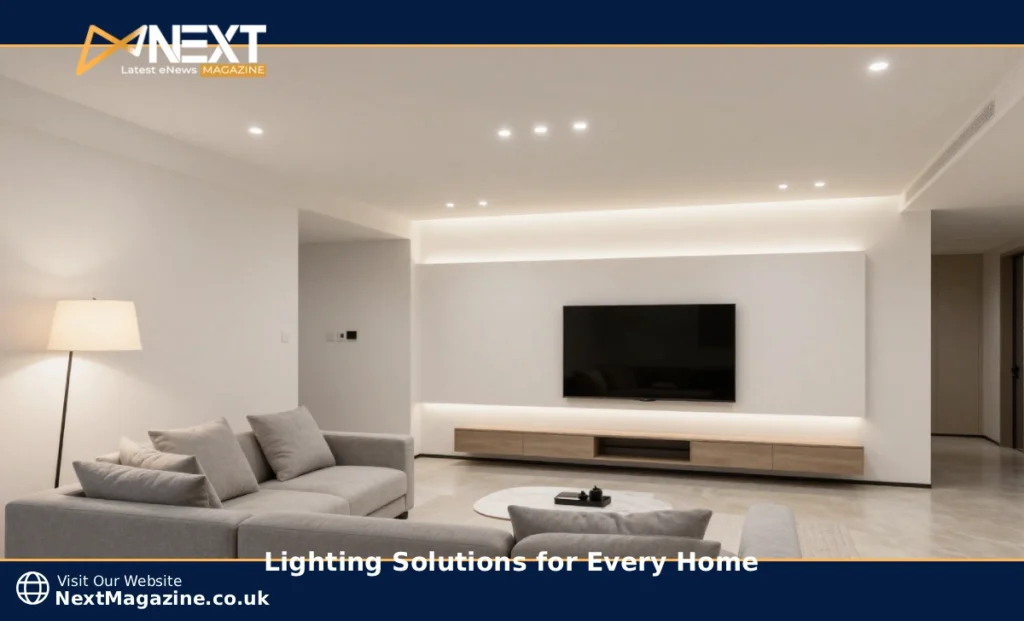
The living room is your most flexible space. It hosts everything from movie nights to dinner parties to reading sessions. Start with recessed ambient lights on a dimmer, then add table or floor lamps for reading zones and accent lighting for bookshelves or artwork. The ability to dim the ambient layer and let the accent lights lead transforms the feel of the room without changing anything physical.
Bedroom, Bathroom, and Home Office
The bedroom benefits most from warm light and dimming capability. Overhead lights at full brightness right before bed work against your sleep cycle. A bedside lamp with a warm bulb (2700K to 3000K) and a dimmable ceiling fixture give you control over your wind-down environment.
The bathroom needs layered light, too, though many homes rely on a single vanity bar. A ceiling fixture handles ambient light while the vanity provides even, shadow-free task lighting for grooming. Avoid placing the vanity light above the mirror only, as this creates unflattering shadows. Side-mounted fixtures at eye level work better.
In a home office, task lighting matters most. A quality LED desk lamp reduces eye strain during long work sessions. Pair it with an ambient ceiling light to avoid the harsh contrast between a bright screen and a dim room behind it.
Choosing the Right Color Temperature
Color temperature, measured in Kelvin, controls how warm or cool your light appears. It is one of the most overlooked decisions in home lighting, but it makes a significant difference in how a room feels.
Color Temperature Quick Reference
| Color Temp | Kelvin Range | Effect | Best Room |
| Warm White | 2700K–3000K | Cozy, relaxing | Bedroom, living room |
| Soft White | 3000K–3500K | Welcoming, neutral | Dining room, hallway |
| Cool White | 4000K–4500K | Alert, focused | Kitchen, home office |
| Daylight | 5000K–6500K | Energizing, crisp | Bathroom, garage |
A practical rule: use warmer temperatures (below 3000K) where you relax, and cooler temperatures (above 4000K) where you work or need precision. Mixing too many color temperatures in one room creates visual inconsistency that is hard to identify but easy to feel.
How Smart Lighting Fits Into Your Home
Smart lighting systems let you control brightness, color temperature, and scheduling from your phone or through voice commands. Lumolog’s smart-compatible LED lineup connects with Amazon Alexa, Google Assistant, and Apple HomeKit without requiring a separate hub in most cases.
The practical value shows in everyday habits. You can set the kitchen lights to turn on at a specific brightness every morning, dim the living room lights automatically at 9 PM, or have outdoor lights activate when motion is detected. These are not luxury features; they reduce energy waste and add real convenience over time.
Motion sensors and automated schedules are the two smartest investments for most households. Lights that turn off when a room is empty consistently reduce electricity use without requiring any behavior change from you.
Lighting Mistakes Most Homeowners Make
Knowing what to avoid saves you time and money on your upgrade:
- Relying on a single overhead light in every room. One light source creates flat, uninviting spaces and poor task visibility.
- Ignoring color temperature. Mixing warm and cool bulbs in the same room looks unintentional and feels off.
- Skipping dimmers. Dimmable fixtures cost a little more but give you significant control over ambiance and energy use.
- Placing vanity lights above the mirror only. This creates downward shadows that are unflattering and reduce visibility for grooming.
- Over-lighting small spaces. More bulbs do not always mean better light. In a small room, too many fixtures create glare and visual clutter.
Where to Start Your Lighting Upgrade
Start with an assessment. Walk through each room and ask: where is the light falling short? Is the counter surface too dim? Does a room feel flat? Is there glare near a workstation? Identify the problem before buying anything.
Once you know what each room needs, follow the layering sequence. Add or adjust your ambient base first, then address task lighting in the specific spots where you work or need precision, then consider accent lighting for the spaces where you want more character.
Finally, automate where it makes a practical difference. Smart scheduling and motion sensing in high-traffic areas like hallways, the kitchen, and outdoor paths offer the clearest return. You do not need a full smart home system to benefit. Starting with two or three well-chosen smart fixtures gives you a clear sense of what the technology can do before you expand.

Henry Collins
Henry writes practical articles on homes, property, and everyday living, taking a research-led approach to subjects most people find genuinely confusing. He's comfortable going deep on a detailed topic and coming back with something readers can actually use. His pieces trade flash for accuracy, and readers notice the difference.
View all articles →Get the Weekly Brief
The best guides and stories, delivered every Sunday.