

Table of Contents
- What Makes Pappedeckel Different from Regular Cardboard
- Manufacturing Process Behind Quality Pappedeckel
- Industrial Applications Driving Market Growth
- Creative and Craft Applications You Can Try
- Environmental Benefits and Sustainability Facts
- Choosing the Right Pappedeckel Grade for Your Needs
- Storage and Handling Best Practices
- Cost Analysis and Market Pricing Trends
- Common Problems and Solutions
- Future Trends and Innovations
- FAQs
- Can Pappedeckel replace plastic packaging completely?
- How does Pappedeckel compare to corrugated cardboard?
- What recycling preparation is needed for Pappedeckel?
- Does Pappedeckel work for outdoor applications?
- Why do prices vary so much between suppliers?
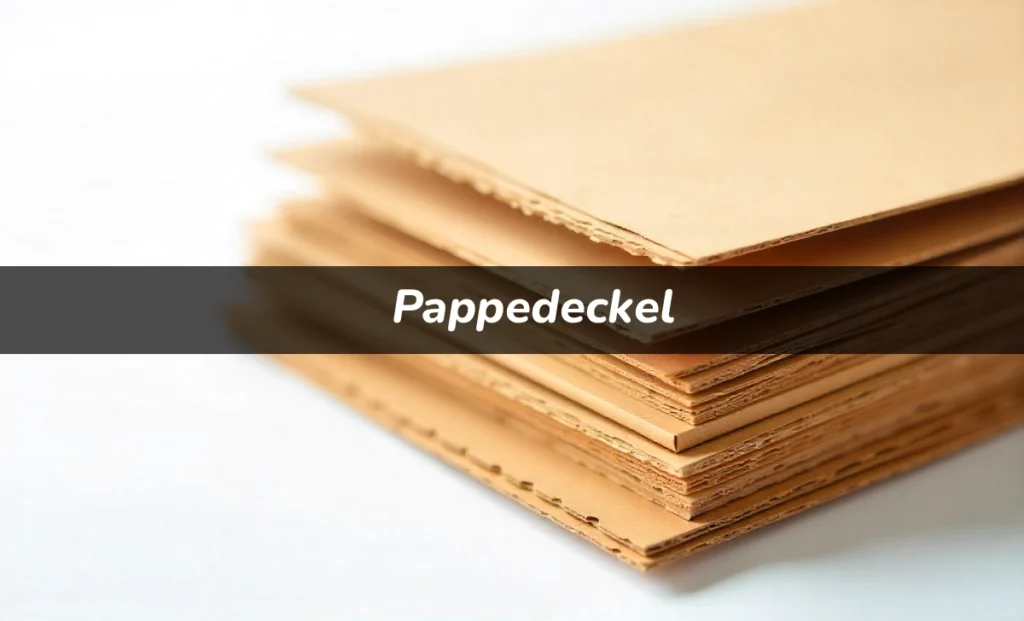
Pappedeckel is German for “cardboard lid” or “cardboard cover,” referring to sturdy cardboard materials used in packaging, crafts, and industrial applications. This versatile material combines durability with eco-friendly properties, making it popular across multiple industries worldwide.
You’ve probably encountered Pappedeckel countless times without knowing its name. This German term describes a specific type of heavy cardboard that bridges the gap between regular paper and full corrugated cardboard.
Understanding Pappedeckel opens doors to better packaging choices, creative projects, and sustainable business practices. You’ll discover its manufacturing process, practical applications, and why major companies choose this material over alternatives.
What Makes Pappedeckel Different from Regular Cardboard
Pappedeckel stands apart through its unique construction and density. Regular cardboard typically weighs 120-180 GSM (grams per square meter), while pappdeckel ranges from 200-600 GSM.
The manufacturing process creates multiple compressed layers without the fluted middle section found in corrugated cardboard. This design provides:
- Superior flatness for printing and folding
- Better edge quality when cut
- Increased durability under pressure
- Smoother surface texture
German manufacturers developed this material in the early 1900s for book covers and packaging applications requiring both strength and printability. The name literally translates to “cardboard lid,” reflecting its original use in box manufacturing.
Manufacturing Process Behind Quality Pappedeckel
Modern pappedeckel production combines recycled fibers with virgin pulp in precise ratios. The process begins with pulp preparation, where recycled paper undergoes de-inking and fiber separation.
Key manufacturing steps include:
- Fiber mixing – Combining recycled content (60-80%) with virgin fibers
- Sheet formation – Creating uniform thickness through controlled deposition
- Pressing – Applying high pressure to compress layers
- Drying – Controlled moisture removal to prevent warping
- Calendering – Surface smoothing for print quality
According to industry data from 2023, German pappedeckel manufacturers produce over 2.3 million tons annually, with 40% exported globally. Quality control measures include density testing every 100 meters and moisture content monitoring.
Temperature control during drying remains critical. Facilities maintain 180-200°C temperatures while monitoring fiber alignment to prevent delamination issues that plagued early production methods.
Industrial Applications Driving Market Growth
Pappedeckel serves diverse industries due to its unique property combination. The packaging sector represents the largest market segment, accounting for 65% of total consumption according to 2024 market research.
Packaging Industry Uses:
- Premium product boxes for electronics and cosmetics
- Food packaging requiring grease resistance
- Pharmaceutical packaging meeting regulatory standards
- E-commerce shipping containers for fragile items
The automotive industry increasingly uses Pappedeckel for interior components. BMW reported a 23% increase in cardboard-based interior panels in its 2023 sustainability report, citing weight reduction and recyclability benefits.
Furniture manufacturers apply Pappedeckel in drawer bottoms and cabinet backing. IKEA sources over 180,000 tons annually for flat-pack furniture components, replacing traditional plywood in non-structural applications.
Creative and Craft Applications You Can Try
Pappedeckel’s workability makes it ideal for creative projects requiring structural integrity. Art schools across Europe teach bookbinding techniques using this material due to its folding properties and print receptivity.
Popular craft applications include:
- Hardcover book binding and portfolio creation
- Architectural model construction
- Picture frame matting and backing
- Custom storage solutions and organizers
- Prototype development for product design
Professional bookbinders prefer Pappdeckel over chipboard for covers because it accepts adhesive better and resists warping. The Bookbinders Guild of Germany recommends 300-400 GSM weights for most binding projects.
Model makers choose Pappedeckel for architectural presentations because it cuts cleanly with standard craft knives and maintains sharp edges. Leading design schools report 40% of student projects incorporate this material.
Environmental Benefits and Sustainability Facts
Pappedeckel production generates 60% fewer carbon emissions than plastic alternatives, according to lifecycle analysis studies from 2023. The material’s recyclability creates a closed-loop system, reducing waste streams.
Key Environmental Advantages:
- 100% recyclable through standard paper recycling
- Biodegradable within 3-6 months in composting conditions
- Reduced transportation emissions due to lightweight properties
- Lower energy requirements during manufacturing
European Union regulations promote Pappedeckel use through extended producer responsibility programs. Companies using over 50 tons annually receive tax incentives for choosing recyclable packaging materials.
Recent studies show Pappedeckel recycling rates exceed 85% in Germany, compared to 9% for plastic packaging. This high recovery rate stems from established collection infrastructure and consumer awareness programs.
Forest Stewardship Council certification covers 78% of virgin fiber inputs, ensuring responsible sourcing practices. Major suppliers report zero net deforestation impact through balanced harvesting and replanting programs.
Choosing the Right Pappedeckel Grade for Your Needs
Weight classification determines Pappedeckel performance characteristics. Understanding these grades helps you select appropriate materials for specific applications.
Light Grade (200-300 GSM):
- Suitable for folders and lightweight packaging
- Good printability for marketing materials
- Cost-effective for high-volume applications
- Limited structural strength
Medium Grade (300-450 GSM):
- Ideal for book covers and premium packaging
- Balance between strength and flexibility
- Excellent print quality retention
- Most versatile category
Heavy Grade (450-600+ GSM):
- Maximum durability for industrial applications
- Suitable for load-bearing components
- Premium feel for luxury packaging
- Higher cost per unit
Thickness measurements range from 0.3mm to 1.2mm, with density affecting both strength and workability. Professional applications typically specify both weight and caliper measurements for consistency.
Storage and Handling Best Practices
Proper storage extends Pappedeckel lifespan and maintains performance characteristics. Moisture control remains the primary concern, as humidity variations cause dimensional changes.
Storage Requirements:
- Maintain 45-55% relative humidity
- Store flat to prevent warping
- Avoid direct sunlight exposure
- Keep away from heat sources
- Use moisture barriers for long-term storage
Industrial users implement climate-controlled warehouses with automated monitoring systems. Temperature fluctuations exceeding ±5°C can cause expansion and contraction, affecting print registration.
Handle sheets with clean, dry hands to prevent oil transfer and moisture absorption. Professional facilities use cotton gloves when handling premium grades destined for high-quality printing applications.
Cost Analysis and Market Pricing Trends
Pappedeckel pricing varies significantly based on grade, quantity, and supplier location. European markets typically command premium prices due to quality standards and environmental regulations.
2024 Average Pricing (EUR per ton):
- Light grade: €680-820
- Medium grade: €720-920
- Heavy grade: €850-1,100
Volume discounts begin at 10-ton orders, with 15-25% reductions for annual contracts. Transportation costs add €40-80 per ton, depending on distance and delivery requirements.
Market analysis shows steady 3-4% annual price increases driven by raw material costs and environmental compliance investments. Supply chain disruptions in 2023 caused temporary 12% price spikes, now stabilizing.
Common Problems and Solutions
Quality issues can affect Pappedeckel performance in critical applications. Understanding common problems helps prevent project failures and material waste.
Delamination Issues:
- Cause: Moisture exposure during storage
- Solution: Proper climate control and sealed storage
- Prevention: Source from certified suppliers with quality guarantees
Edge Fraying:
- Cause: Dull cutting tools or inappropriate cutting speed
- Solution: Sharp blades and slower feed rates
- Prevention: Regular tool maintenance and proper technique
Print Quality Problems:
- Cause: Surface contamination or density variations
- Solution: Surface cleaning and ink adjustment
- Prevention: Specify printing-grade materials
Professional users report 95% fewer quality issues when following manufacturer storage and handling guidelines. Supplier audits help identify potential problems before they affect production schedules.
Future Trends and Innovations
Research focuses on enhancing Pappedeckel properties while maintaining environmental benefits. Barrier coatings development aims to replace plastic films in food packaging applications.
Emerging Developments:
- Water-resistant surface treatments using natural waxes
- Antimicrobial additives for medical packaging
- Conductive formulations for electronics packaging
- Color-integrated manufacturing eliminates surface printing
Nanotechnology applications show promise for creating super-smooth surfaces, improving print quality. German research institutes report 40% better ink adhesion with nano-treated surfaces.
Digital printing compatibility improvements target on-demand packaging markets. New surface treatments allow direct digital printing without primer coats, reducing production time and costs.
FAQs
Can Pappedeckel replace plastic packaging completely?
While Pappedeckel excels in many applications, it cannot replace all plastic uses. Moisture-sensitive products still require barrier protection, though bio-based coatings increasingly address this limitation.
How does Pappedeckel compare to corrugated cardboard?
Pappedeckel offers superior compression strength per unit thickness but lower impact resistance than corrugated alternatives. Choose based on your specific stress requirements and space constraints.
What recycling preparation is needed for Pappedeckel?
Remove all non-paper components like plastic tapes and metal fasteners. Most recycling facilities accept Pappedeckel through standard paper collection programs without special sorting.
Does Pappedeckel work for outdoor applications?
Standard Pappedeckel degrades rapidly when exposed to moisture. Treated versions with water-resistant coatings extend outdoor life to 6-12 months, depending on climate conditions.
Why do prices vary so much between suppliers?
Quality differences, certification levels, and production volumes significantly affect pricing. Premium suppliers invest more in quality control and environmental compliance, justifying higher costs through superior performance.

Isla Morgan
Isla writes travel, lifestyle, and leisure content with a warm, practical style that favors the details readers actually need. She looks for what makes sense of a destination or topic beyond the surface-level highlights. Her pieces read like advice from someone who's genuinely thought about what would help.
View all articles →Get the Weekly Brief
The best guides and stories, delivered every Sunday.