
A buyer on your marketplace checks out, card details in hand, and their purchase involves three sellers, two currencies, and a payout that needs to happen within 48 hours. Every step in that journey touches sensitive payment data. Now imagine running thousands of those transactions a day — each one a potential point of exposure.
For marketplace operators, payment security isn’t a backend concern you hand off to a developer. It sits at the heart of trust, compliance, and revenue. And in 2026, the technology solving this problem at scale has a single name: payment tokenisation.
This guide explains what payment tokenisation is, why marketplaces have a uniquely complex need for it, how the different token types work, and how to build a tokenisation strategy that grows with your platform.
What Is Payment Tokenisation?
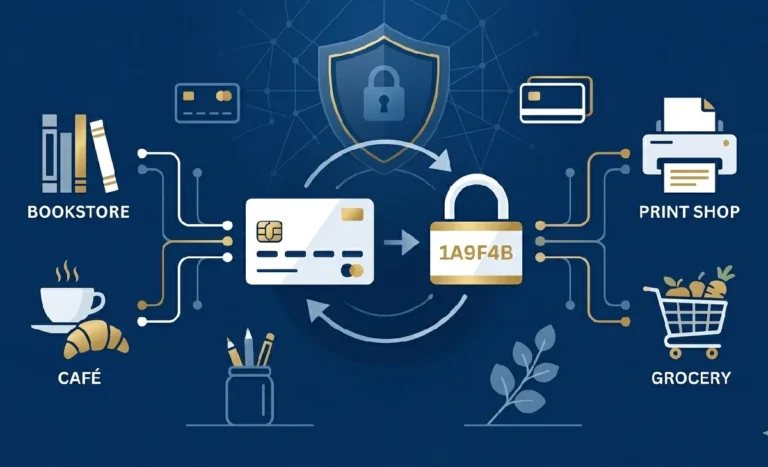
At its core, payment tokenisation is the process of replacing sensitive payment data — most importantly, a customer’s Primary Account Number (PAN), the 16-digit card number — with a randomly generated substitute called a token.
That token has no intrinsic value on its own. It cannot be reverse-engineered to reveal the original card number. It is simply a reference — a placeholder that points to the real data stored securely in a dedicated token vault managed by a payment provider or card network.
When a buyer pays on your marketplace, here is what actually travels through your system: a token. Not a card number. The real card data never touches your servers.
This matters enormously for two reasons. First, if your system is ever breached, attackers find tokens — strings of characters that are useless outside the vault. Second, because your systems do not store actual card data, your PCI DSS compliance scope shrinks dramatically. By replacing PANs with randomly generated characters, tokenisation significantly reduces merchants’ exposure to risk and simplifies PCI DSS compliance obligations.
Tokenisation vs. Encryption
These two terms are often used interchangeably, but they work very differently. Unlike encryption, which yields identical output when the same data is encrypted with the same key, tokenisation creates a unique token for each instance of data, even if the data is identical — reducing the risk of pattern recognition and adding an extra layer of security.
With encryption, the original data can theoretically be recovered if the decryption key is compromised. With tokenisation, there is no mathematical relationship between the token and the original card number. You cannot “decrypt” a token. That one-way substitution is what makes tokenisation structurally stronger for storing payment credentials over time.
Why Marketplaces Have a Bigger Problem Than Regular Online Stores
A standard e-commerce store has a straightforward payment flow: one seller, one buyer, one transaction. Tokenisation still matters, but the exposure is relatively contained.
Marketplaces are different. A marketplace processes payments on behalf of multiple sellers. At any given moment, your platform handles buyer card data, seller bank details, split payment logic, fee deductions, and payout instructions — all simultaneously. Unlike traditional online stores, marketplace payment processing must manage complex split payment flows, delay funds between buyers and sellers, process omnichannel payments, and ensure compliance across multiple vendors.
This complexity creates a broader attack surface. More data, more parties, more integration points — each one a potential vulnerability. Tokenisation addresses this by ensuring that at no point in this chain does raw card data need to travel through your infrastructure.
There is also a regulatory dimension. In most U.S. states, marketplaces are legally classified as facilitators and must collect and remit sales tax from third-party sellers, making the platform the Merchant of Record (MoR) — legally responsible for every transaction, including disputes, failed payments, and refunds. That legal responsibility makes secure payment handling not just a technical best practice, but a legal obligation.
The Three Types of Payment Tokens
Not all tokens work the same way. For marketplace operators, understanding the three main token types is important — because the right choice depends on your scale, architecture, and growth plans.
1. PSP Tokens
A PSP (Payment Service Provider) token is issued and managed by your payment gateway — Stripe, Adyen, Braintree, or whoever processes your transactions. When a buyer pays, the PSP replaces their card number with a token that only that PSP can resolve.
PSP tokens are the most common starting point for marketplaces. They are simple to implement, and the PSP handles all the storage and security overhead. The drawback is lock-in: if you ever want to switch PSPs or add a second processor, your customer card data stays with the original provider. You cannot take it with you.
2. Network Tokens
Network tokens are issued by the card networks themselves — Visa through its Visa Token Service, Mastercard through its Mastercard Digital Enablement Service. Unlike PSP tokens, these tokens are provisioned at the network level and are recognized by the issuing bank directly.
Network tokens automatically update when a card is reissued and can improve authorization rates by 2–5%, while also qualifying for lower interchange fees because the card networks view tokenised transactions as lower risk.
For a marketplace running high volumes of repeat buyers and subscriptions, this is significant. Visa token transactions have seen a 4.6% lift in authorization rates globally compared to PAN, and token-based transactions drive a 30% reduction in online fraud. Fewer failed payments means more revenue collected and fewer customers lost to involuntary churn.
3. Universal Tokens (Vault Tokens)
A universal token (sometimes called a vault token) is issued by a merchant-owned or third-party payment vault that sits above your PSPs. The vault stores the real card data centrally and issues a single token that your platform can use across multiple payment processors.
Universal tokens enable multi-PSP routing strategies without re-tokenizing customer data, give full control over payment data and orchestration logic, and simplify provider switching or regional expansion — making them ideal for global platforms and marketplaces seeking flexibility.
For growing marketplaces, this is the most future-proof approach. You can route a transaction through Stripe today and Adyen tomorrow using the same token, without asking your customer to re-enter their card.
Quick Comparison
| Feature | PSP Token | Network Token | Universal Token |
|---|---|---|---|
| Issued by | Payment Gateway | Card Network (Visa/MC) | Merchant vault / third-party |
| Portability | Low (PSP-locked) | Medium | High (any PSP) |
| Auth rate improvement | Baseline | +2–5% | +Variable (with smart routing) |
| Auto card update | No | Yes | Depends on the vault |
| Best for | Small/early-stage | Recurring payments | Scaling marketplaces |
| PCI scope impact | Reduces | Reduces | Maximum reduction |
How Payment Tokenisation Works in a Marketplace: Step by Step
Here is a real-world flow — a buyer purchasing a handmade bag from a seller on a multi-vendor fashion marketplace.
Step 1 — Buyer enters card details at checkout
The card number is captured through a hosted payment form or secure iframe provided by your payment provider. The raw card data goes directly to the PSP or token vault — never to your marketplace servers.
Step 2 — Token is generated
The payment provider instantly replaces the PAN with a token. This generation happens in real time, adding an element of both security and convenience for the buyer.
Step 3 — Transaction is authorized
The token is sent through the payment network for authorization. For network tokens, the card network recognizes the token natively, and the issuer authorizes — often at a higher rate than PAN-based transactions.
Step 4 — Funds are split
Once the transaction is approved, your platform’s payment orchestration layer applies the split logic — deducting your marketplace commission, calculating applicable taxes, and routing the seller’s portion to their payout account. The token persists throughout this process.
Step 5 — Seller receives payout
The seller’s funds are disbursed according to your payout schedule. The buyer’s token remains on file for future purchases, enabling one-click checkout next time.
Step 6 — Token is stored, not card data
Your marketplace retains only the token. If a customer returns, you process their repeat purchase using the same token — no card details required.
The Real Benefits for Marketplace Operators
Reduced PCI DSS Scope
PCI DSS compliance is one of the most resource-intensive obligations for any payments platform. Companies can avoid the costs and distractions associated with 95% of PCI DSS requirements by keeping cardholder data off their systems — retaining complete control over their cardholder data through tokenisation. Fewer systems in scope means simpler audits, lower compliance costs, and a smaller team required to maintain certification.
Higher Payment Authorization Rates
Every declined transaction is a lost sale. Tokenisation — especially network tokenisation — reduces declines from expired cards because tokens update automatically when a buyer’s card is replaced. Since 33% of customers abandon a transaction if it doesn’t go through the first time, the automatic token update capability is an incredibly valuable benefit for platforms with recurring purchases or loyal buyers.
Lower Fraud Exposure
Tokens are domain-restricted — they are bound to a specific merchant or device context. Even if a token were intercepted, it could not be used on another platform. This structural constraint is what makes tokenisation fundamentally different from storing even encrypted card numbers.
Portability and PSP Flexibility
For marketplaces that plan to expand globally or add regional processors, network tokens offer true portability — businesses can migrate to new PSPs, integrate with different platforms, or test multiple providers without re-tokenizing customer data. This removes a major constraint on growth: you are not locked into one provider’s pricing or geographic limitations.
Faster, Frictionless Checkout
Once a buyer’s card is tokenised, every subsequent purchase becomes one-click. No re-entering details. No re-authentication for repeat orders. For high-frequency marketplaces — think food delivery or ride-hailing — this is a direct conversion driver.
Choosing the Right Tokenisation Strategy for Your Marketplace
The right approach depends on where your marketplace stands today.
If you are early-stage and processing modest volumes through a single PSP, PSP-level tokenisation is a reasonable starting point. The priority is getting to market securely, and most major gateways handle this by default.
If you are scaling and approaching meaningful transaction volumes with repeat buyers, network tokenisation becomes worth implementing. The lift in authorization rates and the automatic card update functionality directly affect revenue recovery.
If you are at scale, operating across multiple regions, or using more than one payment processor, a universal token vault is the infrastructure decision that pays for itself many times over. With a merchant-owned vault, failed transactions can be retried across multiple processors using intelligent routing rules — if one PSP declines a transaction, the same payment token immediately retries through another without requiring customer re-authentication.
Many mature marketplace payment stacks combine all three: universal tokens for portability, network tokens layered on top for the auth rate and fraud benefits, and PSP-level fallbacks where needed.
Tools and Providers Worth Knowing
- Stripe Connect — The most developer-friendly option for marketplace split payments, seller onboarding, and tokenisation. Strong documentation, global coverage, but ties all sellers to Stripe.
- Adyen for Platforms — Built for enterprise-scale marketplaces. Supports network tokenisation, multi-PSP routing, and global compliance out of the box.
- IXOPAY (formerly TokenEx) — A specialist universal token vault. Reduces PCI scope by up to 90% and unifies payment data across all channels and processors.
- Solidgate — Combines network tokenisation with smart routing and retry logic in a single infrastructure layer, suited for platforms with high-volume recurring transactions.
- Payrails — PSP-agnostic token vault with multi-PSP orchestration and network token support, suited for globally expanding marketplaces.
Final Thoughts
A marketplace’s payment infrastructure is, in many ways, its trust infrastructure. Buyers need to know their card details are safe. Sellers need to know payouts are reliable. Regulators need to know your compliance posture is sound.
Payment tokenisation addresses all three at once. It removes sensitive data from your environment, reduces the cost and complexity of compliance, improves the metrics that matter most — authorization rates and fraud rates — and gives your platform the portability to grow without being anchored to a single provider.
The earlier a marketplace builds tokenisation into its core architecture, the less expensive that foundation becomes. The later it waits, the harder it is to retrofit — and the more customer re-engagement that migration requires.
Start with the token type that fits your current scale. Plan for the one your platform will need next year. The gap between those two decisions is smaller than most operators expect.
