
Norway is a nation defined by its stunning, wild landscapes. From the deep fjords to the vast mountain plateaus, the country’s rich biodiversity is a source of national pride and a key part of its identity. But managing this wildness—ensuring the health of animal populations while protecting human safety and property—is a complex, continuous task. This is where the Viltnemnda steps in.
The Viltnemnda, which translates roughly to “Wildlife Committee,” is the backbone of Norway’s decentralized wildlife governance model. It is a municipal board, appointed by the local council, that holds the authority to implement and enforce national wildlife laws at the local level. If you live in Norway or plan to visit its wilderness, understanding the Viltnemnda is crucial to appreciating how this country keeps its natural world in balance.
What is the Viltnemnda?
The Viltnemnda is not a single, monolithic national agency. Instead, it is a network of local committees, each tailored to the specific needs of its municipality. This local focus is a deliberate choice, recognizing that the challenges of managing a moose population in a dense forest region are vastly different from those faced by a coastal town dealing with sea birds or seals.
The legal foundation for the Viltnemnda is the Norwegian Wildlife Act (Viltloven). This legislation delegates significant responsibility to the municipalities, making them the primary administrative authority for wildlife management. The committee members are typically residents with deep knowledge of the area’s ecology, hunting traditions, and community needs. This structure ensures that decisions about local wildlife are made by the people who know the land best.
The Viltnemnda’s Core Responsibilities
The committee’s mandate is broad, covering everything from conservation to emergency response. Their work is a constant balancing act between the needs of the wildlife, the environment, and the human population.
1. Managing Hunting and Quotas
One of the most visible roles of the Viltnemnda is the management of hunting. They are responsible for setting local hunting quotas for various species, particularly the large game animals like moose (elg), red deer (hjort), and roe deer (rådyr). This is not a random process. The quotas are set based on extensive data, including population surveys, winter feeding conditions, and the previous year’s harvest statistics.
The goal is to ensure a sustainable harvest that maintains a healthy age and sex ratio within the population. For example, if a moose population is growing too large and causing significant damage to forests or crops, the Viltnemnda will increase the quota to bring the numbers back into balance. They also issue local hunting licenses and oversee the implementation of hunting regulations, ensuring compliance with national law.
2. Emergency Response and Wildlife Accidents
The Viltnemnda operates as the primary emergency service for injured or distressed wild animals. This is a 24/7 responsibility that is especially critical during the autumn and winter months when wildlife traffic accidents (viltpåkjørsler) spike.
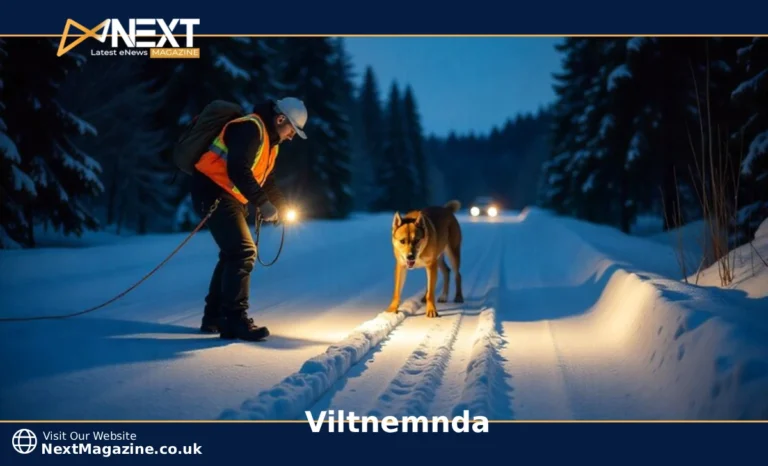
If you hit a wild animal in Norway, your first call must be to the police (02800), who then dispatch the local Viltnemnda team. This team, often referred to as the ettersøksekvipasje (tracking team), is trained to track the injured animal, assess its condition, and, if necessary, put it down humanely. This immediate response is essential for animal welfare and public safety.
The scale of this problem is significant. Data from the Norwegian Register of Cervids (Hjorteviltregisteret) shows that over 15,000 cervids (moose, red deer, and roe deer) were registered as fallvilt (fallen wildlife) in the 2023-2024 reporting year. A vast majority of these cases—over 9,500—were the result of collisions with motor vehicles. The Viltnemnda’s quick action in these situations prevents prolonged suffering and removes injured animals from dangerous areas.
3. Habitat and Conservation Advice
The committee also plays a crucial advisory role in local land-use planning. When a municipality considers a new road, housing development, or forestry operation, the Viltnemnda provides expert input on how the project will affect local wildlife habitats and migration corridors.
They advise on measures to mitigate negative impacts, such as establishing wildlife crossings or protecting key winter grazing areas. This proactive approach is vital for long-term conservation, ensuring that development does not irreversibly fragment the natural environment. Their input helps integrate wildlife concerns directly into municipal policy, a hallmark of Norway’s commitment to environmental stewardship.
The Challenge of Human-Wildlife Conflict
While the Viltnemnda is highly effective, its work is constantly challenged by the increasing proximity of human and animal populations. Urban sprawl and infrastructure development push wildlife into closer contact with people, leading to conflicts that require delicate handling.
Moose in the Suburbs
A common issue is the presence of large animals, particularly moose, in residential areas. While generally harmless, a moose can pose a serious threat if it feels cornered or if it is a cow protecting its calf. The Viltnemnda is responsible for assessing these situations. In most cases, they will attempt to scare the animal away or wait for it to move on naturally. However, if an animal is repeatedly aggressive or poses an undeniable threat to human life, the Viltnemnda has the authority to request a permit for culling from the Norwegian Environment Agency. This is always a last resort, undertaken only after careful consideration of all other options.
Predator Management
The management of large predators—wolves, bears, lynx, and wolverines—is a particularly sensitive area. While the national government sets the overall policy and population goals for these species, the Viltnemnda is often involved in the local response. They assist in documenting predator damage to livestock and can be part of the team that carries out licensed culls under strict national guidelines. This work is often controversial, requiring the Viltnemnda to navigate intense local political and emotional debates between conservationists and livestock owners.
The Future of Viltnemnda: Technology and Transparency
As Norway moves deeper into the 21st century, the Viltnemnda is adapting its methods through technology. The use of digital tools is making their work more efficient and transparent.
Digital Reporting
The introduction of digital reporting systems, such as the Hjorteviltregisteret (Cervid Register), has revolutionized data collection. Hunters and Viltnemnda teams now log their observations, accident reports, and harvest data directly into a centralized database. This provides real-time, high-quality data that informs management decisions, allowing the Viltnemnda to adjust quotas and focus resources on problem areas more quickly than ever before.
Community Engagement
Despite the digital shift, the Viltnemnda remains fundamentally a community-based institution. Its success relies on the cooperation of the public. They actively work to educate the public on how to coexist with wildlife, especially regarding traffic safety. For instance, they emphasize the importance of slowing down at dawn and dusk, particularly in areas marked with wildlife warning signs.
The Viltnemnda’s role is a powerful example of effective local governance. By empowering local experts with the authority to manage their own natural resources, Norway ensures that its wildlife policy is both scientifically sound and deeply rooted in community knowledge.
Final Thoughts
The Viltnemnda is more than just a bureaucratic committee; it is a vital service that protects both Norway’s natural heritage and its citizens. Their work is a constant, demanding effort to balance the needs of a modern society with the imperative of conservation. From tracking an injured deer on a dark winter night to setting the annual moose quota, the Viltnemnda’s commitment to sustainable, local wildlife management is a model for how nations can successfully integrate human activity with the wild world around them.
FAQs
How do I contact the Viltnemnda in an emergency?
If you are involved in a wildlife traffic accident, you must first call the police at 02800. The police will then contact the local Viltnemnda team (ettersøksekvipasje) to handle the situation. Do not attempt to approach or move an injured animal yourself.
What happens if I hit a wild animal and don’t report it?
Failing to report a collision with a wild animal is a violation of Norwegian law (Viltloven § 40) and is punishable by fines. It is considered a serious offense because it leaves an injured animal to suffer and poses a risk to other drivers. You must report all collisions, even if the animal appears to have run away unharmed.
Does the Viltnemnda manage all wildlife in Norway?
The Viltnemnda manages most local game species, including cervids, small game, and local bird populations. However, the management of large predators (wolves, bears, wolverines, and lynx) is primarily governed by regional and national authorities, although the Viltnemnda assists with local documentation and culling under strict national permits.
How are members of the Viltnemnda chosen?
Members are appointed by the municipal council. They are typically residents with expertise in hunting, forestry, agriculture, or conservation, ensuring they have the necessary knowledge to make informed decisions about local wildlife management.
