
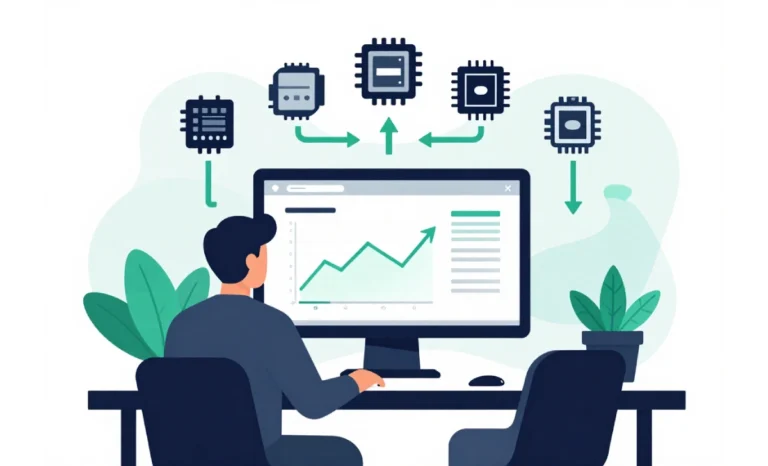
Transaction fees in online businesses are unavoidable expenses that create operational challenges. The costs of digital payment processing increase as the volume of digital transactions continues to rise. These seemingly small percentage increases can scale rapidly, often making payment processing one of a company’s top five operational costs.
Payment processing fees should not be viewed as fixed or unchangeable expenses. Merchants can reduce costs through active management by implementing the right technological systems. Modern fintech tools enable businesses to optimise their payment infrastructure using intelligent routing and data enrichment technologies to streamline transactions.
1. Leverage Dynamic Payment Routing
Using multiple payment processors instead of just one payment processor enables businesses to reduce their payment processing fees. Payment processors charge different fees based on which card type customers use, which currency they select and which geographical area they belong to. A single provider might offer excellent rates for domestic debit cards but charge significantly higher fees for international credit cards.
Dynamic payment routing technology automatically selects the cheapest processor for each transaction according to real-time cost data. The system forwards the transaction to Processor A when a customer uses a particular card type, which Processor A processes at a reduced cost. The system directs traffic to Processor B when this processor provides superior rates for international transactions. This smart switching method verifies that you receive the lowest transaction fee for every sale, which results in businesses saving significantly on their annual transaction expenses.
2. Implement Level 2 and Level 3 Data Processing
For B2B and B2G merchants, interchange optimisation is a game-changer. The largest portion of the cost is interchange fees, the cut that goes to the issuing bank of the card. Card networks like Visa and Mastercard charge lower rates to merchants who offer more detailed transaction information.
- Level 1 Data: simple information such as merchant name, transaction amount, and date.
- Level 2 Data: adds tax amount, customer code, and merchant postal code.
- Level 3 Data: more detailed information, such as product codes, unit prices, quantities, and freight.
When payment technology is able to automatically transmit Level 2 and Level 3 data as part of a transaction, merchants can qualify for significantly lower interchange rates. This is a simple way to reduce payment processing fees, and this can provide significant savings for high-value business transactions.
3. Combat Chargebacks with Automated Prevention
Chargebacks result in revenue loss from the original sale and also create additional penalty fees and administrative overhead for merchants. Beyond the immediate financial impact, consistently high chargeback ratios can place a business in a high-risk category, often leading to stricter oversight by payment providers and higher long-term payment processing costs.
Technology provides organisations with active defence systems that protect their operations. Modern fraud prevention tools use machine learning to detect suspicious patterns before a transaction is authorised. Merchants receive chargeback alerts, which inform them about upcoming disputes that enable merchants to refund customers before disputes turn into official chargebacks. Your penalty fee will be avoided through dispute prevention, which also maintains the low chargeback ratio that enables you to access standard processing rates at reduced costs.
4. Optimise for Debit and Local Payment Methods
Different types of credit cards require different treatment because they have different cost structures. The interchange fees of credit cards reach their highest point with premium rewards cards, while debit cards maintain lower fees. However, many payment gateways treat them identically by default.
The advanced checkout technology enables users to determine card types through BIN detection, which directs customers toward cheaper payment methods. The system can recommend bank transfer payments or local debit payments to customers who choose expensive credit cards because these options provide small discounts and loyalty points. Your total payment processing fees will decrease when you direct customers to use local payment methods, which include UPI in India and SEPA in Europe, because these methods have minimal transaction costs compared to international credit card networks.
5. Consolidate Data for Better Negotiation
Information is power when negotiating with payment service providers (PSPs). Many businesses use multiple systems that fragment their financial data, making it hard to see the true cost of payments.
Unified payment orchestration platforms consolidate data from all your payment flows into a single dashboard. This visibility allows you to pinpoint exactly how much you are paying in payment processing fees across different providers, regions, and channels. Armed with this concrete data, you can negotiate better rates with your PSPs. You can demonstrate your volume and processing history to demand interchange-plus pricing models, which are far more transparent and often cheaper than flat-rate pricing.
Conclusion
The process of reducing payment processing fees requires businesses to develop intelligent payment systems instead of choosing the lowest-cost payment processor. Through dynamic routing deployment, transaction data enhancement and fraud prevention automation, companies can convert their payment systems into valuable business assets. The digital economy requires businesses to maintain profitability because even minor transaction cost reductions can help them achieve better results.
