
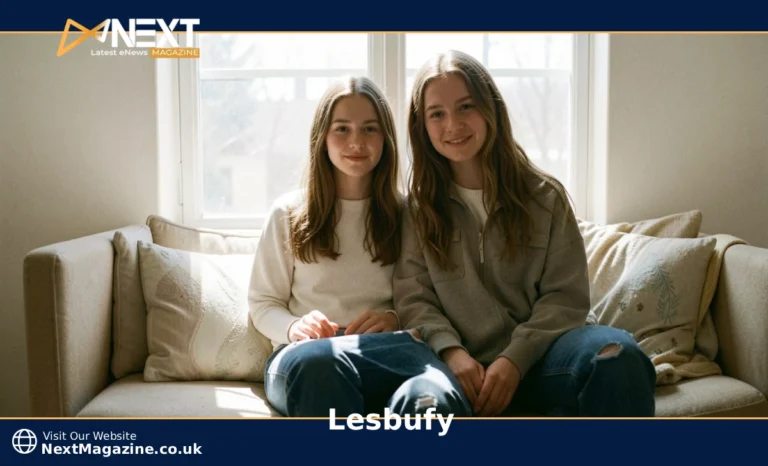
Lesbufy is a 2026 internet slang term that blends “lesbian” and “bestie” to describe a deep emotional bond shared within queer and female-aligned spaces. It originated on TikTok and Instagram as a way to name connections that feel more significant than a typical friendship but don’t fit neatly into romantic categories. The term signals inclusivity, emotional safety, and chosen-family intimacy.
What Lesbufy Actually Means
Words often arrive before explanations do. Lesbufy spread across TikTok comment sections and Instagram captions before most people had a definition for it — and that ambiguity was part of the draw.
The term is a portmanteau of “lesbian” and “bestie,” and captures the spirit of LGBTQ+ friendships, especially those shared by gay and lesbian women. At its core, it names a bond that sits in the space between deep friendship and emotional partnership — something many queer women had been experiencing for years without a precise word for it.
To “lesbufy” a connection is to infuse it with vulnerability, a shared history of struggles and triumphs, and an affectionate solidarity that blends best-friendship with the tenderness typically associated with romance.
This isn’t about sexual attraction. It’s about a specific quality of closeness — the kind where you feel genuinely known, not just liked. Many queer women have described friendships that carry emotional weight far beyond what the word “friend” communicates. Lesbufy fills that gap.
Where the Word Came From
Lesbufy emerged from social media circles — specifically TikTok and Instagram — where users were looking for a way to describe relationships that felt more significant than a “bestie” but different from a “partner.”
The timing makes sense. Queer visibility on these platforms expanded sharply between 2022 and 2025. As more users built community online, they needed vocabulary that matched their lived experience. “Girlfriend” implies romance. “Best friend” undersells it. “Chosen family” comes close but carries its own weight. Lesbufy arrived as something lighter, warmer, and specifically rooted in queer female culture.
A History of Queer Language Online
Queer communities have always created their own language. In mid-20th century Britain, gay men used Polari — a coded slang — to communicate safely in hostile environments. The internet simply moved that practice into a new medium.
In 2026, this happens through hashtags and viral terms. Words like Lesbufy act as digital safe zones — when a user identifies an interaction or community as “Lesbufy-aligned,” they signal that this is a space of inclusivity, empathy, and soft-heartedness.
This is linguistic reclamation at work: a community naming its own experience before mainstream culture tries to do it for them.
How Lesbufy Differs From Other Terms
You might wonder how lesbufy stands apart from existing terms like “WLW” (women who love women), “sapphic,” or “chosen family.”
WLW and sapphic are identity descriptors — they tell you who someone is attracted to. Chosen family describes a support network, often shaped by distance from biological relatives. Lesbufy is different because it describes a specific type of bond, not an identity or a group.
Lesbufy encourages diversity in relationships and goes beyond conventional categories, conveying a sense of friendship with a hint of romance. You can use it without labeling anyone’s sexuality. A bisexual woman and a straight woman could share a lesbufy connection if the emotional quality is there. The word is about the texture of the relationship, not the orientation of the people in it.
This makes it more flexible — and more useful — than most existing terms.
The Lesbufy Aesthetic
Like many internet-born terms, lesbufy developed a visual language alongside its verbal one.
A Lesbufy moodboard typically features soft color palettes — muted pinks, purples, and sunset oranges — and images of friends holding hands in a field, cozy indoor setups with soft lighting, and candid moments of laughter.
This aesthetic does more than look pretty. It communicates values: softness over performance, presence over polish, genuine connection over content creation. For a generation exhausted by curated perfection on social media, the lesbufy aesthetic offers something that feels real.
The visual language also functions as a signal. When someone posts a photo with that soft color palette and an affectionate caption, they’re communicating belonging to a specific community without needing to explain it in words.
Why This Word Resonates in 2026
Society often places a high value on finding a single romantic partner who satisfies all emotional needs. Lesbufy challenges this by elevating the deep friendship to a place of equal importance, acknowledging that a life filled with deep, lesbufy connections is just as valid as a traditional one.
That challenges a cultural assumption most people have absorbed without questioning: the idea that romance is the peak form of human connection. Many people — queer or not — have experienced their closest emotional bonds not in romantic partnerships but in friendships. Lesbufy gives that experience, language, and legitimacy.
Many people feel a deep sense of loneliness even while more connected than ever. Lesbufy provides a framework for intentional connection, encouraging people to look for depth rather than followers or likes.
In a social media environment that rewards performance, a term that centers on genuine emotional intimacy stands out.
How to Recognize a Lesbufy Connection
You don’t perform a lesbufy relationship — you recognize one. Some markers to look for:
You show up as yourself without managing how you come across. The friendship has its own history, language, and rituals. You feel supported in a way that’s specific to you, not generic. The affection doesn’t need justification or labeling. Distance or silence doesn’t fracture the bond.
Embracing the lesbufy philosophy means practicing active listening, creating rituals of connection — whether a weekly coffee date or a shared digital space — and building terrain where the connection can grow.
None of this requires a label. The word lesbufy is useful when you want to communicate this quality of bond to someone else, or when you want to find others who value the same thing.
FAQ
Is Lesbufy only for lesbian or queer women?
The term originated in queer and female-aligned spaces, but its application has broadened. The core meaning — deep, affectionate emotional connection — resonates across identities. Many people use it without applying it exclusively to any one group.
Is lesbufy a real word?
It doesn’t appear in Merriam-Webster or the Oxford English Dictionary yet. As of 2026, it lives in internet culture and social media usage. That said, words like “selfie” and “ghosting” followed the same path before reaching mainstream dictionaries. Lesbufy is real in the way all living language is real: people use it to mean something specific, and others understand it.
How do you use lesbufy in a sentence?
Naturally. “We have such a lesbufy dynamic” or “She completely lesbufy’d our friendship group” both work. The word functions as an adjective and a verb, depending on context. Start using it where it fits, and it quickly becomes intuitive.
