
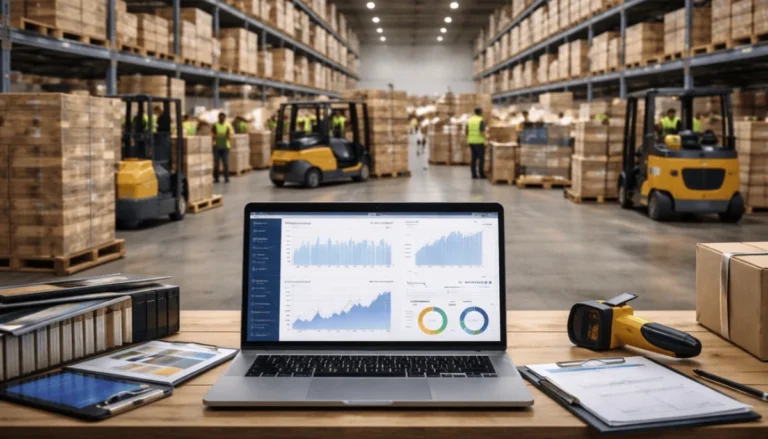
AI in the supply chain is often talked about as if it were a silver bullet. In reality, most companies using AI are not chasing futuristic automation. They are trying to make fewer mistakes, reduce waste, and gain clearer visibility into their operations.
Logistics teams that approach AI with realistic expectations tend to get the best results. Instead of replacing people or processes, AI is used as a support layer that helps decision-makers see patterns they would otherwise miss.
This is especially true for companies working with cross-border logistics, where complexity increases fast. Businesses like TuEnvioYa focus first on structure and clarity before introducing advanced tools. Without that foundation, even the best technology struggles to deliver value.
Where AI is actually used in supply chains today
Most real-world artificial intelligence supply chain software is designed to answer practical questions, not abstract ones.
Common use cases include:
- Forecasting demand using historical sales and seasonal data
- Planning inventory to avoid overstock and stockouts
- Optimizing transport routes to reduce delays and fuel usage
- Flagging risks such as supplier delays or sudden demand changes
These systems work best when the underlying data is clean and processes are stable. AI does not correct poor inputs. It simply processes them faster.
That’s why companies that rush into AI without fixing their basics often feel disappointed. The technology reflects reality. If operations are messy, the output will be too.
The link between AI and supply chain sustainability
Many supply chain sustainability examples are not driven by ideology. They are driven by efficiency.
Reducing emissions often means:
- Shipping fewer partial loads
- Avoiding unnecessary transport between warehouses
- Holding the right amount of inventory in the right location
AI supports these goals by identifying inefficiencies that are hard to detect manually.
For example, improved demand forecasting reduces last-minute shipments. Smarter inventory placement shortens delivery distances. Route optimization cuts fuel usage without slowing service.
These are small gains individually, but they compound over time.
Sustainable supply chain practices examples in real operations
In practice, sustainability shows up in everyday decisions.
Consider an ecommerce brand shipping across Europe from one central warehouse. As demand grows unevenly across countries, delivery times increase and costs rise.
By using AI-supported planning, the company can:
- Analyze order volume by region
- Pre-position inventory closer to demand
- Reduce long-distance shipments
- Improve delivery speed while lowering emissions
Another example involves returns. AI tools can identify patterns showing which routes or carriers cause delays. Adjusting shipping rules based on this data often leads to fewer late deliveries and fewer returns.
These outcomes improve both customer experience and environmental impact without adding complexity.
What AI cannot fix
There is a common misconception that AI can compensate for poor logistics design.
It cannot.
AI will not fix:
- Incorrect VAT or import structures
- Poor warehouse selection
- Inconsistent product data
- Unclear fulfillment workflows
In these cases, AI may even amplify problems by automating bad decisions.
Companies that succeed with AI usually spend time first on fundamentals. They define responsibilities, clean their data, and clarify how decisions are made.
Choosing the right AI tools
There is no universal solution for every company.
The most effective tools are those that solve a specific problem. Before selecting software, experienced teams ask:
- What decision are we trying to improve?
- Do we have reliable data to support this?
- Can the team act on the output?
- Will this integrate with existing systems?
AI should inform decisions, not remove accountability.
The human role still matters
AI does not replace experience. It supports it.
Humans still need to:
- Make trade-offs between cost, speed, and risk
- Handle exceptions
- Adapt to market changes
- Manage partners and suppliers
The strongest setups combine data-driven insights with human judgment.
AI is a long-term advantage, not a quick fix
Companies that benefit most from AI treat it as part of their operating system, not a one-off project.
They usually start with:
- One clear use case
- One dataset
- One decision area
Only after proving value do they expand. This approach builds internal trust and avoids wasted investment.
Learning from companies already using AI
Looking at real examples helps separate hype from reality. An overview of companies using AI in supply chain management shows how businesses apply AI in practical ways, from forecasting to inventory planning.
What stands out is not the complexity of the technology, but how closely it’s tied to daily operations.
Final thoughts
AI in the supply chain is not about chasing trends.
It’s about making better decisions with the data already available.
When paired with a solid logistics foundation, AI helps companies reduce waste, improve reliability, and support sustainable supply chain practices without losing control as they grow.
The companies that succeed are not the ones with the most tools. They are the ones who use them with discipline.
