

Table of Contents
- Stripes, Plates, and Personality: Why the Details Matter
- Personalised Number Plates: The Rules to Know
- Choosing Finishes That Blend With the Car’s Design
- More Subtle Touches Worth Considering
- Window Tint
- Interior Upgrades
- Ambient Lighting
- Badges, Wheels and Decals
- Before You Customise: Insurance and DVLA Checks
- Encouraging Personal Expression Through Vehicle Design
There’s something magnetic about a car that stands out for all the right reasons. Not loud or overworked, but effortlessly styled. Today’s drivers are steering away from cookie-cutter looks and leaning into individuality. Whether it’s a slick accent or a bold colour twist, it’s the subtle touches that tell people who you are before you’ve even stepped out.
Clean lines, cohesive elements and a few one-of-a-kind details give a car a strong identity on the road. And you don’t need a complete overhaul to turn heads, just a few clever choices that also stay on the right side of the rules.
Stripes, Plates, and Personality: Why the Details Matter
First impressions matter, even more so when it comes to cars. Think of a vehicle’s front as its face. A simple addition like bonnet stripes can sharpen its look instantly. Bonnet stripes aren’t just for race cars anymore. They’ve become a style statement in their own right. From bold twin lines to subtle pinstripes, they can add a sporty edge or classic flair depending on how they’re used. Vinyl stripes are also reversible and far cheaper than paint, which makes them a low-risk first step.
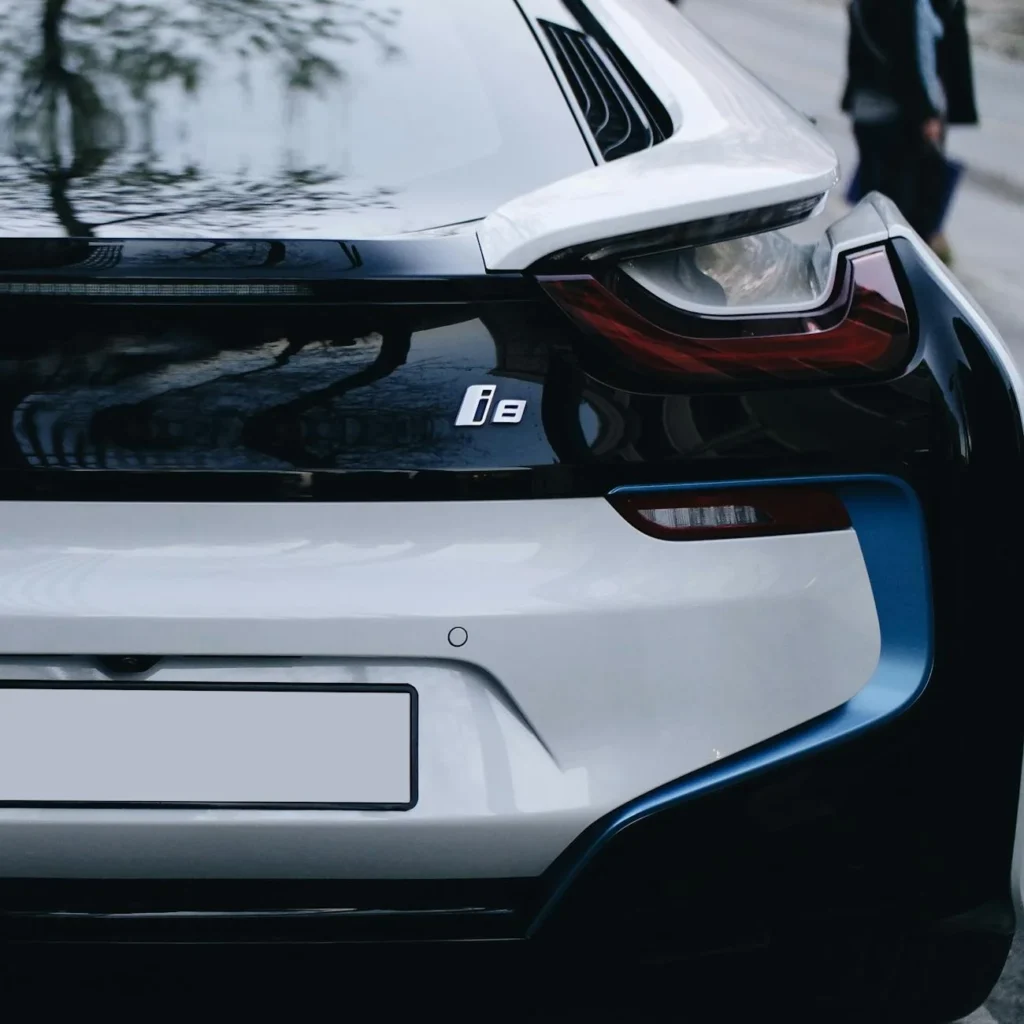
Then there are number plates, often overlooked yet packed with potential. A generic plate does the job, but personalised number plates do so much more. They say something about the driver and offer a finishing touch that feels completely bespoke. Whether it’s initials, a short word or a nod to a beloved model, a custom registration adds polish without being overbearing.
When these small details are chosen carefully, they start to tell a story, one that merges performance with personality.
Personalised Number Plates: The Rules to Know
A private registration is only an asset if it’s displayed legally. In the UK, plates made and fitted since 1 September 2021 must meet the British Standard BS AU 145e. In practice, that means:
- One typeface only: characters must be in the standard Charles Wright font, in solid black. Italic, script, “3D” two-tone and carbon-effect lettering aren’t allowed.
- No creative spacing: letters and numbers must keep the standard size, spacing and grouping, even if moving them would spell a name more clearly.
- No making the car look newer: you can’t put a registration on a vehicle that makes it appear newer than it is, although you can make it look older.
- A registered supplier: plates must be made by a registered number plate supplier, who will ask for proof of identity and your right to use the registration, such as the V5C logbook.
Displaying an illegal plate can mean a fine of up to £1,000 and an MOT failure, and the DVLA can withdraw a personalised registration that’s repeatedly misrepresented. A well-chosen registration that reads clearly with standard spacing is always the safer buy.
Choosing Finishes That Blend With the Car’s Design
Styling a car isn’t about copying trends. It’s about finding something that fits. It might be matte black stripes across a white body, echoing clean minimalism, or colour-matched stripes that highlight the car’s shape without overpowering it. The key is choosing elements that don’t feel bolted on. They should look like they’ve always been there.
A well-styled car commands attention through balance. From the grille to the rear spoiler, everything should work together. Good stripe placement can emphasise length, and a distinctive plate adds a memorable finishing detail. Subtle symmetry matters too. People may not be able to say exactly why a car looks right, but they notice when it flows. You don’t need neon lights or oversized decals, just a few standout elements that carry the car’s look.
More Subtle Touches Worth Considering
Window Tint
Tinted glass adds privacy and a sleek finish, but the front is tightly regulated. For cars first used on or after 1 April 1985, the windscreen must let at least 75% of light through and the front side windows at least 70%. There are no limits on rear windows. Police and DVSA examiners measure tint with meters, and illegally dark front glass can lead to a prohibition notice that keeps the car off the road until it’s removed. Most drivers keep the darker tint for the rear.
Interior Upgrades
You spend far more time looking at the cabin than at the outside of your car. A hand-stitched leather steering wheel cover, well-fitted mats and seat covers in a neutral tone, or a tidy console with a phone mount and a small storage tray all lift the space without changing its character. A subtle signature scent finishes it off.
Ambient Lighting
Soft LED strips in the footwells or along the dash trim add a premium feel at night. Stick to warm white or a single soft colour and keep it inside the cabin. Coloured exterior and underbody lighting is restricted on UK roads, and red lights facing forward or flashing blue lights aren’t allowed.
Badges, Wheels and Decals
Removing model badges (de-badging) gives a cleaner rear end, while refinishing the wheels in gloss black or gunmetal can transform the side profile. Small, well-placed decals work too, as long as they don’t cover lights, plates or the driver’s view.
Before You Customise: Insurance and DVLA Checks
Even subtle changes can have paperwork attached:
- Tell your insurer: most policies require you to declare modifications, including cosmetic ones such as wheels, tint and wraps. Undeclared changes can give an insurer grounds to reduce or refuse a claim.
- Update the V5C for a colour change: if a full wrap or respray changes the car’s main colour, update the colour on the V5C logbook. Stripes and partial wraps usually don’t count, but check with the DVLA if you’re unsure.
- Keep it reversible: vinyl stripes, wraps and removable accessories protect resale value. If you sell the car, you can transfer your private registration to a retention certificate and keep it.
Encouraging Personal Expression Through Vehicle Design
The car you drive is more than just a machine. It’s an extension of who you are. Whether it’s a stripe down the bonnet, a set of characters on your number plate or a refined cabin, these touches speak volumes without saying a word.
Car customisation doesn’t have to be expensive or time-consuming. It’s about being intentional and staying within the rules. Details that feel true to your personality will always outshine a showroom clone, so if your ride is feeling a little too standard, start with the details. They might be small, but they make all the difference.

Alfie Grant
Honestly? Alfie's still winging most of it. He writes about ambition and failure because he's lived through plenty of both, usually with a coffee in hand and zero idea what he's doing next. His writing is less "here's the answer" and more "here's what went wrong, and what I'm trying instead."
View all articles →Get the Weekly Brief
The best guides and stories, delivered every Sunday.