
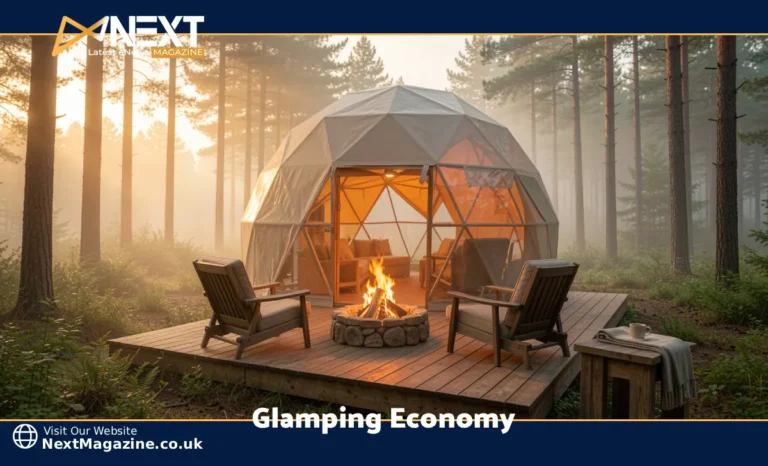
Let’s clear this up first. This article is not for someone curious about glamping as a holiday idea.
This is for three kinds of people:
- Landowners sitting on a piece of property, wondering if glamping could turn it into a steady income
- Existing operators who’ve had some success but feel the market is shifting under their feet
- Investors who want to know whether this sector still has legs before putting real money in
If you’re one of those three, keep reading. If you’re still in the “wouldn’t it be fun to own a yurt” phase—that’s fine, but this article may move faster than you’re ready for.
Why the Glamping Economy Still Works in 2026
There’s a temptation, after a few years of hype, to assume glamping has peaked. I don’t think that’s accurate—but the nature of the opportunity has definitely shifted.
Here’s the core truth: people still want to be outside without being miserable. That hasn’t changed. What has changed is who those people are and what they expect.
Millennials were the first big wave. Gen Z is now catching up quickly. But the group getting less attention is remote and hybrid workers, mixing nature with their work weeks. Mid-week bookings have grown noticeably since 2024, driven by people who want a Tuesday change of scenery—but still need decent WiFi to pull off a morning meeting.
Nearly 40% of glamping guests in 2025 had never been traditional campers. These aren’t outdoor enthusiasts who upgraded. They’re hotel travellers looking for something different. That’s a far bigger customer pool than most operators realise.
From a business angle, glamping still sits in an attractive spot. A well-placed dome or cabin is genuinely hard to copy. Unlike a city apartment rental, you can’t replicate the land, the view, or the setting. That rarity supports real pricing power during peak weeks.
For a closer look at how certain types of outdoor stays are building loyal audiences, this piece on Haskawana is worth a read.
What’s Actually Changed in 2026
A few years ago, guests were genuinely thrilled just to have a real mattress and running water under canvas. That’s not the bar anymore.
Climate-controlled domes, private outdoor tubs, and curated welcome kits are now expected at properties charging above a certain rate. The glamping economy has matured. Guests who’ve done this twice before are harder to impress, and they’ve already seen the same catalogue-shot tent photos on every listing platform.
But here’s the shift that surprised me more than any amenity trend: the guest who books mid-week in October, stays three nights, and leaves a glowing review is now worth more than the weekend guest who shows up for the photo opportunity and checks out irritated by slow WiFi.
The best operators I’ve spoken to are quietly adjusting everything around that mid-week guest. Longer-stay pricing. Workation packages. Flexible checkout windows. The glamping economy is also visibly splitting into two lanes. One is the high-volume, photogenic model near major cities—quick turnover, lots of units, hard to stand out. The other is smaller, experience-driven properties that guests drive three hours for and rebook before they even leave. The second lane wins long-term. The first is getting crowded fast.
The Stuff Nobody Talks About: Permits, Real Costs, and the Weather
This is the section most articles skip entirely. Let’s not do that.
What Does It Actually Cost to Start?
The honest answer: it depends, but you need more money than most people initially assume.
A basic two-bell-tent setup on already-serviced land might cost $15,000 to $30,000 to get running—but only if you already have electricity, water, and a waste solution in place. Starting from raw land means $80,000 to $200,000 before you host your first guest, once you account for infrastructure, structures, furnishings, and early marketing.
A single quality geodesic dome with proper power, a composting toilet setup, and decent furnishings typically runs $40,000 to $70,000 per unit. Revenue on that one unit at $250 per night, with 60% annual occupancy, brings in roughly $54,750 gross before operational costs. After expenses, a single-unit operation is a lifestyle business—not a passive income stream. The numbers improve meaningfully at three to five units with strong direct bookings. But go in with realistic figures, not optimistic ones.
Permits and Zoning: The Six-Month Surprise
This is the number one thing new operators underestimate, and it catches people off guard more than almost anything else.
Glamping exists in a legal grey zone in most regions. It’s not a hotel. It’s not a campsite. Local planning departments often aren’t sure what to do with it. Getting the right approvals—planning permission, fire safety certification, environmental sign-off, septic system approval—can take anywhere from three months to over a year. Some operators have waited eighteen months before hosting their first guest.
Before you buy land or sign a lease, spend money on a local planning consultant who has handled hospitality or outdoor accommodation projects before. It’s the best few hundred pounds or dollars you’ll spend.
The same kind of careful risk assessment that applies to outdoor and nature-based ventures—thinking through what you can’t control—is explored in this look at Tiimatuvat.
Seasonality and Weather: The Risk That Ruins Weekends
The glamping economy is wildly seasonal in most climates. If you’re operating in the UK, Northern Europe, or most of Canada and the northern US, expect to earn 65% to 80% of your annual revenue in roughly four to five months. The rest of the year is slower, and some weeks in November or February will be quiet regardless of what you do.
Weather is the other side of this. One serious storm can cancel a full weekend of bookings, and depending on your cancellation policy, you’re either absorbing that loss or leaving guests frustrated. Operators who last more than three years have weather contingency plans: storm damage protocols, flexible rebooking windows, and heating or shelter structures that keep units viable in shoulder months.
Properties doing well in winter aren’t fighting the season. They’re building an identity around it—log fires, stargazing kits, warming drinks by the firepit. That reframe takes deliberate effort, but it’s often the difference between a six-month business and a twelve-month one.
What Smart Operators Are Actually Doing Right Now
The glamping economy rewards creativity more than capital right now. You can put a lot of money into a beautiful property and still sit mostly empty if you miss the small stuff.
They Answer the “What Now?” Question
A beautiful tent or dome draws people in. What guests remember six months later is what they did once they arrived.
The best operators build simple experiences directly into the stay—a guided sunset walk, a firepit cooking session, a hand-drawn map with three local swimming holes marked on it. None of this costs much. But it answers the unspoken question every couple or family has when they pull up to a remote site: what do we do now?
They Bundle Instead of Just Pricing Per Night
Nightly rates get attention, but packages protect margins better.
Instead of $350 a night for the tent alone, successful operators pack in breakfast, a late checkout, a welcome kit, and a guided morning activity at $425 total. Guests feel like they’re getting more. Operators lock in a higher booking value. The bundle also makes your listing harder to price-compare directly against competitors, which matters more than people realise.
They’re Moving Guests Off the Platforms
A lot of glamping sites built early growth on Airbnb or Glamping Hub. That worked—until it didn’t.
In 2026, the most stable properties are actively building direct booking relationships. Why? Better guest data. Lower fees. And real relationships that lead to repeat visits. One owner I spoke to put it simply: “When someone books direct, they feel like they found us themselves. They’re already proud of the decision before they arrive.” Direct booking guests leave better reviews, rebook more often, and are easier to reach before arrival.
Start building that list early. Twenty past guests you can contact directly is more valuable than a thousand followers on social media.
The Hidden Layer: Operations That Make or Break You
I’ve started calling this the connectivity iceberg. What guests see is the dome, the view, the carefully styled bed. What they don’t see is everything keeping it running underneath—and everything that can quietly fall apart.
Laundry timing. Check-in instructions that actually work when someone has no signal. Directions that don’t send guests down a dead-end track at 9 pm. Pest prevention. Waste removal. Heating failures on a cold October night. Double bookings from mismanaged channel listings.
Any one of these, handled badly once, can undo months of strong reviews.
Unexpected disruptions—the kind you can’t plan for but should always plan around—are a reality for any hospitality business. This account of how quickly things can go sideways in travel is a useful reminder that contingency thinking is never wasted.
Operators who make it past year three have systems. Not elaborate ones—simple, consistent ones. A clear cleaning checklist. Automated pre-arrival messages. A backup contact for emergencies. A maintenance log per unit. Technology helps here, but only if you choose it carefully. A channel manager that syncs availability across platforms in real time is worth every penny. Building your own booking system from scratch typically takes twelve to eighteen months, costs more than expected, and pulls your focus away from what guests actually experience.
Where the Glamping Economy Is Headed
Over the next few years, I expect this market to split into two clearly different businesses.
The first: high-volume, visually striking sites within two hours of major cities. Quick turnover, accessible locations, heavily photographed setups. Margins get squeezed as more sites open. Operators here compete on appearance and platform ranking.
The second: smaller, quieter, experience-driven properties where guests travel specifically for something they can’t find anywhere else. They come back year after year. They bring friends. They pay more because the stay justifies it.
The second category is harder to build and far easier to sustain. The first is easier to launch and harder to hold.
If you’re just starting, think seriously about which lane your property naturally belongs in—and design for it deliberately from the beginning. Generic doesn’t survive anywhere right now.
Practical Steps You Can Take Today
You don’t need a complete overhaul. Small, specific changes make a real difference.
- Audit your guest journey from booking to checkout. Where does it get confusing or frustrating? Complicated check-in processes and unclear directions are the most common problems, and they’re cheap to fix.
- Add one low-cost, high-memory ritual. A handwritten welcome note. A communal fire on Saturday evenings. A basket of local produce is waiting for arrival. These cost little and pay off in reviews.
- Update your photos to show people, not just spaces. Guests in 2026 want to see real moments—people laughing by a fire, eating breakfast outside, reading in a hammock. Empty-tent catalogue shots don’t convert the way they used to.
- Start a simple email list. Even a small one. Twenty past guests you can reach directly is more valuable than a thousand social media followers.
- If you’re pre-launch, get your permits moving first. Don’t buy structures before you know your land is approved for this use. Talk to a local planning consultant before spending money on domes or furnishings.
Final Thought
The glamping economy in 2026 is not a shortcut to easy money. It never was—but it looked like one for a while, and that attracted people who weren’t ready for the operational reality.
What it is is a genuine business opportunity for people willing to do the unglamorous groundwork: permits, systems, direct guest relationships, and a clear understanding of what makes their specific property worth travelling for.
The glamping sites that are still here in five years will be the ones that figured out who they’re for and delivered on that promise—consistently, every single stay.
That’s a higher bar than it used to be. But it’s also a more honest one. And honestly? That’s better for everyone.
FAQs
Is glamping still in demand in 2026, or is it dying out?
Glamping is not dying out—but the easy years are behind us. Demand is still growing, particularly from first-time glampers who’ve never traditionally camped and from mid-week travellers mixing work with nature. What’s changed is that standing out now takes more than a nice tent. Properties with clear identities, strong guest experiences, and direct booking relationships are doing well. Generic setups in crowded markets are struggling.
How much money can a small glamping site actually make per year?
A single unit at $250 per night with 60% annual occupancy brings in roughly $54,750 gross. After operations—cleaning, maintenance, marketing, platform fees, insurance, and utilities—you might clear $25,000 to $35,000 on a well-run single unit. Three to five units with strong direct bookings and bundled pricing can generate a genuinely livable income. But it’s not passive, and the first twelve to eighteen months will likely be reinvestment, not profit.
Do I need to own land to start a glamping business, or can I lease?
You don’t need to own land. Leasing from a farmer or rural landowner is a common starting point with lower upfront costs. Some leases are structured as a revenue share, others as a fixed annual rent. The key risks with leasing: you’re building on someone else’s land, which affects your exit options, and your lease terms determine your long-term stability. Get any agreement reviewed by a solicitor before investing in structures.
What’s the hardest part of running glamping that no one talks about?
Operations. Specifically, the gap between what guests expect and what a remote property can reliably deliver. Heating that fails. Directions that don’t work without a mobile signal. Linen that wasn’t ready in time. Wildlife that paid an uninvited visit overnight. These aren’t glamorous problems, but they’re the ones that generate one-star reviews and keep owners awake. The most successful operators treat glamping as hospitality first and outdoor experience second. The nature is the backdrop—the service is the product.
