

Table of Contents
- What Is Hyperfiksaatio? (More Than Just “Getting Distracted”)
- Hyperfiksaatio vs. Hyperfocus: What’s the Real Difference?
- Why Your Brain Locks On (The Simple Version)
- Hyperfixation, ADHD and Autism: What the Connection Actually Looks Like
- Special Interests vs. Hyperfixation: A Closer Look
- Real Signs That Hyperfiksaatio Is Happening
- You might recognise some of these:
- When Hyperfiksaatio Is a Strength (And When It Becomes a Problem)
- When it works for you:
- When it works against you:
- The Long-Term Effects People Don’t Talk About Enough
- ADHD Hyperfixation Management: What Actually Helps
- A Few Questions Worth Sitting With
- Final Thoughts
- FAQs
- What does hyperfiksaatio mean, and is it the same as hyperfixation?
- How is hyperfiksaatio different from regular focus or hyperfocus?
- Is hyperfiksaatio only for people with ADHD or autism?
- How can I manage hyperfiksaatio without losing its benefits?
- What are the signs that my hyperfixation is becoming a problem?
- Can hyperfiksaatio ever be a good thing?
- Can children grow out of hyperfiksaatio?
- How can I support a partner who experiences hyperfiksaatio?
I still remember the first time I really noticed it in myself.
I sat down to look up one small thing — something completely ordinary, like how to repot a plant. Three hours later, I had seventeen browser tabs open, a notebook full of handwritten soil chemistry notes, and zero idea where the afternoon had gone.
In Finnish, there’s a word for that state: hyperfiksaatio.
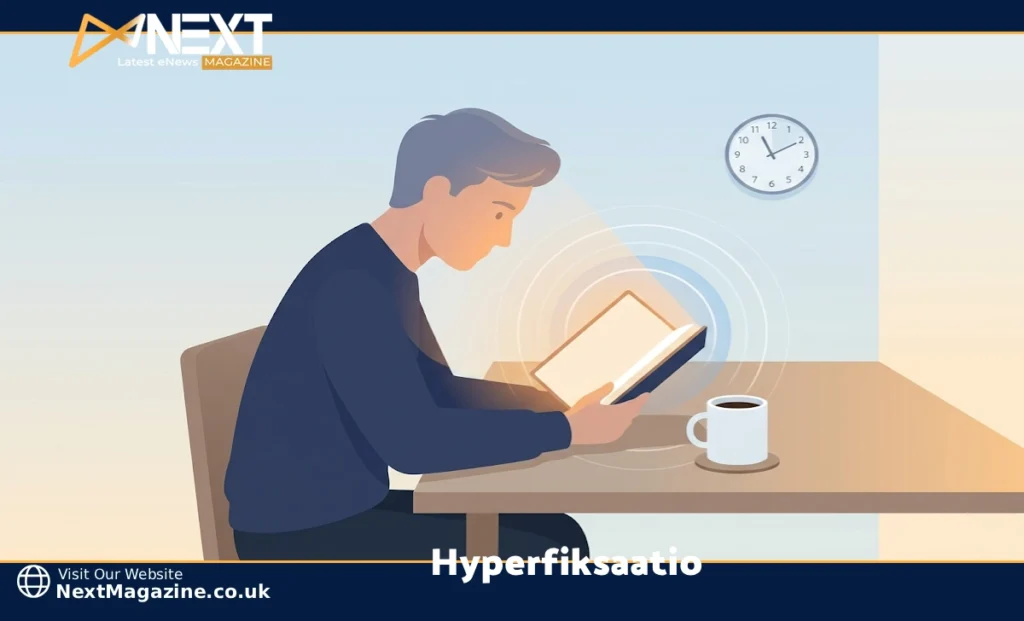
It’s not just being “really into something.” It’s deeper than that. Stickier. Your attention locks on, and the rest of the world goes quiet — your hunger, your phone, the sun going down. Depending on when and how it shows up, it can feel like a gift or a trap. Sometimes both in the same week.
Let’s understand this step by step — what hyperfiksaatio actually is, why it happens, how to recognise it, and how to work with it instead of constantly fighting it.
What Is Hyperfiksaatio? (More Than Just “Getting Distracted”)
At its core, hyperfiksaatio means your attention locks onto one thing so completely that everything else fades into the background. Not “I forgot to check my phone for an hour” — more like “I forgot to eat, and now it’s dark outside.”
The Finnish term translates directly to hyperfixation in English, and it’s used in Finnish psychology as a descriptive pattern of attention, not a clinical diagnosis. It comes up often in conversations about ADHD and autism, where the brain’s relationship with interest and attention works differently. But you don’t need a diagnosis to experience it. Anyone can fall into it, especially when something genuinely captures their curiosity or when stress is running high.
What makes hyperfiksaatio different from simply being interested in something? The main clue is what happens when you try to stop. Normal interest lets you pause and come back later. Hyperfiksaatio makes pulling away feel almost painful — like being dragged away from something urgent when nothing else actually is.
Hyperfiksaatio vs. Hyperfocus: What’s the Real Difference?
People mix these two up constantly, and honestly, it’s an easy mistake. Let’s clear it up.
Hyperfocus is that sharp, productive “in the zone” feeling — usually tied to a specific task, and usually shorter. You hammer through a work project in one sitting and come out feeling accomplished. It’s closer to what psychologists call a flow state.
Hyperfiksaatio is bigger and longer. It’s not just one focused session — it’s an ongoing pull toward a subject or interest that keeps drawing you back, sometimes for weeks. You might have multiple hyperfocus sessions inside a single hyperfiksaatio episode. Think of hyperfocus as a sprint; hyperfiksaatio is more like a season.
Here’s the other key difference: flow feels expansive and energising. You could shift tasks if you had to. Hyperfiksaatio can feel tight. Shifting away feels almost impossible, or at least genuinely uncomfortable. That’s not a character flaw — it’s just how the attention pattern works.
Why Your Brain Locks On (The Simple Version)
You don’t need a neuroscience degree for this. Here’s the short version.
When your brain finds something interesting or new, it releases dopamine — the chemical connected to reward and motivation. That feels good, so you keep going. Then you find another interesting piece, and another. Before long, your brain has quietly stopped paying attention to less exciting signals, like hunger, fatigue, or the time.
For people with ADHD or autism, this process can be especially strong. The brain’s reward and attention systems work differently — boring tasks can feel almost impossible, while genuinely engaging ones become all-consuming. It’s not a choice or a lack of willpower. It’s brain chemistry doing exactly what it’s designed to do.
Hyperfiksaatio can also work as a coping response. When life feels overwhelming or anxiety is running high, disappearing into something absorbing offers structure and a temporary sense of control. That’s not always harmful — but it can delay dealing with whatever was causing the stress in the first place.
If anxiety feels like a consistent driver behind your focus patterns, it’s worth looking at both pieces together. This guide to anxiety management covers practical approaches that can complement whatever you’re already doing to handle your hyperfiksaatio.
Worth noting: Some experts point out that labeling every deep focus episode as hyperfiksaatio risks making normal concentration sound like a problem. If you can pull yourself out when you genuinely need to, it might just be flow. The line is flexibility — can you choose to stop, or does stopping feel almost impossible?
Hyperfixation, ADHD and Autism: What the Connection Actually Looks Like
Hyperfiksaatio shows up most often in conversations about ADHD and autism — and for good reason.
With ADHD hyperfixation, attention tends to be interest-driven. Routine or low-stimulation tasks fade into the background, while captivating ones pull you in so hard it becomes difficult to surface. This isn’t laziness — it’s a genuine difference in how the brain regulates focus.
With hyperfixation autism, deep sustained interests — sometimes called special interests — can overlap with hyperfixation. These interests aren’t just hobbies. They can be a significant source of identity, comfort, and expertise. The distinction from casual interest is the intensity and duration: it’s not something you enjoy occasionally, it’s something you return to again and again with the same energy every time.
That said, hyperfiksaatio is not limited to neurodivergent people. Anxiety, stress, novelty, and emotional intensity can all trigger similar states in anyone. In Finnish psychological discussions, it’s often treated as a description of how attention can behave — not a label for the person experiencing it. That framing matters. It keeps the focus on patterns, not problems.
Special Interests vs. Hyperfixation: A Closer Look
These two ideas often get tangled up, especially in autism discussions. Here’s how they’re different.
Special interests (most commonly discussed in the context of autism) are deep, persistent areas of passion that may last for years — sometimes a lifetime. They often bring real joy, calm, and a sense of self. They’re not just intense; they’re defining.
Hyperfixation tends to be more variable. It can attach to the same interest over and over, or it can shift — one month it’s a specific TV show, the next it’s learning bookbinding. The intensity is similar, but the staying power varies more.
Some autistic people experience their special interests through repeated hyperfiksaatio episodes. Others maintain a steady, quieter engagement with no dramatic “locking in.” Both are valid. The overlap exists, but they’re not the same thing — and treating them as identical can lead to misunderstanding what someone actually needs.
Real Signs That Hyperfiksaatio Is Happening
You might recognise some of these:
- Hours pass without you noticing — time genuinely disappears
- Forgetting to eat, drink water, or use the bathroom
- Feeling irritated or anxious when someone interrupts you mid-focus
- Skipping plans or pushing off responsibilities because you “just need to finish this one thing”
- Physically crashing after you finally stop — drained in a way that goes beyond normal tiredness
In the moment, hyperfiksaatio can feel wonderful. You’re engaged, productive, and fully present in what you’re doing. The difficulty often appears afterwards — when you realise you missed calls, skipped meals, or stayed up until 2 AM for the third night in a row.
When Hyperfiksaatio Is a Strength (And When It Becomes a Problem)
This is the part people often don’t talk about honestly. Hyperfiksaatio is not inherently good or bad. It depends on where it lands.
When it works for you:
- A writer finishes a full draft in one intense weekend
- An engineer solves a stubborn bug after six focused hours
- A learner builds genuine expertise in a subject they love, going far deeper than any course requires
- During hard life periods, returning to a familiar interest offers real emotional stability
When it works against you:
- Scrolling for three hours without meaning to, then feeling hollow
- Researching a health symptom obsessively until you’ve convinced yourself of something frightening
- Staying in work mode long past the point of usefulness because disengaging feels impossible
- Losing track of relationships because your attention has been fully elsewhere for weeks
One of the trickiest things about hyperfiksaatio: your brain doesn’t distinguish between “productive” and “not productive.” It just wants engagement. It will lock onto work emails or a creative project with equal enthusiasm. That’s why awareness matters more than discipline here.
The Long-Term Effects People Don’t Talk About Enough
Short-term, hyperfiksaatio means missed meals and late nights. Stretch that over the years, and the picture changes.
Left unaddressed, recurring patterns can contribute to:
- Chronic burnout — because rest never feels as compelling as the next interesting thing
- Strained relationships — loved ones can feel repeatedly sidelined, even when that was never the intention
- Career challenges — difficulty initiating projects that don’t trigger that “locked in” feeling, or swinging between obsessive overwork and complete shutdown
- Physical health wear — poor sleep, irregular eating, and dehydration add up quietly over time
One physical effect that often gets overlooked is posture. Hours of sitting in one position during deep focus sessions — hunched over a screen, barely moving — can take a real toll on your spine and back muscles over time. If you’ve noticed stiffness, back pain, or posture-related discomfort alongside your focus patterns, it may be worth paying attention to. Scoliosis Awareness Month shines a light on how spinal health can quietly shift before people notice — a good reminder that physical check-ins matter just as much as mental ones.
On the other side: people who learn to recognise and direct their hyperfiksaatio often describe it as one of their greatest strengths. The goal isn’t eliminating deep focus — it’s making sure deep focus doesn’t quietly run your life while you’re not paying attention.
This matters across different life stages, too. Kids with hyperfiksaatio tendencies may forget homework or sleep while absorbed in games or shows. Teenagers can disappear into online worlds or creative projects for days. Adults often toggle between work obsessions, relationships, or hobbies — sometimes in ways that surprise even them. Teaching self-awareness early helps far more than waiting for the pattern to “settle down on its own.”
ADHD Hyperfixation Management: What Actually Helps
The goal here is not to fight your focus. That usually backfires and just adds frustration on top of exhaustion. The idea is to build small structures that keep the benefits while softening the worst parts.
Here’s what tends to actually work:
Use a timer — and make it gentle. Set an alarm for 45–90 minutes. When it goes off, stand up. Even for 30 seconds. That tiny break can loosen the grip just enough for you to check in with yourself. It doesn’t have to be a full stop — just a moment of re-entry.
Build non-negotiables before you go deep. Eat first. Take your medication if you’re on any. Move your body a little. These basics tend to disappear once hyperfiksaatio kicks in, so front-loading them is the simplest way to protect them.
Schedule your focus blocks intentionally. This sounds almost too obvious, but it genuinely helps. Tell yourself: “I’ll let myself go all-in on this from 2 PM to 4 PM.” Making it a chosen window changes the feeling from guilty absorption to intentional engagement.
Use a physical anchor. Put a glass of water next to you. Every time you notice it, take a sip. That small physical cue reminds you that your body exists outside the focus bubble.
Ask one honest question before you start. “If I get locked into this for four hours, will I regret it later?” If yes, set a harder limit. If no — go in and enjoy it.
Let people around you help. If you have a partner, family member, or close friend who understands the pattern, ask them for gentle check-ins. Not interruptions — just a heads-up when an hour has passed. This works better than white-knuckling it alone.
One thing hyperfiksaatio does reliably is push routine health appointments off the calendar. When you’re deep in something engaging, a screening or check-up feels easy to reschedule. Booking these in advance — and treating them like non-negotiables — helps. If you’ve been putting off any routine health check, including things like breast health screenings, this overview of next-generation breast imaging is a helpful reminder of why staying on top of those appointments matters.
A Few Questions Worth Sitting With
You don’t need answers right now. Just notice:
- When was the last time you lost hours to something and felt genuinely good about it afterwards?
- When did you feel frustrated or worn out by it instead?
- What would be different if you could step into deep focus by choice — and step back out the same way?
Final Thoughts
Hyperfiksaatio isn’t a flaw. It’s a feature of how attention works in some brains — especially under stress, curiosity, or passion. The goal isn’t to flatten your focus or eliminate deep engagement from your life. It’s to make sure that deep engagement doesn’t quietly take over while you’re not watching.
One timer. One glass of water. One honest question before you start. That’s a reasonable place to begin.
FAQs
What does hyperfiksaatio mean, and is it the same as hyperfixation?
Yes — hyperfiksaatio is the Finnish word for hyperfixation. It describes an intense, prolonged pull toward a specific interest or activity that keeps drawing your attention back, sometimes for days or weeks at a time.
How is hyperfiksaatio different from regular focus or hyperfocus?
Regular focus is flexible — you can switch tasks when needed. Hyperfocus is that shorter, task-based “in the zone” feeling, usually productive and energising. Hyperfiksaatio is longer-lasting and subject-oriented, often containing multiple hyperfocus sessions within it. Pulling away from hyperfiksaatio tends to feel harder and more uncomfortable.
Is hyperfiksaatio only for people with ADHD or autism?
No. It’s more common and more intense in neurodivergent brains, but anyone can experience it — especially during stressful periods or when something genuinely captivates them.
How can I manage hyperfiksaatio without losing its benefits?
Work with it rather than against it. Use timers, protect your basics (food, sleep, movement) before going deep, and create intentional focus windows so engagement feels chosen rather than accidental. Small structures beat rigid restrictions every time.
What are the signs that my hyperfixation is becoming a problem?
Regularly skipping meals or sleep, feeling out of control during or after episodes, relationships suffering because people feel ignored, or a persistent cycle of burnout and guilt afterwards — these are signs worth paying attention to. Talking to a doctor or therapist can help if it’s affecting your daily life consistently.
Can hyperfiksaatio ever be a good thing?
Absolutely. When you’re aware of it and can direct it, hyperfiksaatio can drive real creativity, expertise, and deep personal fulfilment. Many people look back at their most intense focus periods as the foundation of skills they genuinely value.
Can children grow out of hyperfiksaatio?
Some patterns ease with age. Many continue into adulthood in different forms. Teaching self-awareness and gentle routines early tends to help more than expecting the pattern to disappear on its own.
How can I support a partner who experiences hyperfiksaatio?
Listen without judgment, share how it affects you honestly, and work together on routines that give you both what you need. Framing it as a brain pattern — not selfishness — makes those conversations easier to have and easier to hear.

Charlotte Hayes
Charlotte covers health, wellbeing, and lifestyle with a responsible, no-nonsense approach to a space full of overclaiming. She sticks to clear writing and useful context rather than jargon or hype, helping readers navigate everyday health questions with information they can actually trust. Restraint, for her, is the whole point.
View all articles →Get the Weekly Brief
The best guides and stories, delivered every Sunday.