

Table of Contents
- Provascin and Provasin: Not the Same Thing
- Why This Distinction Matters
- What Is Provascin?
- Who Makes It — Purica
- What Category Does It Belong To?
- Key Ingredients in Provascin (and What Each One Does)
- CoQ10 — Cardiac Energy & Antioxidant Defense
- L-Carnitine — Fatty Acid Transport
- Alpha-Ketoglutaric Acid — The Overlooked Ingredient
- Betaine HCl — Homocysteine Control
- Chaga Mushroom Extract — Antioxidant & Vascular Balance
- Grape Seed Extract & Green Tea — The Nutricol® Blend
- How Provascin Works in the Body
- Potential Benefits — What the Evidence Actually Says
- Who Should Consider Using Provascin
- Who Should NOT Take Provascin
- Dosage and How to Take It
- Prevention vs. Therapeutic Dosing
- Side Effects and Safety Considerations
- How Long Before You Notice Results?
- Final Assessment
- FAQs
- Is Provascin the same as Provasin?
- Can Provascin replace my heart medication?
- Is Provascin vegan and gluten-free?
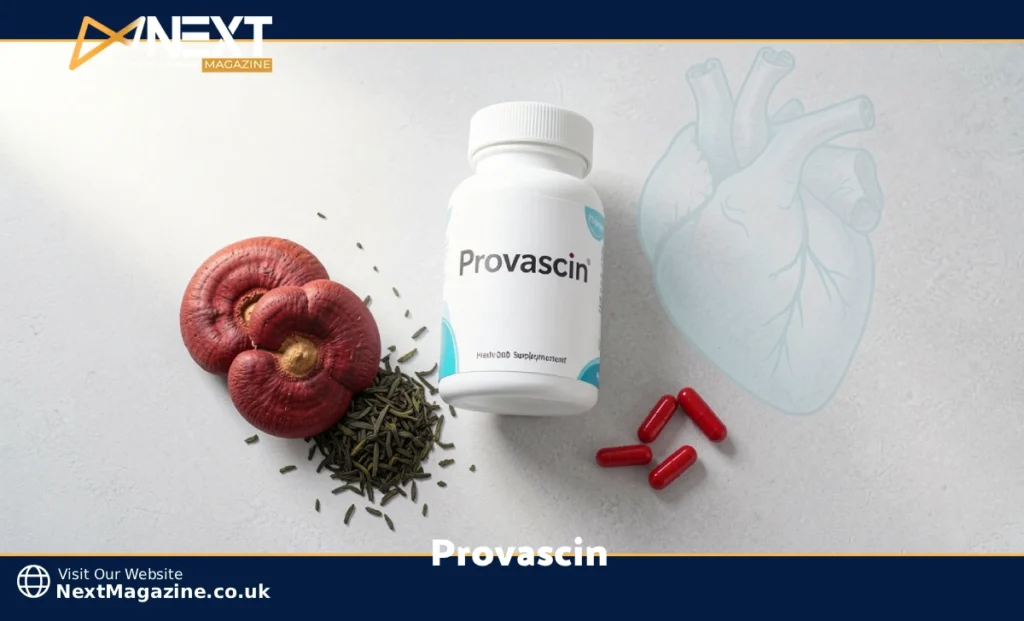
Provascin is a cardiovascular dietary supplement made by Purica, a Canadian natural health company. It combines CoQ10, L-Carnitine, Chaga mushroom, alpha-ketoglutaric acid, and antioxidant blends to support heart energy, healthy circulation, and vascular function. It is not a prescription drug and does not treat or cure heart disease.
Provascin and Provasin: Not the Same Thing
Before anything else, let’s clear up a common source of confusion.
Provascin (the supplement discussed in this guide) and Provasin (a prescription statin medication containing atorvastatin) are two completely different products. One is a nutraceutical supplement, while the other is a prescription cholesterol-lowering drug — they are not interchangeable and should never be treated as such.
Why This Distinction Matters
If you or a family member was prescribed “Provasin” for high cholesterol and you’re researching it online, you need to be speaking with your prescribing doctor — not reading supplement guides. Conversely, if you’re exploring natural cardiovascular support and found Provascin, this article will walk you through exactly what it is and what to realistically expect from it.
What Is Provascin?
Provascin is a cardiovascular dietary supplement manufactured by Purica, a Canadian natural health company. It is sold in capsule form and designed to support heart health, blood circulation, healthy cholesterol levels, and vascular function. It is not a pharmaceutical drug, does not require a prescription, and is not intended to treat or cure any cardiovascular disease.
Who Makes It — Purica
Purica is a Canadian-owned, Canadian-operated company that has been part of the natural health movement since 1999. Inspired by nature and backed by science, Purica is known for producing therapeutic-grade, vegan, non-GMO formulations across a range of health categories — from medicinal mushrooms to cardiovascular and hormonal support. Provascin sits within their cardiovascular product line alongside products like Recovery, Immune 7, and their Nutricol® antioxidant blend.
This background matters. When evaluating any supplement, manufacturer credibility and track record are important filters. Purica’s 25+ year operating history in the Canadian natural health space gives it more standing than many newer supplement brands.
What Category Does It Belong To?
Provascin is classified as a nutraceutical — a term that describes a product sitting between a food supplement and a therapeutic agent. Unlike conventional medications, Provascin is marketed as a nutraceutical, meaning it combines nutritional and therapeutic benefits. It is not intended to cure diseases; however, it may help support the body’s natural cardiovascular processes when used alongside a healthy lifestyle.
Key Ingredients in Provascin (and What Each One Does)
The formula is built around a combination of well-known cardiovascular nutrients — CoQ10, L-Carnitine, hawthorn berry, and antioxidants — rather than novel or unproven compounds. This makes Provascin’s ingredient base more grounded in established nutritional science than many competitors in the supplement space.
Here is what each major ingredient actually does and why it was included.
CoQ10 — Cardiac Energy & Antioxidant Defense
CoQ10 is a powerful antioxidant that helps maintain and support cardiovascular health by protecting the cells’ energy factories — the mitochondria. CoQ10 levels steadily rise after birth, peaking at about 20 years of age, after which they steadily decline. CoQ10 supplementation also increases the heart’s squeezing action (contractility), enabling the heart to pump blood more efficiently.
There is a specific reason CoQ10 is listed as a priority for statin users. CoQ10 is recommended by medical authorities for people taking statin drugs, since statins interfere with CoQ10 production, which increases the potential for heart damage. This is one of the most clinically documented reasons an adult might consider CoQ10 supplementation, and Provascin directly addresses it.
L-Carnitine — Fatty Acid Transport
L-Carnitine is an amino acid derivative that acts as a transport molecule. It transports fatty acids into mitochondria, supporting energy production and heart muscle performance.
The supporting evidence for L-carnitine in cardiovascular contexts is meaningful. The Mayo Clinic reviewed 13 studies from 1973 to 2012 and determined that, compared with placebo or control, L-carnitine is associated with a 27% reduction in all-cause mortality, a 65% reduction in ventricular arrhythmias, and a 40% reduction in anginal symptoms in patients experiencing a heart attack. These figures come from patients with existing cardiac events, not healthy adults — context matters when interpreting supplementation data.
Alpha-Ketoglutaric Acid — The Overlooked Ingredient
This is the ingredient most competitor articles either skip entirely or mislabel. Naturally produced in the body, alpha-ketoglutaric acid plays a key role in the cells’ production of energy. In addition, it actively scavenges free ammonia in the blood, decreasing its damaging effects on the heart, blood vessels, brain, kidneys, and other tissues. Free ammonia levels in the blood increase following physical stress, over-training, trauma, and heart attacks.
This makes Provascin particularly relevant not just for older adults managing heart health, but also for physically active adults who experience elevated ammonia from intense exercise.
Betaine HCl — Homocysteine Control
Betaine Hydrochloride lowers homocysteine, an amino acid tied to arterial damage when elevated. Elevated homocysteine is a recognised cardiovascular risk factor linked to arterial stiffness and endothelial dysfunction. Including betaine HCl addresses a structural risk factor that many heart supplements ignore entirely.
Chaga Mushroom Extract — Antioxidant & Vascular Balance
Chaga is a medicinal mushroom that Purica has used across several of its product lines. Chaga mushroom extract is a strong antioxidant that aids in stress management and vascular balance. Its polyphenol content helps neutralise free radicals that contribute to vascular ageing and inflammation.
Grape Seed Extract & Green Tea — The Nutricol® Blend
Grape seed extract is rich in proanthocyanidins that strengthen capillaries and improve microcirculation. Green tea extract provides EGCG for mild metabolic and antioxidant support. Together they form what Purica calls the Nutricol® antioxidant blend — targeting antioxidants for tissue maintenance, glucose metabolism support, and relief from chronic venous insufficiency (CVI) symptoms.
Nutricol® is a proprietary Purica formulation, not a generic ingredient pairing. This distinction is worth noting when comparing Provascin to similar products using standalone grape seed or green tea extracts.
How Provascin Works in the Body
Provascin does not work through a single mechanism. It targets four physiological pathways simultaneously:
1. Cellular Energy Production — CoQ10 and L-Carnitine work inside the mitochondria to improve energy output in heart muscle cells. This is especially relevant as both nutrients decline naturally with age.
2. Free Radical Defence — Alpha-lipoic acid, Chaga, green tea extract, and grape seed extract form a layered antioxidant system that protects blood vessel walls, heart tissue, and LDL particles from oxidative modification.
3. Vascular Function — Nitric oxide plays a critical role in vascular health, promoting blood flow and relaxation of blood vessels. Provascin’s active ingredients stimulate pathways that lead to increased nitric oxide levels, allowing arteries to dilate more effectively and improving circulation throughout the system.
4. Metabolic Waste Clearance — Alpha-ketoglutaric acid scavenges free ammonia, while betaine HCl reduces circulating homocysteine. Both functions protect blood vessels from damage caused by metabolic byproducts.
Potential Benefits — What the Evidence Actually Says
Based purely on ingredient evidence — not marketing claims — Provascin has a reasonable scientific basis for supporting healthy circulation and blood flow in adults with mildly suboptimal cardiovascular function, providing cellular energy support for the heart muscle particularly in adults over 50 where CoQ10 and L-Carnitine decline naturally, reducing oxidative stress on blood vessel walls through its antioxidant matrix, and offering symptomatic support for chronic venous insufficiency — including leg swelling and discomfort — which Purica specifically cites as a supported use.
An important transparency note: individual ingredients — particularly CoQ10, L-Carnitine, and hawthorn berry — have genuine clinical evidence for cardiovascular support. However, the full Provascin formula has not been independently clinically trialled as a whole. This is common across the supplement industry and does not automatically invalidate the product, but it is something consumers deserve to know.
Who Should Consider Using Provascin
Provascin is most likely to provide meaningful support for these groups:
- Adults over 40 whose CoQ10 and L-Carnitine levels are in natural decline
- Statin users whose medication depletes CoQ10 (speak to your prescribing doctor first)
- Adults with chronic venous insufficiency — leg swelling, heaviness, varicose veins — where hawthorn and antioxidants have specific supporting evidence
- People following preventive cardiovascular health routines alongside diet and exercise
- Active adults who want support for metabolic waste clearance after physical exertion
Who Should NOT Take Provascin
This section is consistently underserved by competing content. Here is a clear breakdown:
- People taking medications for blood pressure — L-Arginine in Provascin promotes vasodilation, which lowers blood pressure. Combined with blood pressure medication, this effect could push blood pressure below the desired therapeutic target.
- Those on blood thinners — CoQ10 and certain polyphenols can interact with warfarin and similar anticoagulants
- Pregnant or breastfeeding women — consult a healthcare professional before use
- Those with liver disorders, iron deficiency, diabetes, or kidney disease — the official product label lists these as requiring prior practitioner consultation
- People expecting rapid, dramatic symptom relief — Provascin is slow, cumulative nutritional support, not a fast-acting therapeutic
Dosage and How to Take It
Provascin comes in vegan capsules. The CoQ10 in the formula has an optimum dosage of 30–200mg daily, with clinical doses potentially higher as recommended by a practitioner.
Prevention vs. Therapeutic Dosing
This is a distinction almost no competitor article explains, despite it being clearly outlined on the product label:
- Prevention: 3–4 capsules of Purica Provascin daily
- Existing cardiovascular conditions: 6–8 capsules daily
If you are in the higher dosing tier, this should be discussed with and supervised by a qualified healthcare provider. The higher dose is not a self-directed recommendation.
General usage tips for best results:
- Take with meals to improve absorption and reduce the chance of digestive discomfort
- Stay well hydrated
- Do not exceed the recommended dose without practitioner guidance
- Provascin works well alongside Vitamin C, Vitamin E, glutathione, and additional CoQ10, according to the manufacturer
Side Effects and Safety Considerations
For most healthy adults, Provascin is generally well tolerated. Reported mild side effects include:
- Digestive discomfort, particularly when taken on an empty stomach
- Temporary headache or lightheadedness in the first week of use
- Possible interactions with iron absorption (relevant for those with iron deficiency)
These symptoms typically disappear once the body adjusts during the first week of use. If symptoms persist or worsen, discontinue use and speak with a healthcare provider.
As of 2026, no serious adverse events have been widely reported in the published literature for the individual ingredients at the doses used in this formula. That said, given the absence of a whole-formula clinical trial, individual responses can vary in ways that haven’t been formally studied.
How Long Before You Notice Results?
Most users notice meaningful changes between 4 and 8 weeks of consistent daily use. CoQ10 and hawthorn are not fast-acting compounds — they build cumulative benefit over time. Expecting results in a few days is unrealistic for this type of nutritional supplement.
What users most commonly report noticing first:
- Improved daily energy levels and reduced fatigue
- Reduced leg heaviness or discomfort (CVI-related users)
- Better exercise tolerance over time
Results vary based on baseline health status, consistency of use, diet, physical activity, and individual biology.
Final Assessment
Provascin is a thoughtfully constructed cardiovascular supplement from a manufacturer with a legitimate track record. Its ingredient selection — CoQ10, L-Carnitine, alpha-ketoglutaric acid, betaine HCl, Chaga, and the Nutricol® antioxidant blend — addresses multiple physiological mechanisms rather than chasing a single benefit.
The honest limits are equally important to state: the full formula lacks independent clinical trials as a combined product, results build over weeks, not days, and it carries real drug interaction risks that should be respected.
For adults over 40 managing cardiovascular wellness proactively, statin users looking to offset CoQ10 depletion, or those dealing with mild circulatory symptoms, Provascin represents a well-grounded option when used alongside medical oversight, a balanced diet, and regular physical activity.
As with any supplement in 2026, the most informed approach is to read the ingredient label, understand the mechanism, and confirm suitability with a qualified healthcare professional before starting.
FAQs
Is Provascin the same as Provasin?
No. Provascin is a dietary supplement made by Purica. Provasin is a prescription statin medication. They are entirely different products. If you have been prescribed Provasin by a doctor, do not substitute it with this supplement.
Can Provascin replace my heart medication?
No. Provascin is best understood as nutritional scaffolding for cardiovascular health — meaningful for prevention and mild support, not a substitute for medical treatment. Never stop or reduce prescribed medication based on supplement use without your doctor’s explicit guidance.
Is Provascin vegan and gluten-free?
Yes. Provascin is gluten-free and non-GMO. Its non-medicinal ingredients include magnesium stearate from a plant source, microcrystalline cellulose, and hypromellose — all vegan-compatible.

Evie Russell
Evie writes about emotional intelligence the way she'd explain it to a close friend — warmly, honestly, and without pretending she has it all figured out. Her essays lean into vulnerability, often pulling from her own relationships and the awkward lessons learned along the way. She writes as a fellow learner, not an expert.
View all articles →Get the Weekly Brief
The best guides and stories, delivered every Sunday.