
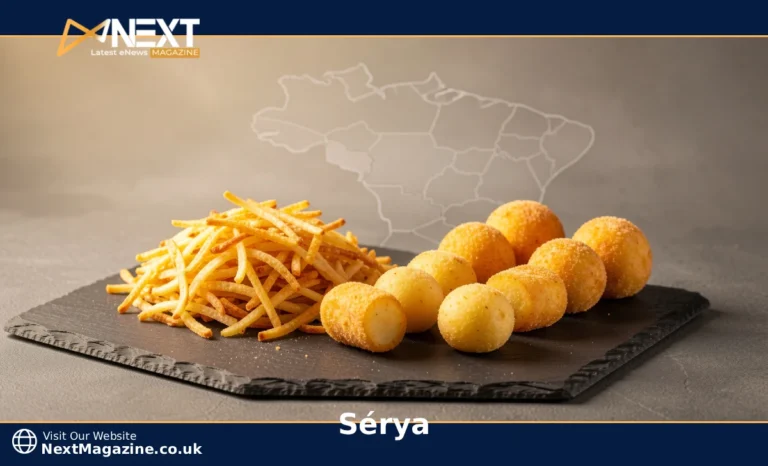
Sérya Alimentos is a Brazilian food company founded in 2015 in Araxá, Minas Gerais. It was the first company in Brazil to produce frozen pre-formed potato specialties at an industrial scale. In May 2019, McCain Foods acquired a 70% majority stake. Forno de Minas holds the remaining 30%.
What Sérya Alimentos Is
Before 2015, if you wanted a frozen hash brown or a potato noisette in Brazil, you were largely dependent on imports. No domestic company was producing these products at scale. Sérya Alimentos changed that.
Sérya is a Brazilian food company headquartered in Araxá, in the state of Minas Gerais. Founded in 2015, it focuses on one specific niche: frozen pre-formed potato specialties. It was the first company in Brazil to manufacture these products industrially, building a production facility equipped with technology designed for consistent, high-volume output.
The name might not be widely recognized outside food industry circles, but the company holds a significant place in Brazil’s frozen food story.
The Market Gap Sérya Was Built to Fill
Brazil is not a small market for frozen potatoes. It ranks as the 5th largest market in the world for frozen French fries, according to McCain Foods. That scale tells you there is strong demand. What was missing, until Sérya arrived, was a domestic manufacturer focused on the value-added specialty segment.
Standard frozen fries had a domestic supply base, but pre-formed products, hash browns, shaped potato cakes, and noisettes, were not being produced at volume inside the country. Foodservice operators and retailers either imported them or went without. That gap created a clear opening.
Sérya was built specifically to address that opening. Araxá made sense as a base. Minas Gerais is one of Brazil’s primary potato-growing regions, which keeps raw material supply chains shorter and more reliable. The location was not incidental.
What Sérya Actually Produces
Sérya’s product range sits in the category known as frozen pre-formed potato specialties. These are distinct from conventional frozen fries. They are shaped, pre-fried, and frozen before they reach the customer, whether that customer is a supermarket shopper or a commercial kitchen.
The core product types include:
- Hash browns: Shredded and formed potato patties, pre-fried and frozen
- Potato noisettes: Small, rounded potato balls with a crisp exterior
- Mashed potato bites: Portioned mashed potato products, formed and frozen
Sérya sells through two main channels: retail, where products reach consumers through supermarkets, and foodservice, where they go to restaurants, hotels, and institutional kitchens. This dual-channel approach gives the company broader market coverage and reduces dependence on any single distribution path.
Why “Pre-Formed” Matters
For a restaurant or large-scale kitchen, pre-formed products solve real operational problems. Every piece comes out the same size and weight, which means consistent cook times, predictable food costs, and faster service. A kitchen using Sérya hash browns does not need to measure, shape, or prep; it just cooks. For foodservice operators working at volume, that reliability has direct commercial value.
For retail buyers, the appeal is convenience. Pre-formed frozen potato products require minimal preparation and deliver results that home cooks would find difficult to replicate from scratch.
Why McCain Foods Acquired Sérya in 2019
In May 2019, McCain Foods announced it had acquired a 70% majority stake in Sérya Alimentos. Forno de Minas, a Brazilian dairy company in which McCain had already acquired a 49% stake one year prior, retained the remaining 30% of Sérya.
McCain is the world’s largest producer of frozen french fries, operating 52 plants across six continents and generating annual sales exceeding CAD $9.5 billion. Its Brazil strategy was not opportunistic. It was deliberate.
Aluizio Neto, Managing Director of McCain in Brazil and the executive who took on leadership of Sérya following the acquisition, explained the rationale directly. The investment, he said, would let McCain concentrate more effort on developing high-value-added products locally, in line with its leadership position across potatoes and appetizers.
The structure of the deal also matters. By bringing Forno de Minas in as a 30% partner in Sérya, McCain connected two complementary Brazilian food businesses under a shared ownership umbrella. Forno de Minas is one of Brazil’s best-known artisan cheese brands. Pairing it with Sérya gave McCain two strong anchor brands in different segments of Brazil’s premium food market.
What This Means for Brazil’s Frozen Food Future
McCain’s acquisition of Sérya was not just about buying a production facility. It was about positioning for a market that was expected to grow fast.
At the time of the acquisition, Brazil was already the 5th largest frozen french fry market globally. Aluizio Neto stated in 2019 that Brazil had the potential to become the 3rd largest market in the world by 2021. Even if that specific timeline shifted, the underlying trend, rising consumer demand for frozen convenience foods in a large urbanizing economy, remained intact.
For consumers, the most direct outcome of the acquisition is expanded product availability. With McCain’s global supply chain, technology resources, and distribution reach behind Sérya, the range and accessibility of frozen potato specialties in Brazil can grow faster than Sérya could have managed independently.
For foodservice operators, a well-resourced Sérya means more reliable supply, more consistent product quality, and, over time, a wider product catalog. Brazil’s food service industry, which serves a population of over 200 million people, needs dependable suppliers at scale. Sérya, backed by McCain, is better positioned to be one.
For the broader frozen food industry in South America, the Sérya acquisition signals that multinationals are taking the region’s potential seriously. It is an example of a global company betting on local production capacity rather than relying on imports to serve a growing market.
Sérya started as a solution to a specific problem: Brazil had the demand for frozen potato specialties but no domestic producer to meet it. In four years, it built the facility, proved the model, and attracted the world’s largest potato company as a majority owner. That trajectory says as much about Brazil’s frozen food market as it does about Sérya itself.
